Baptism is one of those tricky subjects that almost everyone seems to have an opinion on. The problem we have found that the opinions are very shallow and not contextually based. In order to avoid that we need to demonstrate the traditional view and then give you a more complete way. Ultimately it's up to you.
It is also super important to know that all the questions in this baptism bank are referring to a bible study out there concerning Baptism. You may see reference to "the study" and that is what that means. This is not a common study and occurs in only a few types of churches, but the techniques and subject matter is very common amongst a LOT of denominations.
Traditionally
Traditional subject studies start in the scriptures in a couple of different ways. The first way is that the reader or student gets shown the scriptures that mention the word "baptism" If you are not aware of how that is done, any decent concordance can be used to look up the word baptism and you will be given a list of scriptures where that word exists. To be honest, if you were just looking for that, its efficient. The incomplete part comes from what happens after. Generally all those scriptures are lumped together and deemed a subject matter study and we then proceed to go to that first scripture and read it as we found it, a cherry picked chunk that is incomplete on its own. Yay, you found the word, but the party does not start until you sit down and figure out how that little abstract you found fits inside the story narrative where the author placed it. The surrounding story and intent of the author who wrote it and the audience it was intended for is the gold vein in the gold mine. You have to do some homework (we call it wrestling) and put it all together. Most will not, because they are either spiritually lazy or they are in a hurry to validate something they have heard.
The second is what we call the "Told Principle" This is even more simple, you, you rely on what someone else tells you as being factual. The hard truth even the smartest teachers of the scriptures miss things or fail to put them all together because they also have been "told" this is the meaning and then the snowball becomes bigger rolling down the hill. If you don't believe that can happen, look at the well known passage where Jesus is talking to Nicodemus and he says (paraphrasing) "you don't understand these things? Your suppose to be Israel's teacher. That's a stinger, but the realization is, this happens.
Takeaway #1
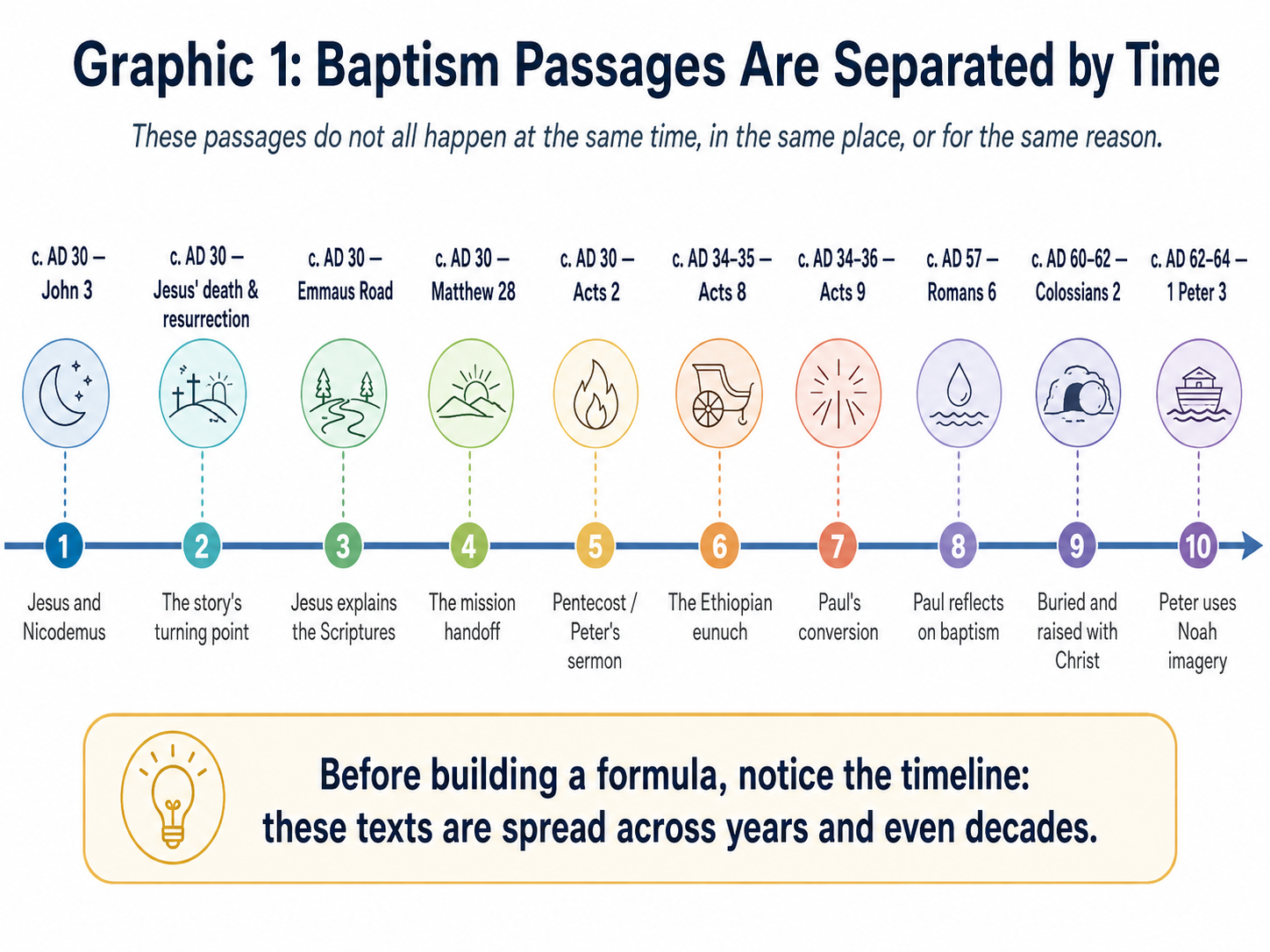
All of the scriptures are not in the same time period. When we take hour handy list that we got from our concordance, we have the tendency to think these all go together and lead to one another. They do not. Often there are many years separating the books and many events that show how people evolve and struggle with engaging and follow Jesus
It is very helpful to look at these graphically to help piece this together. And if we are being completely honest with you here, this is an ongoing study and an ongoing wrestling tournament. There is always more to learn from the text.
Patterns
The following topics in the question bank on baptism each go through these scriptures giving us the typical "told" answer and then explores some better contextual information. You will notice patterns arise in how we tend to want to create this "master formula" for baptism. We do this because a formula creates certainty and certainty is comforting. When we use scriptures to back it up, we feel at ease determining where we stand with this baptism concept.
Some of these patterns you will notice include things such as:
- All the scriptures are talking to the same audiences, they are not (spoiler)
- Paul, Peter and Jesus call upon old testament scriptures to appeal to certain audiences
- Certain audiences you address in one way, and others in other ways. The areas and people covered in these scriptures are vastly different
- There are certain context signals that are present that the original audiences understood immediately, one of them being tension.
- There is considerable tension between Jewish audiences and Gentile audiences because lets be honest, a good honest God fearing Jew has a hard time accepting that Gentiles are in the plan.
- The first conversation in Acts 2 is Jewish. And its super easy to say that this message is for us, it is not. It is commonly emphasized that this is an instruction for modern day readers, that is a mistake.
- Timelines are super important. Paul and Peter are not sitting together comparing notes and building a complete baptism doctrine. These texts emerge across different years, communities, problems, audiences and circumstances.
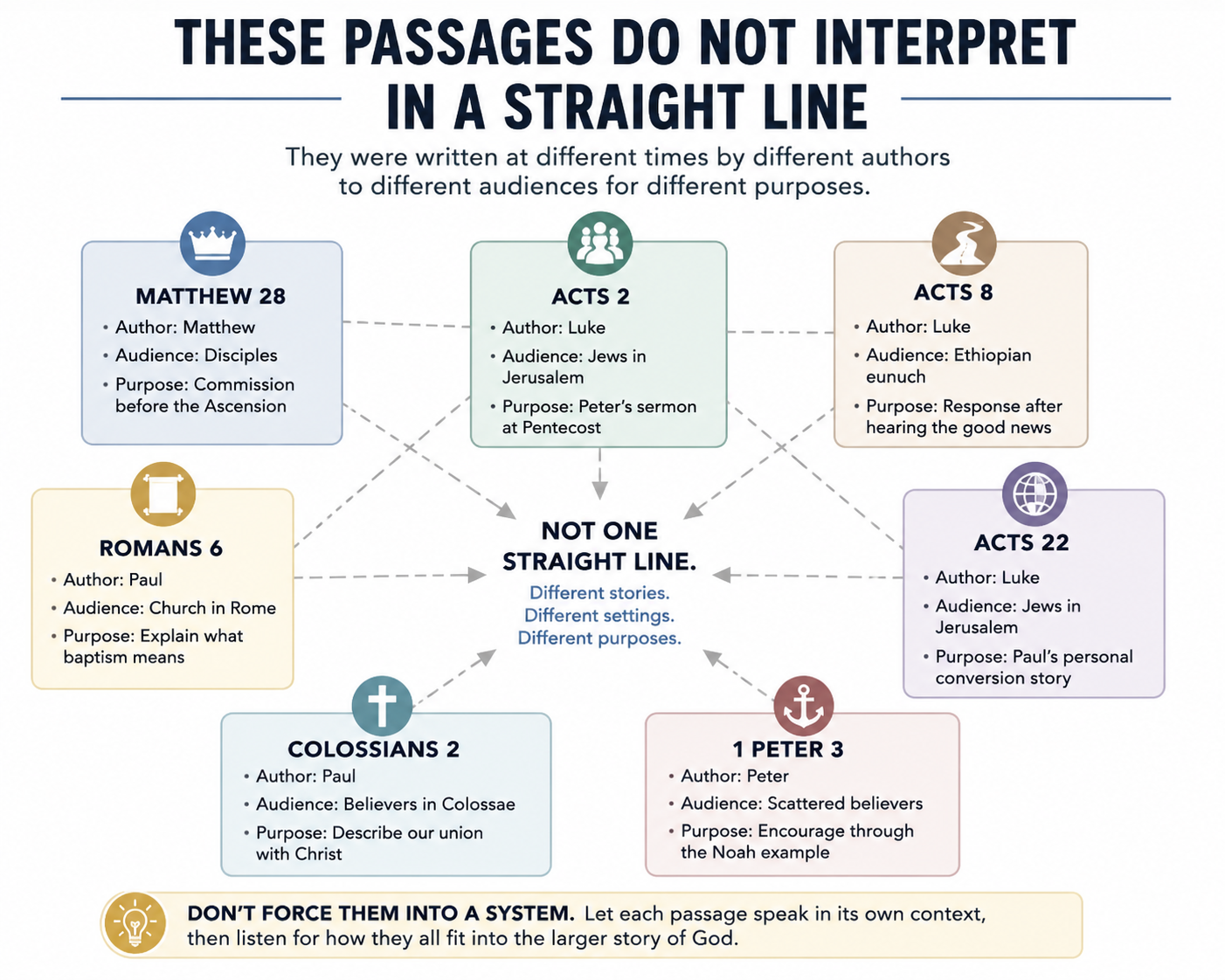
Dont Assume a Straight Line
More Patterns
- It may look like each scripture goes in the order your concordance listed it, but its important to see their place on the time line (master graphic at bottom)
- Do not force the scriptures into a system, different stories have different settings for different audiences
- Know who the author is and make an attempt to know their styles. For example John has a certain style, he is harder to understand because he loves to use words with different meanings and also speak with symbolic imagery as well as make weird references to time.
Each Pattern Contributes a Piece of Understanding
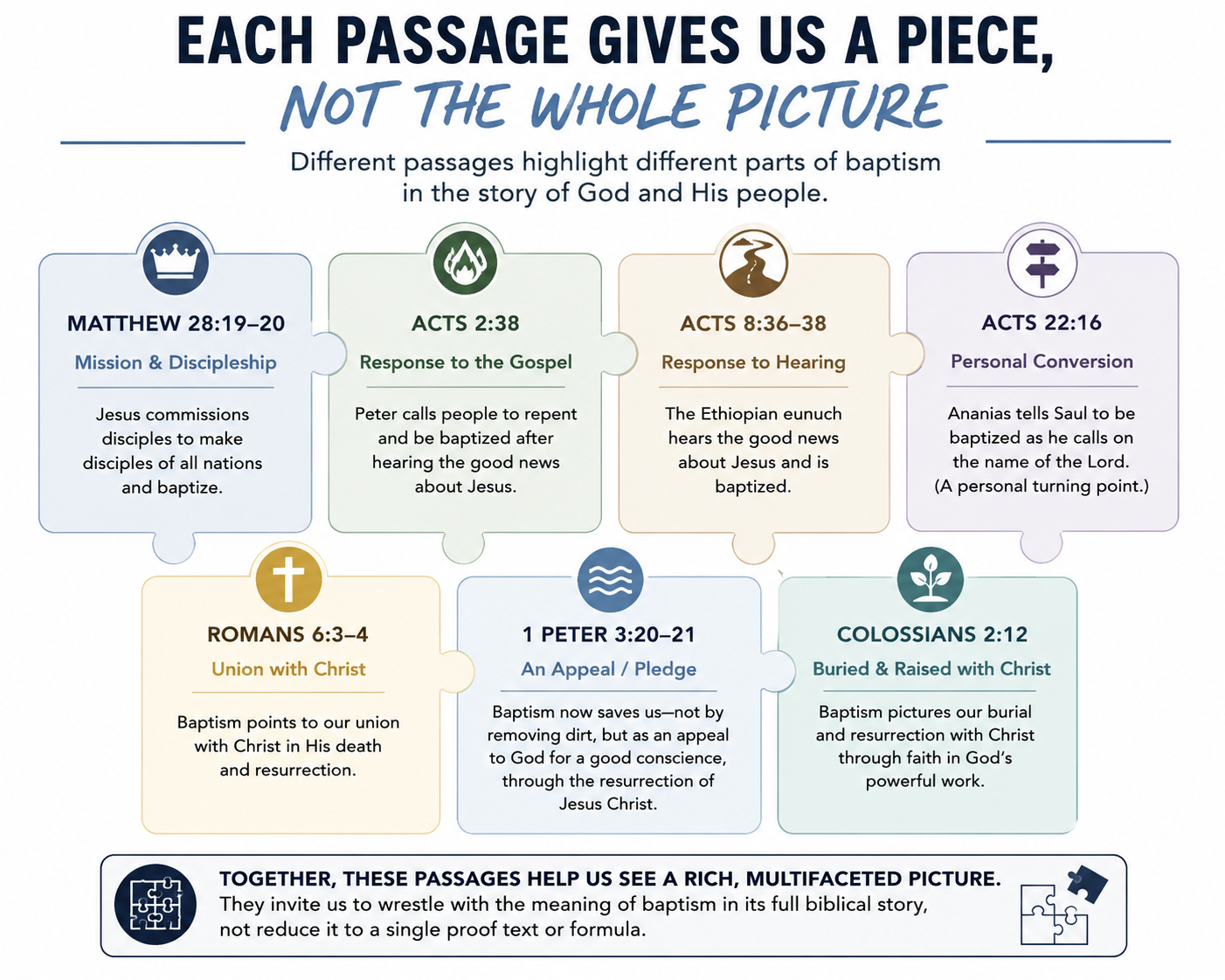
- Each Part builds a picture. Think of it as a puzzle
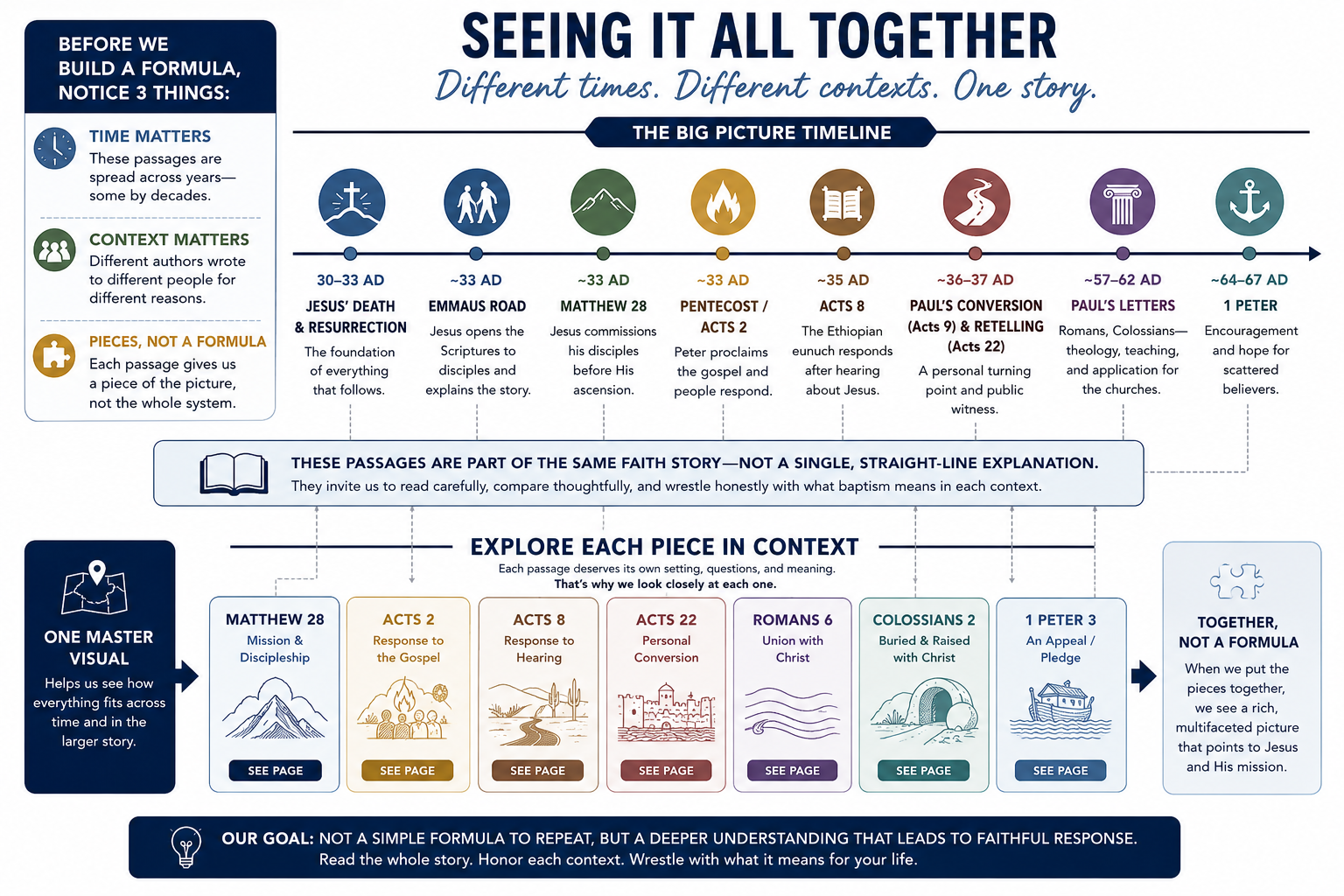
- This graphic has a lot to offer, as you go through the rest of these baptism questions you will see how this all comes together
The story begins
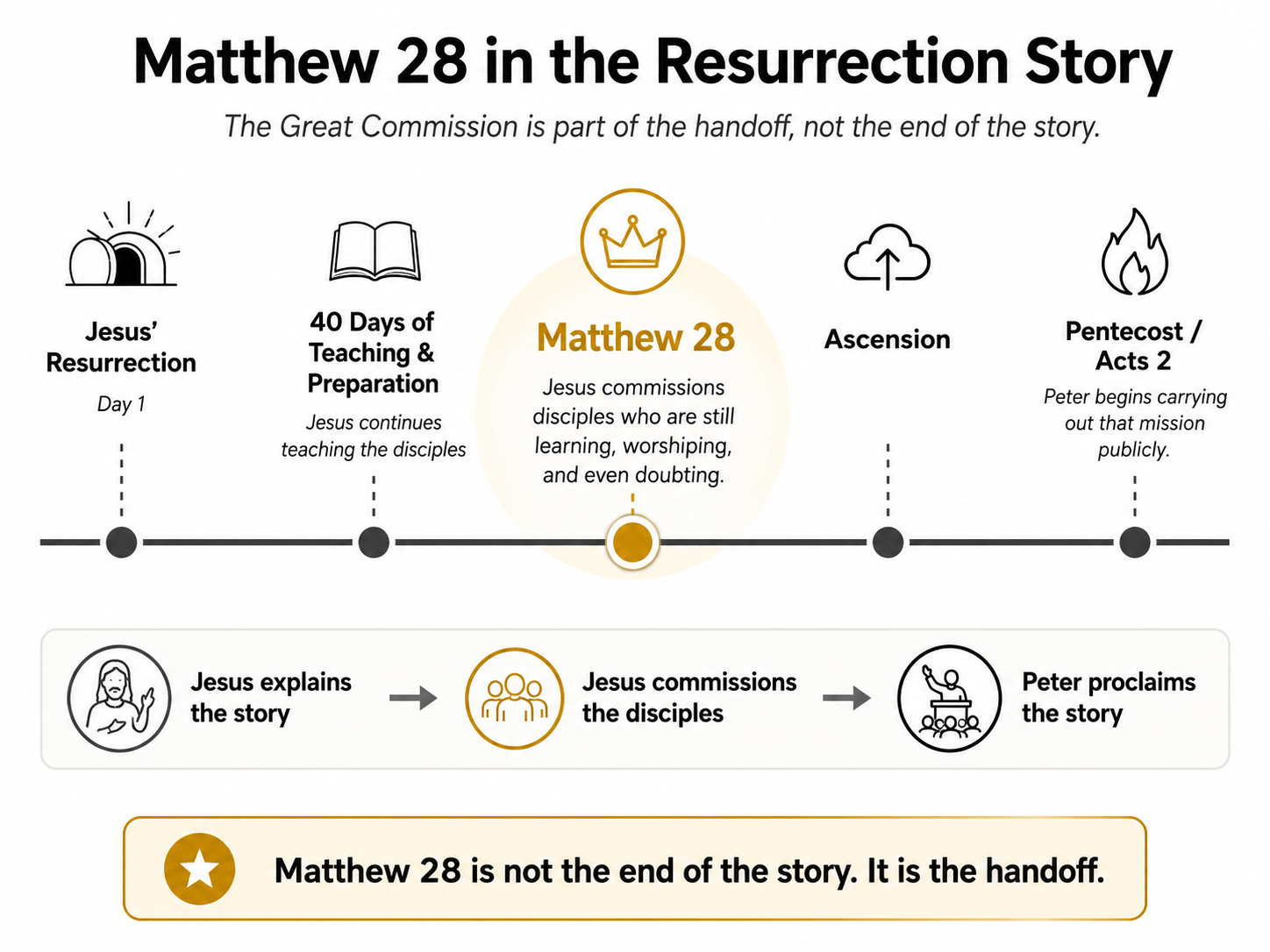
Before you get started:
- Lastly we are including this graphic because we seem to get pretty confused as to where this all starts and its important to recognize some steps along the way
- We love to quote Matthew 28 as our charge or instruction manual to getting out there and either making disciples, obeying God, or repenting and getting baptised. Put your familiarity aside for a moment and consider the fact that we probably do not understand this contextually. Lets just be honest ok? Traditionally most churches do not do a good job with discipleship because we treat the bible as a handbook of rules to be followed. We also do not understand what obeying really means either. So add in the baptism part and you have the perfect storm of confusion wrapped up with the certainty of what we have been told.
- Even the 12 disciples had a hard time figuring it out, and they were IN the story. Jesus had to spend an extra 40 days with them after he rose from the dead to get them ready. You would have thought 3 years would be enough, but us humans are not always ready.
- When Jesus does appear first to the disciples after resurrection, its on the road, and he starts off with a history lesson of the scriptures before revealing himself. When Peter address the crowd, a mere 50 days after the resurrection (40 days with Jesus plus 10 days waiting and prayer for the Spirit) he starts with the very same lesson, he gives a history lesson to the people who should have realized what the scriptures were saying in the first place
So now what?
Resist the urge to just skim this. If you really have questions, its a deep dive. You find lots of follow up material on the site regarding similar subjects. Remember this lesson really needs to be taught, it is not the best delivery method to just read this. Take your time. and go through all the questions in this question bank. Its called wrestling for a reason.
Listen to an AI-generated audio discussion of this question
This audio was generated from the material on this page using Google NotebookLM.