When Biblical Certainty Gets in the Way
A Different Kind of Bible Learning Experience
What Happens When the Answers We Trust Become the Questions We're No Longer Willing to Ask?
People come to Bible studies looking for understanding. They encounter teachers who provide answers. Over time, those answers can become settled conclusions. Eventually, questioning those conclusions may be interpreted as questioning Scripture itself.
But those are not necessarily the same thing.
There is a difference between questioning the authority of Scripture and questioning whether our understanding of Scripture is correct. Confusing the two can turn learning into agreement, discussion into instruction, and curiosity into something that needs to be corrected.
What if the greatest obstacle to deeper biblical understanding isn't a lack of answers, but our certainty that we already have them?
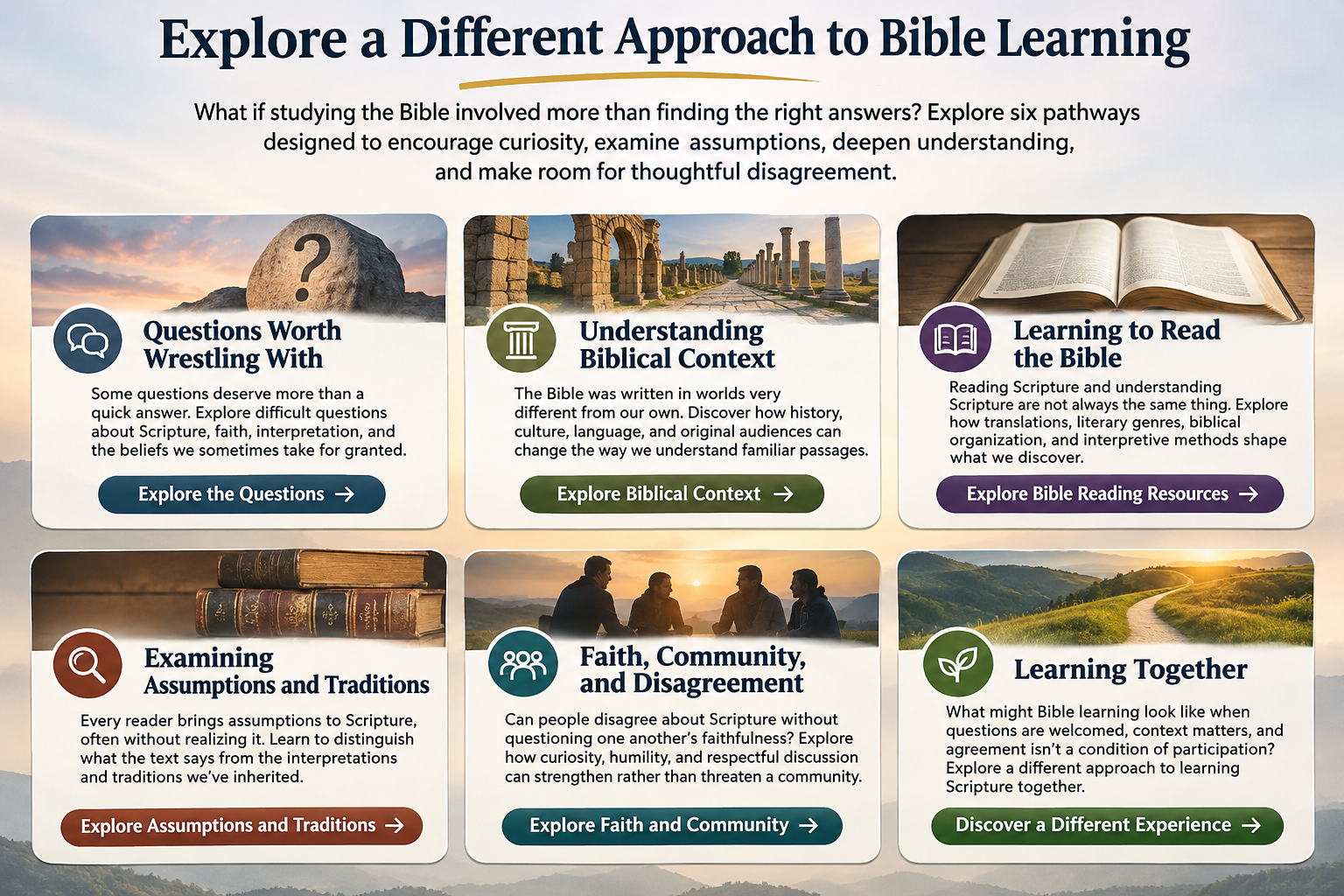
Questions Worth Wrestling With
What if some of the most important questions about Scripture are the ones we've stopped asking?
Biblical understanding doesn't always grow through finding another answer. Sometimes it begins by reconsidering a familiar one. Questions Worth Wrestling With explores difficult questions about faith, Scripture, interpretation, and tradition—not to manufacture doubt, but to encourage thoughtful examination.
With more than 100 questions to explore, this collection invites readers to look beyond familiar explanations, consider biblical context, and develop a deeper understanding of what they believe and why.
Explore Questions Worth Wrestling With →
Understanding Biblical Context
What if a familiar biblical passage means something different when we understand the world in which it was written?
The Bible was written across centuries, cultures, languages, and historical circumstances very different from our own. Yet we often approach its words through the assumptions and experiences of our modern world. Without understanding the original setting, we may confidently interpret a passage in ways its first audience would never have recognized.
Exploring biblical context doesn't require abandoning familiar interpretations. It means examining the historical, cultural, and literary evidence that helps us understand what the original authors were communicating. Sometimes that examination confirms what we've always believed. Other times, it challenges us to reconsider conclusions we once considered settled.
Explore Biblical History and Cultural Context →