Biblical Oppression: What It Is, How It Works, and Why We Often Ignore It

Biblical Oppression: What It Is, How It Works, and Why We Often Ignore It
Key Takeaways
-
Biblical oppression is the unjust use of power at the expense of others, and God consistently condemns it in God’s word.
-
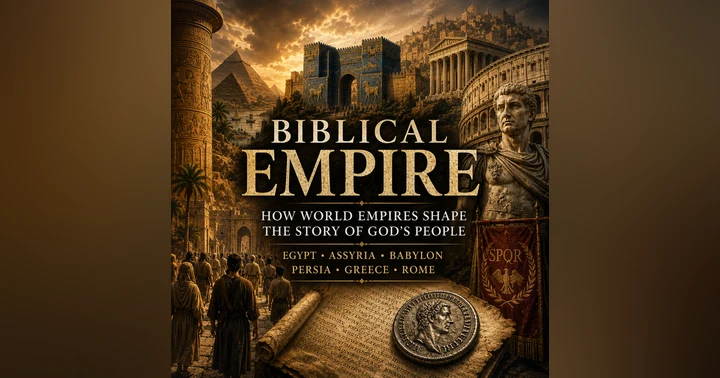
The Bible describes oppression socially, economically, politically, and spiritually-from Egypt and Babylon to Rome and the new testament church.
-
Spiritual oppression is real, including demonic influence and evil spirits, but Scripture links it to concrete harm in bodies, courts, wages, land, and public life.
-
Oppressive systems self-perpetuate: the powerful grow more powerful, which makes it easier for them to take even more from the weak.
-
We often gloss over biblical oppression because we individualize sin, normalize our own systems, and avoid texts that threaten our comfort.
Biblical oppression is not a side topic. It runs through Genesis, Exodus, the prophets, the Gospels, and Revelation. If we learn to see it clearly, we also learn how the lord calls his people to faith, repentance, prayer, justice, and deliverance.
What Is “Biblical Oppression”? A Clear Definition
Biblical oppression is the consistent biblical theme where people with power exploit others, and God opposes that abuse. Generic oppression can mean any heavy burden, but biblical oppression is more specific: it is the unjust, often systemic misuse of authority against God’s design for life, dignity, mercy, and justice.
Oppression manifests at both individual and societal levels, often recognized through acts of violence, coercion, and systemic injustice that benefit the powerful while harming the vulnerable. It includes social oppression such as slavery and caste-like exclusion, economic oppression such as unjust weights and predatory debt, political oppression such as tyranny and empire, and spiritual oppression through idols, lies, fear, satan, the devil, a demon, or larger demonic systems.
The Bible critiques power by warning that unchecked authority inherently leads to the abuse of the helpless. Reversing oppression is difficult because in an oppressive system, there is not much reason for the powerful people to change things; they are invested in maintaining their power. Most oppressors do not see themselves as oppressors, often justifying their actions with an “us vs. them” mentality, making it hard for the oppressed to convince them of their wrongdoing.
That is why Biblical oppression is never neutral. It is sin. It distorts creation, hardens the soul, and turns authority into an oppressive force. Understanding this definition is necessary before we apply passages about justice, mercy, Jesus Christ, and the Holy Spirit.

Oppression From the Beginning: Genesis to Early Israel
The Bible’s story of oppression begins in Genesis, not just in Exodus or the prophets. Genesis 1–2 presents human power positively: humanity is given dominion as caretakers, not exploiters. The ability to rule is meant to protect life, not destroy it.
Genesis 3 shows the fall twisting relationships. Fear, blame, domination, suffering, and death enter the world. Cain’s murder of Abel in Genesis 4 becomes the first concrete picture of power turned murderous. God’s question, “Where is your brother?” still challenges every person who benefits while another oppressed person is ignored.
The violence escalates through Lamech’s boasting and the corruption before the flood. After the flood, Genesis 9–11 introduces the seeds of empire. Nimrod, Babel, and the tower show humanity’s drive to consolidate power and make a name through domination. The Bible presents Babylon as the archetype of oppression, symbolizing humanity’s tendency to elevate themselves to godlike status through domination and coercion, beginning with the Tower of Babel in Genesis 11.
Genesis also gives personal case studies. The treatment of Hagar, an enslaved Egyptian woman, serves as a lesson on the intersectionality of race, class, and gender, urging modern institutions to protect vulnerable individuals from exploitation. Hagar is an oppressed woman, yet the lord sees her. Her story trains mine eyes and thine eyes to notice those powerful families and institutions would rather overlook.
God then calls Abraham around the early second millennium BC and warns that his descendants will be oppressed in a foreign land. Genesis 15:13 and Exodus 12:40 connect this promise to the later fact that the ancient Israelites were enslaved in Egypt for 400 years.
How the Bible Describes Oppression in Practice
Biblical writers name specific behaviors and systems as oppressive, not just vague “bad feelings.” The foundational story of the Old Testament is the Exodus, where the Israelites suffer under the bondage of the Egyptian Empire, illustrating how imperial systems of control crush human dignity for economic and national gain. In Exodus 1, Pharaoh uses forced labor, population control, and infanticide to secure national wealth.
The story of the Israelites in Egypt warns that societies are judged by how they treat vulnerable workers and minority groups, cautioning against the unchecked consolidation of power. Civil disobedience, exemplified by Shiphrah and Puah defying Pharaoh’s orders, emphasizes that reverence for human life and dignity must take precedence over allegiance to unjust authorities. In simple terms: thou shalt not obey a wicked command just because it comes from one official.
The Torah’s laws, given in the period traditionally associated with Israel’s formation, target oppression directly. The ancient Israelites believed that God provided laws in the Torah to prevent oppressive systems from taking root, emphasizing justice for the poor, widows, and foreigners, and instituting practices like debt cancellation and land restoration every fifty years. Leviticus 25 describes Jubilee as a reset of land and debt so that thy land does not become a permanent tool of exploitation.
Here are common biblical examples:
| Area | Biblical pattern | Example |
|---|---|---|
| Labor | Forced work and withheld wages | Egypt, hired workers |
| Courts | Bribes and false judgments | Amos 5:10–12 |
| Land | Seizing property from the weak | Micah 2:1–2 |
| Taxes | Crushing burdens | 1 Kings 12:4 |
| Worship | Idols demanding sacrifice | Baal, imperial cults |
The prophets define oppression as defrauding workers, cheating with scales, exploiting the poor man, and using law to protect the rich. Institutional abuse involves unjust laws or corrupt court systems that favor the rich and deprive the innocent of their rights. The quartet of the vulnerable includes the widow, the orphan, the poor, and the sojourner/stranger.
Older translations preserve memorable phrases: “surely oppression maketh a wise man mad,” and “a gift destroyeth the heart.” Ecclesiastes also speaks of “all the oppressions” done under the sun. Ezekiel condemns leaders who “exercised robbery,” while other passages call rulers to remove violence. When riches increase, Scripture warns us not to set light by justice. Search older concordances and you may even see summaries like “egyptians oppress,” “syria oppressed,” and “judged israel,” showing how often this pattern repeats.
Babylon, Empire, and the Pattern of Oppression
“Babylon” functions in Scripture as a symbol of recurring oppressive empires, not just a single ancient city. Historically, the Neo-Babylonian Empire, roughly 626–539 BC, destroyed Jerusalem in 586 BC. The Babylonian Empire is depicted in the Bible as a symbol of oppression, having sacked Jerusalem and destroyed the temple of God in 2 Kings 25.
Isaiah 13–14, Jeremiah 50–51, and Daniel 1–6 portray Babylon as arrogant, idolatrous, and humiliating to conquered peoples. It renames captives, extracts labor, and demands loyalty. In Revelation, written in the late first century AD, “Babylon” becomes a symbolic name for Rome and every later system that enriches itself through violence.
Revelation 18 is especially direct. Its list of luxury goods includes human beings, showing that oppression is not only about armies but also about trade, appetite, and wealth concentration. You can read the passage in Revelation 18.
This is the cycle: when one Babylon falls, another rises. The concept of oppression is characterized by a self-perpetuating cycle, where the powerful become increasingly entrenched in their positions, making it difficult to dismantle oppressive systems. That cycle will not fully break until christ reigns openly and finally.

Israel’s Calling and Israel’s Complicity
Israel is called to resist oppression but repeatedly becomes oppressive herself. God rescues slaves from Egypt around the 13th century BC to form a nation that knows why oppression is evil: “You shall not wrong a sojourner,” because Israel had been sojourners in Egypt.
The Law includes fair courts, honest weights, protection for the poor, interest-free loans to fellow Israelites, and periodic debt release in Deuteronomy 15 and Leviticus 25. But Israel’s monarchy, beginning with Saul around 1050 BC, quickly mirrors oppressive empires through conscription, taxation, and forced labor. Throughout Israel’s history, leaders such as King Saul committed acts of genocide against marginalized groups, illustrating internal oppression within the nation itself in 2 Samuel 21:2.
Throughout the Old Testament, the prophets warned Israel’s leaders against oppression, emphasizing that their failure to uphold justice would lead to their downfall, as seen in the narratives of kings like Saul and Solomon. Amos attacks those who trample the needy. Isaiah denounces rulers who make unjust laws. Ezekiel exposes princes who shed innocent blood.
Naboth’s Vineyard shows the danger clearly. A wicked king and queen manipulate courts to seize land from an ordinary citizen. The story of Naboth’s Vineyard illustrates the dangers of political corruption and eminent domain overreach, highlighting the importance of protecting private property and legal rights for ordinary citizens.
The Bible frequently condemns those who hoard wealth by crushing the poor, rebuking the wealthy and powerful for taking advantage of those who cannot defend themselves. God’s people are not automatically safe from becoming oppressors. They must continually submit to god’s word, prophetic correction, and the command to hear the cry of the weak.
Jesus Christ and the New Testament Confrontation With Oppression
Jesus lived under Roman imperial occupation in first-century Judea and Galilee. Heavy taxation, military rule, and elite collaboration shaped daily life. Into that world, jesus announces “good news to the poor” and “freedom for the oppressed” by quoting Isaiah 61 in Luke 4:18–19.
Throughout the Gospels, Jesus challenges the social, religious, and economic systems that oppress women, the sick, and social outcasts, promoting radical inclusion and equal dignity for all people. He touches lepers, honors women, welcomes children, eats with sinners, and restores those treated as unclean. An oppressed woman is not invisible to him.
Jesus also refuses the devil’s offer of oppressive world power in Matthew 4. Jesus warned against leaders who love status while devouring widows’ houses. He overturns temple tables as a sign against economic exploitation wrapped in religion. His crucifixion exposes an alliance of political, religious, and spiritual powers.
The new testament presents his death and resurrection as the defeat of hostile rulers and authorities. Colossians 2:15 says christ disarmed them. The early Christians believed that Jesus’ resurrection brought hope that oppression could be undone, anticipating a future where the kingdom of God would be fully established on earth, free from suffering and pain.
Jesus taught his followers to create oppression-free zones by caring for the poor and downtrodden, emphasizing that their treatment of the least among them would define their faith. The oppressed were encouraged to be patient and await a day of justice, while the oppressors were called to divest themselves of power and privilege to build a new kingdom based on love and compassion.
The Holy Spirit, Spiritual Oppression, and Inner Liberation
Spiritual oppression includes demonic attack and the inner bondage produced by sin, lies, fear, shame, and despair. The spirit does not treat those wounds as imaginary. The exciting news of the gospel is that jesus christ gives his people the indwelling holy spirit.
According to mainstream biblical teaching, a believer cannot be demon-possessed in the sense of ownership, because god anointed and sealed his people by the holy spirit. Yet a believer can be harassed, tempted, accused, and discouraged by evil spirits. Ephesians 6 says the enemy is not merely flesh and blood, and 1 Peter warns that satan prowls like a roaring lion.
Spiritual oppression often accompanies physical or social oppression. An abused worker may internalize the lie that nothing can change. A trafficked person may live under terror. A community may become thought captive to the idea that “this is just how the world works.”
The holy spirit is comforter and advocate. He reminds believers of the word, gives knowledge and courage, exposes evil, and strengthens prayer. Ordinary disciplines matter: pray, confess sin, meditate on Scripture, listen in community, and seek deliverance where bondage is deep. These practices help break the fear that oppressive systems use to control people today.
Why We Gloss Over Biblical Oppression Without Thinking
Many modern Bible readers skip or soften passages about oppression, especially when they challenge our own comfort. It is easier to make every text about private morality than to ask who has power, who is harmed, and who benefits.
Individualism is one major reason. We reduce sin to personal failings and ignore structural injustices that the bible repeatedly condemns. But biblical oppression is not only a cruel person making a bad choice; it can be a law, market, court, church culture, or nation that rewards exploitation.
Cultural blind spots also matter. People inside powerful cultures tend to see their systems as normal, not oppressive. Egypt, Babylon, Rome, and Israel all justified themselves. We do the same when our lifestyle depends on cheap labor, hidden suffering, or legal arrangements we never question.
Selective reading of God’s word is another problem. We memorize verses about personal salvation but avoid Amos, Micah, James, and Revelation because they confront money, power, and the poor. Some theological traditions also over-spiritualize poverty, treating every “poor” text as only about the soul.
Finally, there is identity threat. If I discover that my comfort is connected to another person’s suffering, I may defend myself before I repent. That is why humility is essential. The wise man does not only critique his enemies; he lets Scripture critique him.
Learning to See: How God’s Word Trains Us to Recognize Oppression Today
Biblical texts train our moral vision so we can see oppression in our own time, not only in ancient stories. God is identified in the Bible as a “stronghold for the oppressed,” and Scripture declares that “the Lord works righteousness and justice for all who are oppressed.”
Start by reading whole books: Exodus, Amos, Luke, James, and Revelation. Then ask better questions:
-
Who has power?
-
Who lacks it?
-
Who benefits?
-
Who is silenced?
-
Who is sacrificed for another group’s comfort?
The biblical mandate to “speak up for those who cannot speak for themselves” serves as a call to challenge modern structural injustices, such as systemic racism, economic inequality, and human trafficking. Modern examples include migrant labor exploitation, predatory lending, racialized violence, wage theft, and systems that keep some groups perpetually disadvantaged.
The lord heard Israel’s cry in Egypt, and the lord still sees. Let Scripture challenge your own assumptions, not only your opponents’ systems.

Following Jesus in an Unjust World: Practical Responses
Christians are called not only to understand biblical oppression but to act against it in jesus Christ’s name. That begins with self-examination. Ask how your spending, voting, employment, investments, church life, and habits may benefit from or challenge oppressive patterns.
Here are practical next steps:
-
Support fair wages and ethical labor.
-
Advocate for just legal processes.
-
Serve marginalized neighbors without turning them into projects.
-
Partner with churches that center widows, orphans, the poor, and strangers.
-
Fast and pray specifically about oppression.
-
Invite the holy spirit to expose hidden prejudice, apathy, and fear.
-
Speak when silence would protect abuse.
The early church modeled this through shared possessions in Acts 2 and Acts 4, care for widows, and courage before unjust authorities. Acts 5:29 summarizes the principle: “We must obey God rather than men.”
Resisting oppression is not a one-time heroic act. It is an ongoing, imperfect journey of obedience empowered by grace. We fail, repent, learn, and continue.

FAQ: Common Questions About Biblical Oppression
Is oppression always about governments and empires, or can it be personal?
Oppression appears at multiple levels in Scripture: imperial systems like Egypt, Babylon, and Rome; community systems like corrupt elders and judges; household systems like abusive masters; and personal relationships where a stronger person exploits a weaker one.
Do not limit oppression to headlines. It can also appear in families, churches, workplaces, and friendships when power is used to control, silence, or exploit. This is highly sensitive since most people would never admit that this is going on.
How is biblical oppression different from persecution?
Persecution is suffering specifically because of faithfulness to God or allegiance to Jesus Christ, as in Acts 8 or 1 Peter 4. Oppression is broader. It includes any unjust crushing of people, whether they are believers or not.
Christians can experience both at once. But the Bible also cares deeply about oppression suffered by people outside Israel or the church.
Can a follower of Jesus participate in oppression without realizing it?
Yes. Scripture repeatedly shows God’s own people participating in oppressive systems while still performing religious rituals. Isaiah 1 and Amos 5 show God rejecting worship when people tolerate injustice.
The right response is humble self-examination, listening to marginalized voices, and allowing the holy spirit and god’s word to reveal hidden complicity. Hower keep in mind the examples in the Bible are part of God's story, not yours. Modern oppression happens all the time, we just have to learn to recognize it from the framework that the Bible gives us and let it shape your lens.
What role do prayer and the Holy Spirit play in resisting oppression?
Prayer is both a cry for God’s help and a way the Holy Spirit reshapes our desires and courage. The holy spirit exposes lies, comforts the crushed, and gives boldness to speak truthfully before unjust powers.
Prayer should not replace action. It should form the kind of people who act with courage, wisdom, and love.
Does focusing on biblical oppression distract from preaching the gospel?
No. The new testament presents the gospel as the announcement that Jesus Christ is Lord, which has personal, social, and cosmic implications.
Forgiveness through the cross is central. But turning from sin also includes turning from exploitation, refusing unjust power, and embodying the mercy and justice of God’s kingdom.

The Problem With Certainty