Hellenism: From Ancient Greek Culture to New Testament World and Modern Society
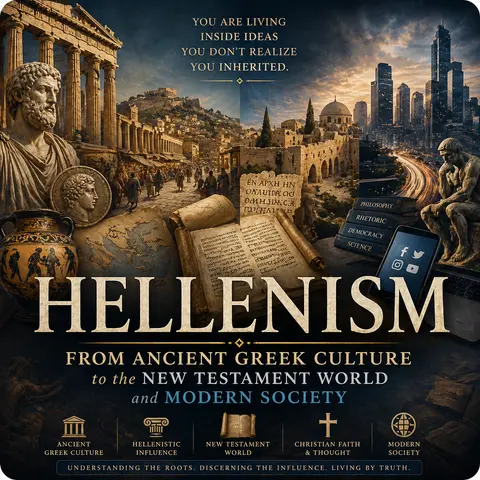
Hellenism: From Ancient Greek Culture to New Testament World and Modern Society
When you step into a hospital, watch a play, or participate in a democratic election, you’re engaging with systems that trace their roots back over two thousand years to the ancient Greeks. Hellenism, the spread of Greek language, culture, and ideas across the Mediterranean world didn’t just shape antiquity. It molded the very world in which Jesus walked, the apostles preached, and the New Testament was written. Understanding this cultural phenomenon unlocks deeper insights into Scripture and reveals why so much of modern life still carries a distinctly Greek accent.
Key Overviews
-
Hellenism refers to the widespread dissemination of Greek language, philosophy, and social structures from Alexander the Great’s conquests (4th century BC) through the Roman Empire, not simply a modern pagan religion.
-
The New Testament emerged in a thoroughly Hellenized world: Koine Greek was the common tongue, cities featured Greek-style institutions, and philosophical concepts like “logos” and “ekklesia” shaped early Christian vocabulary.
-
Modern institutions including health care, entertainment venues, democratic politics, and liberal arts education carry clear Hellenistic roots woven into Western and global culture.
-
Historical Hellenism (a cultural-historical process) differs from modern Hellenic religious movements that seek to revive worship of the olympian gods.
-
This article traces Hellenism from its Greek and Roman origins through the New Testament era and into contemporary society, providing accessible context for both Scripture readers and anyone curious about Western civilization’s foundations.
What Is Hellenism? Core Definition and Historical Scope
Hellenism describes the spread and blending of Greek culture, language, and ideas across the Eastern Mediterranean and Near East, beginning around 323 BC with the death of Alexander the Great and extending into the Roman period. This wasn’t merely military conquest it was a cultural transformation that touched everything from how people spoke and traded to how they worshipped and thought about the world.
The term comes from the ancient Greek word “Hellēnismos,” which initially meant speaking Greek or living in a Greek way. Over centuries, its meaning expanded to encompass this broader cultural phenomenon. Today, “Hellenism” carries two distinct uses:
-
Cultural-historical Hellenism: The spread of Greek institutions, language (Koine Greek), philosophy, and civic life throughout the ancient world
-
Religious Hellenism: Modern reconstructed practices of Greek polytheism, sometimes called Hellenic paganism or Hellenismos
This article focuses primarily on the historical-cultural dimension, how it shaped the early church and continues influencing modern society while also addressing modern religious expressions in a dedicated section.
Origins of Hellenism in the Greek and Early Roman World
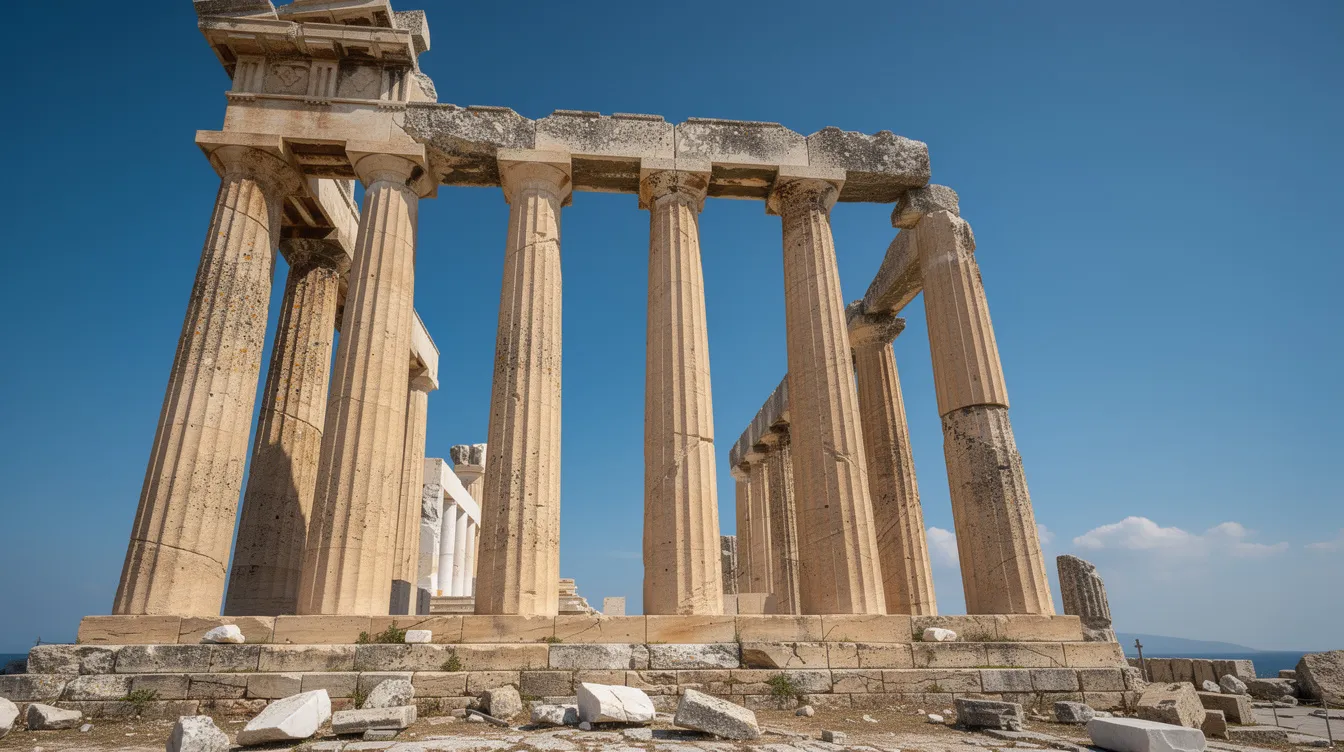
Hellenism grew from the rich soil of classical Greek culture that flourished in 5th and 4th century BC city-states like Athens and Sparta. This was the world of Plato and Aristotle, of democratic assemblies and dramatic festivals, of philosophical inquiry and athletic competition. But this culture remained largely contained within the Greek world until one young Macedonian king changed everything.
Alexander the Great launched his campaigns in 334 BC, and within a decade he had conquered territories stretching from Macedonia through Asia Minor, Egypt, Mesopotamia, Persia, and as far as the Indus Valley. He founded over 70 cities named Alexandria, most famously Alexandria in Egypt (331 BC), which became one of the ancient world’s greatest centers of learning.
Hellenism represented a cultural fusion where Greek traditions mingled with Eastern ones, creating a hybrid culture. When Alexander died in Babylon in 323 BC without a clear heir, his generals divided the empire into successor kingdoms:
| Kingdom | Rulers | Territory |
|---|---|---|
| Ptolemaic | Ptolemies | Egypt, based in Alexandria |
| Seleucid | Seleucids | Syria, Mesopotamia, Persia |
| Antigonid | Antigonids | Macedonia and Greece |
Each kingdom promoted Greek language, education through gymnasia (buildings or rooms designed for physical exercise, training, and sports), and civic institutions while incorporating local traditions. The Ptolemies, for example, adopted pharaonic imagery and promoted the cult of Serapis, cultural syncretism led to the emergence of new deities, such as Serapis, which combined attributes of Greek and Egyptian gods.
Koine Greek became the lingua franca for business, diplomacy, and science across the Mediterranean and Middle East. This common dialect would later become the language of the entire New Testament.
The era produced remarkable intellectual achievements. Scientific advancement in the Hellenistic period included Eratosthenes accurately calculating the Earth’s circumference using geometry. The era of Hellenism produced significant contributions to mathematics and physics, including the work of Euclid and Archimedes.
Urbanization during Hellenism led to the establishment of cosmopolitan cities such as Alexandria, which became hubs for trade and education. The Library of Alexandria became the largest library in the ancient world, establishing foundations for library science and textual criticism. Standardized coins and trade routes connected the Mediterranean world to India, facilitating the movement of various goods, and the unification of diverse lands under Hellenism facilitated massive trade expansion, creating the first global economy.
When Rome conquered Greece in the 2nd century BC, it didn’t suppress Hellenism, it absorbed it. Roman elites hired Greek tutors, studied Greek philosophy, and adopted Greek artistic styles. Hellenistic art evolved to focus on realism and emotional depth, depicting real-world subjects and individual experiences, influencing Roman sculpture and architecture. This Greco-Roman synthesis would carry Hellenistic ideas forward into the world of the New Testament and beyond.
Hellenism and the Greek Community: Language, Education, and Daily Life
Greek-speaking communities, both in mainland Greece and in colonies from Sicily to Asia Minor and Egypt, served as the primary carriers of Hellenism. These communities established distinctive institutions that shaped daily life and would eventually influence global culture.
Koine Greek unified the diverse populations of the Hellenistic world. Unlike the literary Attic Greek of classical Athens, Koine was a simplified common dialect suited for commerce, administration, and everyday communication. This was the language merchants used in Egyptian markets, diplomats employed in Syrian courts, and crucially, the language in which the New Testament would be written.
The gymnasium stood at the heart of Hellenistic education and social life. Here, freeborn young men trained nude (the word comes from “gymnos,” meaning naked) in athletics while also studying rhetoric, philosophy, and literature. This institution shaped the Hellenistic ideal of the educated citizen, someone cultivated in both body and mind.
Hellenism fostered major philosophical schools like Stoicism and Epicureanism, which prioritized reason, ethics, and individual purpose. These schools trained generations of thinkers who would influence everything from Roman governance to early Christian theology.
Typical features of Hellenistic cities included:
-
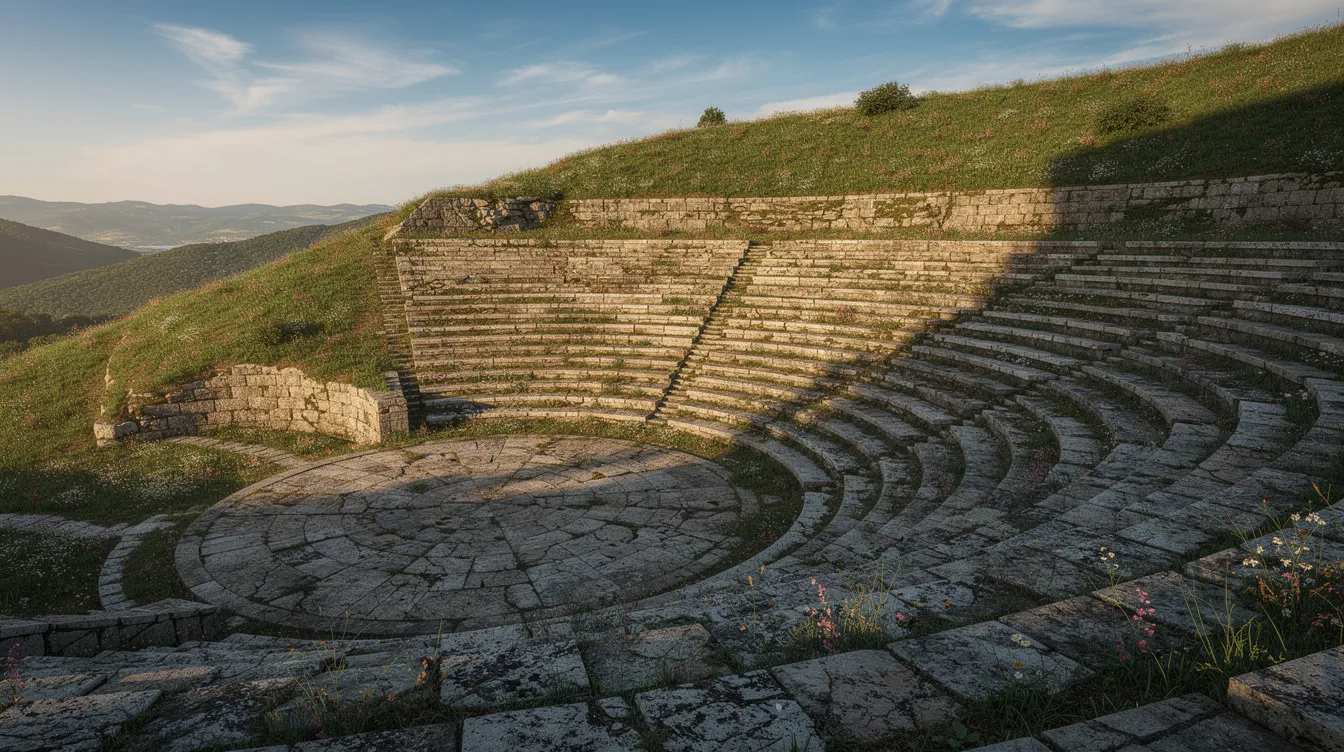
Theaters for drama, poetry competitions, and civic gatherings
-
Stoas (covered colonnades) for public debate, commerce, and shelter
-
Temples dedicated to both traditional Greek deities and local gods
-
Asclepieia (healing sanctuaries) combining religious practice with early forms of clinical observation
Many Jewish, Egyptian, and Syrian cities developed Greek-style councils, assemblies, and civic offices. Local elites took pride in being recognized as “philhellenes” (lovers of Greek culture), demonstrating how deeply Hellenism penetrated non-Greek populations across the ancient world.
Hellenism, Judaism, and the New Testament World
The entire world in which Jesus lived and the apostles preached was thoroughly Hellenized. Even in regions that remained politically under Rome and religiously Jewish, Greek language and culture permeated daily life. This created tension that we do not always pick up on.
Judea experienced successive waves of Hellenization under the Ptolemies (301-198 BC) and then the Seleucids (198-142 BC). Greek cities rose throughout the region, complete with theaters, hippodromes, and gymnasia. Caesarea Maritima, built by Herod the Great, featured a massive harbor, a theater seating 4,000, and all the amenities of a thoroughly Hellenistic city.
Jewish responses to Hellenism varied dramatically:
Positive engagement: Jewish thinkers in Alexandria, most notably Philo (20 BC-50 AD), used Greek philosophical concepts to interpret Hebrew Scripture. Hellenism significantly influenced early Christianity through Greek concepts like the Logos and the translation of Hebrew scriptures into the Greek Septuagint, produced in Alexandria roughly 3rd-2nd century BC, this Greek Old Testament became the primary Scripture for many early Christians.
Resistance: The Maccabean revolt (167-160 BC) erupted when Antiochus IV Epiphanes attempted to force Hellenization by desecrating the Jerusalem Temple and requiring participation in Greek religious practices.
For Jesus and the apostles, the Hellenistic context was inescapable. Galilee was surrounded by Hellenistic cities like Sepphoris and Tiberias, just miles from Nazareth. Paul, a Hellenized Jew from Tarsus, traveled through Greek-speaking urban centers including Philippi, Thessalonica, Corinth, Athens, and Ephesus, using Greek rhetoric to communicate the gospel.
Greek concepts permeated New Testament vocabulary:
-
Logos (word/reason): Used in John’s Gospel, resonating with both Jewish wisdom traditions and Greek philosophical ideas
-
Sōtēria (salvation): A term with rich associations in the Hellenistic world
-
Charis (grace): Connected to patronage systems throughout Greek society
-
Ekklesia (assembly/church): Originally a civic term for political gatherings
The influence of Hellenism reminds us that the New Testament was not written in a cultural vacuum. Its authors communicated with real communities whose language, assumptions, and everyday experiences were shaped by the world around them. When we overlook those circumstances, we risk interpreting their words through assumptions the original audience may never have shared. This raises an important question: Who was each book of the Bible originally written to, and why does that matter? Understanding the intended audience is an essential part of understanding the message.
Hellenistic Culture in Specific New Testament Texts
Acts 17:16-34 provides a vivid example of Christian engagement with Hellenistic culture. Paul arrives in Athens, debates in the agora (marketplace), and addresses philosophers on the Areopagus. He references an altar “To an Unknown God” and quotes Greek poets—likely Aratus or Cleanthes—to connect with his audience: “For in him we live and move and have our being.”
The Gospel of John opens with “In the beginning was the Logos”, language that would resonate with both Jewish wisdom traditions and Greek philosophical ideas about rational order and divine reason. This wasn’t accidental; John wrote for communities embedded in a Greek-speaking, philosophically aware culture.
Early Christian communities in Corinth, Ephesus, and Thessalonica were thoroughly Hellenistic cities. Paul’s letters address issues arising directly from this context: factions mirroring philosophical schools, debates about meat sacrificed to other gods, and athletic metaphors drawn from gymnasia (“run the race” in 1 Corinthians 9:24-27).
The New Testament doesn’t reject all aspects of Hellenism. Instead, it uses Hellenistic language, literary forms, and philosophical terms to communicate the gospel to a Greek-speaking world.
Hellenism’s Legacy in Modern Society: Health Care, Entertainment, and Public Life
Many aspects of modern life, especially in the West but increasingly worldwide, stand on Hellenistic foundations, often mediated through the Roman Empire and later European history. This is viewed as totally normal in those cultures.
Health Care
Ancient healing sanctuaries dedicated to Asclepius, particularly at Epidauros, combined religious rituals with early forms of clinical observation. Patients sought cures, underwent treatments, and sometimes experienced dream therapy in these sacred spaces. The Hippocratic tradition (5th-4th century BC), with its emphasis on rational observation and the famous oath to “do no harm,” established ethical principles that still guide medical practice today. Modern hospitals and medical ethics carry this Hellenistic DNA.
Entertainment
Greek theaters hosted dramatic festivals where tragedies by Sophocles and comedies by Aristophanes entertained thousands. The word “theater” itself comes from Greek, as do genres like tragedy and comedy. Hellenistic amphitheaters like Pergamon’s influenced Roman venues and eventually modern stadiums hosting tens of thousands of spectators. When you watch a film or attend a sporting event, you participate in traditions traceable to ancient Greece.
Civic and Political Life
Greek ideas about citizenship, city councils, law courts, and public debate influenced later democratic and republican systems. Athenian democracy’s direct participation was reimagined in Enlightenment models that shaped modern governments. The U.S. Senate’s traditions of debate echo practices in ancient stoas where citizens argued public matters.
Education
The Hellenistic ideal of paideia, holistic education in character, arts, rhetoric, and physical training—underlies today’s liberal arts education. University models, from Oxford’s tutorial system to American colleges emphasizing critical thinking and broad learning, trace roots to Hellenistic institutions like Alexandria’s Mouseion.
Science and Philosophy
Hellenistic thinkers advanced mathematics, astronomy, and natural philosophy, laying groundwork for scientific method and rational inquiry central to modern innovation. These modern innovations in research and discovery continue traditions established in places like Alexandria over two millennia ago.
Hellenism in Contemporary Cultural Imagination
Modern literature, film, and video games continually revisit Greek myths and Hellenistic settings. Hollywood adaptations of Homer’s Iliad, superhero films referencing Zeus and Ares, and video games set in ancient Greece all reflect this ongoing fascination.
Many people encounter Hellenism through popular culture without realizing its historical depth—Olympic Games ceremonies deliberately echo ancient rituals, while over 20 million tourists visit the Acropolis annually. This enduring appeal reflects lasting Hellenistic ideas about heroism, beauty, tragedy, and human excellence (arete) that continue shaping how we understand what it means to live well.
Hellenism as Religion: Ancient Practices and Modern Revivals
While this article focuses primarily on cultural and historical Hellenism, the term also refers to religious practice centered on the ancient Greek gods, both historically and in modern revival movements.
Ancient Religious Practices
Ancient Greek religion in the Hellenistic and Roman periods was polytheistic, involving public sacrifices, festivals, and household worship focused on deities like Zeus, Athena, Apollo, and Dionysus. The main Gods of Hellenism are the Dodekatheon, which includes the twelve Olympian Gods such as Zeus, Hera, Poseidon, and Athena.
Zeus is the chief and king of the Gods, known for wielding the thunderbolt and for overthrowing his father Cronos to become ruler of the gods. Hades is the God of the underworld, who rules over the realm of the dead, while Hestia is the Goddess of the Hearth, honored in homes and given libations before meals.
Religious practice involved:
-
Public worship: Festivals, processions, and sacrifices at temples and pan-Hellenic sanctuaries like Delphi
-
Household worship: Daily rituals honoring household gods and ancestors
-
Mystery cults: Initiatory religions like the Eleusinian mysteries promising spiritual transformation
Hellenism, as a term referring to paganism, was notably used by Emperor Julian the Philosopher in the 4th century AD, marking a significant historical reference to the ancient Greek religion. However, by the 4th-6th centuries AD, with the Christianization of the Roman Empire, especially after Constantine’s Edict of Milan (313 AD) and Theodosius I’s anti-pagan laws in the late 4th century—public Greek polytheism declined and was eventually suppressed.

Modern Hellenic Religious Movements
The revival of Hellenic religious identity is part of a broader social movement aimed at re-Hellenizing Greek identity, with roots tracing back to the 15th century philosopher Georgios Gemistus Plethon, who sought to reconnect with ancient traditions. Modern Hellenism has evolved through various historical phases, including the 18th century when individuals began to adopt elements of ancient Greek religion, leading to the formation of neopagan groups in the 20th century that incorporated aspects of ancient Greek spirituality.
Today, small but active communities in Greece (the Supreme Council of Ethnikoi Hellenes, founded 1997), the United States, Brazil, and elsewhere seek to revive or reconstruct ancient religious practices under names like Hellenismos, Hellenic polytheism, or Dodekatheism.
Hellenismos is a diverse religious path that emphasizes honoring the Gods in a manner that is as close as possible to ancient Greek practices, with no formal doctrine regarding the right way to serve a particular God. Hellenismos is closely linked to philosophy, with ancient Greek philosophers such as Plato, Socrates, and Aristotle influencing the ways in which the Greeks viewed their world and the divine.
Key philosophical concepts in Hellenism include Eusebeia (piety), Arete (virtue), and Xenia (hospitality), which are rooted in ancient Greek values and guide the conduct of practitioners. The philosophy of Hellenism emphasizes the importance of reciprocity in relationships with the gods, where offerings are seen as a way to acknowledge the gods as part of the community rather than as mere transactions.
In Hellenism, offerings are made to the Gods as a sign of reciprocity, recognizing their role in the community and acknowledging that they deserve respect and gifts in return for their blessings. Offerings and libations are considered sacred integral acts within Hellenic worship, including sacrifices, votive offerings, and libations.
Worship generally takes the form of prayer, offerings, and setting up altars, which serve as the sacred place and focal point of worship to one or more deities. Hellenic practices often include the construction of altars, which serve as sacred spaces for worship where offerings and prayers are made to the Gods.
Hellenic festivals, which are celebrated throughout the year, typically commemorate events in Greek history and honor deities, incorporating religious themes, arts, sacrifices, and offerings. Modern practitioners use academic study—myths, inscriptions, archaeological evidence—to shape rituals and theology, often blending historical fidelity with contemporary values such as vegetarian offerings.
These modern religious expressions represent one strand in the broader story of Hellenism’s legacy, distinct from the general cultural Hellenization that shaped the New Testament and modern institutions.
Christian Responses to Hellenism Then and Now
Early church fathers engaged Greek philosophy critically. Justin Martyr (c. 150 AD) saw Socrates as a precursor to Christian truth through what he called “logos spermatikos” (seminal reason). Clement of Alexandria (c. 200 AD) integrated Platonic philosophy into Christian theology. Augustine (c. 400 AD) credited Cicero’s Hortensius with awakening his philosophical interests, even while ultimately rejecting polytheistic worship.
The New Testament itself reflects both tension and dialogue with Hellenistic values. It affirms virtues like self control and wisdom while challenging idolatry, sexual immorality, and status-seeking common in Greco-Roman culture. Paul’s critique of worldly “wisdom” in 1 Corinthians 1 exists alongside his sophisticated use of Greek rhetoric throughout his letters.
Fourth-century ecumenical councils used Greek philosophical concepts, terms like “homoousios” (same substance) from Aristotelian categories, to articulate orthodox doctrine about Christ’s nature. Today, many Christian theologians recognize both the dangers and gifts of Hellenism: its role in shaping doctrinal language while also presenting competing worldviews that the church has always needed to engage critically.
How Understanding Hellenism Helps Us Read the New Testament and Our World
Understanding Hellenism is crucial for seeing the New Testament not as an isolated religious text but as a collection of writings fully embedded in a Greek-speaking, Roman-ruled, culturally mixed world. This context illuminates countless passages: references to synagogues in Greek cities, debates in marketplaces, legal language in Paul’s letters, and metaphors drawn from athletics, theater, and politics.
The same Hellenistic heritage shapes our assumptions about reason, debate, education, and civic life today—whether or not we’re conscious of it. When we value critical thinking, participate in democratic processes, attend theatrical performances, or seek medical care, we engage with systems that carry Hellenistic DNA.
Think of Hellenism as a bridge: connecting ancient Greece, the Roman Empire, early Christianity, and our modern institutions. Schools, hospitals, courts, and entertainment industries all bear marks of this ancient cultural force. Understanding Hellenism allows us to appreciate both the richness of the early Christian message, communicated in Greek to a philosophically sophisticated audience and the complexity of our own society, which still lives in the long shadow of Greek and Hellenistic ideas.
Whether you’re studying Scripture, visiting a museum, or simply wondering why we value the things we do, Hellenism offers essential context for understanding both where we’ve been and who we are.
Frequently Asked Questions (FAQ)
Is Hellenism the same as Greek mythology?
Greek mythology is a body of stories about gods, heroes, and cosmic origins, while Hellenism is a broader term encompassing the spread of Greek culture, language, philosophy, and ways of life—including but not limited to religious myths. You can study the homeric epics and Greek mythology as literature or art without practicing any form of Hellenic religion. Hellenism in history also involves politics, science, education, and everyday customs far beyond mythological narratives.
Did Jesus and the apostles speak Greek?
Jesus likely spoke Aramaic as his primary language, with possible knowledge of Hebrew and some Greek, especially when interacting near major Hellenistic cities or with non-Jewish people like the Syrophoenician woman (Mark 7:24-30). The apostles, particularly Paul, clearly used Greek extensively. The entire New Testament was written in Koine Greek, and Paul’s missionary journeys targeted Greek-speaking cities across the Eastern Mediterranean. This linguistic choice allowed the Christian message to spread rapidly across the Hellenistic and Roman world.
How did Hellenism influence early Christian doctrines?
While Christian beliefs are rooted in Jewish Scripture and the experience of Jesus, the language used to explain those beliefs often drew on Greek philosophical terms. Fourth-century church councils at Nicaea (325 AD) and Chalcedon (451 AD) used concepts like “ousia” (essence) and “hypostasis” (person) to articulate orthodox doctrine about Christ and the Trinity. This doesn’t mean Christianity is simply “Greek philosophy with a religious label” rather, the early church engaged Hellenistic thought deeply and critically while proclaiming faith in one God revealed in Jesus Christ.
Is modern Western society still Hellenistic?
Modern society blends many influences Jewish-Christian, Roman, Germanic, Enlightenment, and global traditions but Hellenistic ideas about reason, debate, art, and civic life remain foundational. Democratic institutions, theater and sports culture, philosophical ethics, and liberal arts education all trace roots to Greek and Hellenistic origins. “Hellenistic” isn’t a label for everything modern, but it describes a deep historical current still visible in how we educate, govern, heal, and entertain ourselves.
Can someone appreciate Hellenism without adopting its religious aspects?
Absolutely. Many people study and value Hellenic literature, philosophy, art, and history purely as cultural heritage without worshipping the ancient deities. Universities teach Plato and Aristotle as foundational thinkers; museums preserve Hellenistic sculpture; churches have historically drawn on Greek philosophical insights for theological work. Resources from Cambridge University Press and other academic publishers offer scholarly approaches to this material. Understanding Hellenism’s cultural and intellectual dimensions enriches Bible reading and perception of modern institutions regardless of personal faith commitments.
From Understanding History to Asking Better Questions
Hellenism offers a fascinating example of how deeply culture influences the way people communicate, understand ideas, and interpret the world around them. The same is true when we approach Scripture. Recognizing the cultural world of the New Testament invites us to reconsider assumptions we may have inherited without ever examining them. How much of what we believe comes directly from the biblical text, and how much comes from the traditions and interpretations that developed afterward? These are the kinds of questions we explore in Questions Worth Wrestling With, a growing collection dedicated to examining Scripture through context, thoughtful inquiry, and a willingness to keep learning.
When Outsiders Became Family: The Conflict That Shaped the Early Church