New Testament Culture: 25 Practices That Change How We Read the Bible
Overview
-
The New Testament emerged where Jewish, Greek, and Roman cultures collided, and understanding this mixed world reshapes how we read about Jesus Christ and the early Christians.
-
Many New Testament debates-circumcision, food laws, head coverings, slavery-respond to real first-century social conflicts, not abstract rules dropped from the sky.
-
Each of the 25 practices below connects a concrete custom or institution to specific New Testament passages so readers can see how cultural background clarifies testament understanding.
-
Paul's letters especially show the struggle of forming communities that included both Jews and Gentiles under Roman power.
-
The article will not excuse or condemn practices just by describing them, but will invite readers into the complexity of the first-century Mediterranean world.
1. The World of the New Testament: Jews, Greeks, and Romans
The World of the New Testament: Jews, Greeks, and Romans
Imagine walking through first-century Corinth. Merchants negotiate in Greek, Roman officials exercise authority, and Jewish families gather to hear their scriptures read in the synagogue. Different religious traditions, social expectations, and cultural identities exist side by side. Some customs are shared, others are fiercely defended, and still others are considered offensive by neighboring communities. This is the complicated world into which Christianity emerged.
The world of the New Testament was shaped by centuries of cultural change. Alexander the Great's conquests had spread Greek language, philosophy, education, and customs across much of the eastern Mediterranean. This influence, commonly called Hellenism, continued long after Alexander's empire disappeared. When Rome became the dominant political power, it inherited a world already deeply influenced by Greek culture. Jewish communities lived within this environment while maintaining their own scriptures, religious traditions, and distinctive understanding of God.
These influences did not exist in isolation. Many Jewish people spoke Greek, lived in cities governed by Rome, and participated in commercial networks connecting distant regions. Some embraced aspects of Greek culture, while others resisted practices they believed threatened their religious identity. Jewish communities themselves were diverse, with differing perspectives on religious observance, political authority, and the interpretation of their scriptures. The cultural boundaries were real, but they were rarely as simple as dividing people into three separate groups.
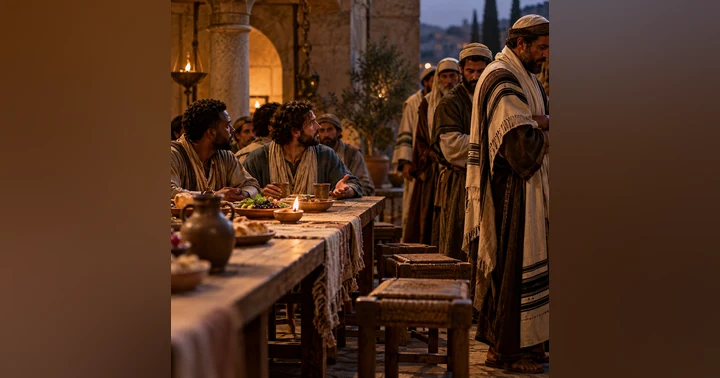
Into this already complicated world came the message about Jesus. His earliest followers were Jewish, but the movement soon expanded into communities with significant Gentile participation. People who had grown up worshiping different gods, following different customs, and accepting different social expectations were now gathering together around a shared faith. Questions about food, marriage, religious observance, social status, and acceptable behavior were no longer theoretical disagreements. They became practical challenges affecting relationships within these new communities.
This is particularly important when reading Paul's letters. His instructions were written to actual people dealing with specific circumstances.

2. Circumcision as a Marker of Religious Identity
Circumcision was far more than a cultural tradition in first-century Judaism. According to Genesis 17, God established circumcision as the physical sign of his covenant with Abraham and his descendants, describing it as an everlasting covenant. For generations, Jewish families practiced circumcision as an expression of covenant identity and belonging. In a world shaped by Greek and Roman influences, this practice also distinguished Jewish men from many of their Gentile neighbors.
The distinction became especially visible in Hellenistic culture, where athletic competitions and exercise often took place in the nude. Many Greeks regarded circumcision as an undesirable alteration of the body, while Jewish communities regarded it as a sign of faithfulness to God. These competing attitudes made circumcision both a religious and cultural boundary. When Gentiles began joining the early Christian movement, the question was unavoidable: would they need to accept circumcision and other Jewish covenant practices to become full members of God's people?
The controversy appears prominently in Acts 15 and Paul's letter to the Galatians. Some Jewish believers argued that Gentile converts needed to be circumcised, while Paul insisted that circumcision could not be made a condition of their inclusion in Christ. The Jerusalem meeting described in Acts 15 likewise rejected requiring circumcision of Gentile believers. What might appear to modern readers as an argument over an ancient ritual was actually a dispute over covenant membership, religious authority, and the boundaries of a rapidly expanding community.
But this raises a question that deserves more attention than it usually receives. If circumcision had been commanded by God and described as an everlasting covenant sign, how could Paul argue that Gentile believers were not required to practice it? The answer requires examining the relationship between God's covenant with Abraham, the identity of Israel, and Paul's understanding of what had changed through Christ. It also challenges readers to distinguish between the original purpose of a biblical instruction and the assumptions they bring to its application.
3. Jewish Dietary Laws and Gentile Eating Customs
Food was much more than a matter of personal preference in first-century Jewish culture. The dietary instructions found in Leviticus 11 and Deuteronomy 14 distinguished between animals considered clean and unclean, prohibiting foods such as pork and shellfish. These practices helped Jewish communities maintain their religious identity while living among people with different customs. In the wider Greek and Roman world, however, many of these restrictions were unfamiliar or considered unnecessary, creating practical challenges whenever Jewish and Gentile communities interacted.
The difficulties extended beyond what appeared on the dinner table. Jewish communities held differing expectations about food preparation, ritual purity, and participation in meals with Gentiles. Sharing a meal could communicate friendship, acceptance, and belonging, while refusing an invitation could reinforce social and religious boundaries. For Jewish followers of Jesus, eating with Gentile believers sometimes meant navigating deeply established traditions and the expectations of their own communities.
Two New Testament accounts reveal how significant these tensions became. In Acts 10–11, Peter experiences a vision involving animals previously regarded as unclean, but the narrative's central development concerns his recognition that Gentiles should not be treated as unacceptable to God. In Galatians 2:11–14, Paul describes confronting Peter at Antioch after Peter withdrew from eating with Gentile believers when certain visitors arrived. Paul's objection was not simply about dietary preferences. Peter's withdrawal had created a division within a community that was supposed to recognize both Jewish and Gentile believers as belonging together.
This controversy exposes a challenge that reaches beyond ancient food restrictions. Peter had inherited religious practices rooted in scripture, yet Paul believed that the way those practices were being expressed was undermining the message they proclaimed. The question was not whether Jewish believers could continue observing their traditions, but whether those traditions could become barriers to accepting others. When does a practice intended to express faithfulness become a boundary that prevents us from recognizing someone else's place in the community?
4. Food Sacrificed to Pagan Gods
Animal sacrifice was a familiar part of religious life throughout the Greek and Roman world. Temples dedicated to various gods received offerings during festivals, public ceremonies, and private acts of devotion. Portions of sacrificed animals could be consumed by worshipers, distributed among participants, or enter the local meat trade. Consequently, purchasing meat or accepting a dinner invitation could raise questions about its connection to religious practices that Jewish and Christian believers rejected.
For Gentiles who had grown up participating in these traditions, the situation was particularly complicated. A meal that once represented ordinary participation in community life could acquire a different meaning after joining the Christian movement. Some Corinthian believers argued that pagan gods had no genuine divine existence and therefore meat associated with their worship was simply food. Others, whose previous religious experiences remained deeply significant, regarded eating such meat as a troubling connection to idolatry. Paul addresses these competing perspectives in 1 Corinthians 8–10, recognizing that knowledge alone does not resolve every question of conscience.
Paul's response is more nuanced than a universal prohibition. In 1 Corinthians 10:25–27, he permits believers to eat meat sold in the marketplace or served in an unbeliever's home without investigating its history. Yet he also warns against participating in meals that constitute fellowship with pagan worship, distinguishing ordinary eating from religious participation. He further urges believers to consider how their choices affect others, particularly those whose consciences remain troubled by former associations with idols. The same food could therefore raise different concerns depending on the circumstances in which it was consumed.
This distinction challenges the tendency to reduce Paul's instructions to a simple list of permitted and forbidden activities. He examines the relationship between personal freedom, religious allegiance, and responsibility toward other people. The historical setting helps explain why he could permit eating certain meat in one circumstance while rejecting participation in another.
If Paul considered circumstances, intentions, and the effect on others when addressing a cultural practice, what might we miss when we turn his instructions into rules without first examining the situations they were meant to address?
5. Religious Banquets in Pagan Temples
In the Greek and Roman world, temples were more than places where people offered prayers and sacrifices. They could also serve as gathering places for communal meals, celebrations, and events connected to civic or professional associations. Some temple complexes included dining rooms where participants shared food associated with religious ceremonies. These gatherings brought together religious devotion, social relationships, and community obligations in ways that would seem unfamiliar to many modern readers.
Participation in such banquets could carry significant social expectations. Invitations might come from friends, relatives, business associates, or members of organizations that played important roles in city life. Attending could strengthen relationships and demonstrate loyalty to a community, while declining might create tension or invite questions about someone's religious commitments. For Gentiles who had become followers of Jesus, withdrawing from familiar religious gatherings could mean distancing themselves from relationships and traditions they had known throughout their lives.
This helps explain the difficulty Paul addresses in 1 Corinthians 8–10. Some Corinthian believers apparently considered themselves knowledgeable enough to enter an idol's temple and eat without regarding the idol as a genuine god. Paul challenges the consequences of that reasoning, particularly when such behavior encourages another believer to act against their conscience. In 1 Corinthians 10, he draws a sharper distinction between ordinary meals and participation in worship associated with idols. His concern is not merely the origin of the food but the religious significance of the gathering and the obligations created by participation.
The conflict reveals how difficult it could be to separate religious conviction from the expectations of everyday society. These believers were not making decisions in isolation; they were navigating relationships, reputations, and the possibility of social exclusion. Paul's instructions addressed a world where refusing to participate could carry real consequences, even when participation appeared harmless to others.
When a community expects participation as a sign of loyalty or belonging, how do we distinguish genuine faithfulness from simply conforming to the expectations of the people around us?

6. Jewish Synagogues in Greek-Speaking Cities
Long before the Christian movement expanded throughout the Roman Empire, Jewish communities had established themselves in cities across the Mediterranean world. Places such as Alexandria, Antioch, Thessalonica, and Corinth were home to Jewish populations living within predominantly Greek-speaking environments. Although Jerusalem and its Temple remained central to Jewish religious identity, local synagogues provided gathering places where communities could read scripture, receive instruction, pray, and maintain connections with their religious heritage. These communities were part of a much larger world shaped by trade, migration, political authority, and cultural exchange.
Living outside Judea did not necessarily mean abandoning Jewish traditions or resisting every aspect of the surrounding culture. Many diaspora Jews spoke Greek, participated in local commerce, and used Greek translations of their scriptures. The Septuagint, a collection of Greek translations of Jewish sacred writings that began centuries before Christianity, illustrates how Jewish religious life had already adapted to a multilingual environment. Yet adaptation did not eliminate religious differences. Jewish communities continued negotiating how to preserve their identity while participating in societies whose religious customs and expectations often differed from their own.
The book of Acts repeatedly describes Paul visiting synagogues when entering new cities. In Acts 17, for example, Paul visits the synagogue in Thessalonica and reasons from the scriptures about Jesus as the Messiah. The account describes some Jewish listeners being persuaded, along with God-fearing Greeks and prominent women. These gatherings provided an audience already familiar with Israel's scriptures, including Gentiles who had developed an interest in Jewish religious teaching. They also became settings for disagreement, particularly when interpretations of scripture and claims about Jesus challenged established understandings.
This background complicates the idea that the earliest Christian communities emerged through a simple separation between Judaism and the surrounding world. The boundaries were already being negotiated within Jewish communities themselves, and the message about Jesus introduced additional questions about scripture, identity, and belonging. Synagogues provided important starting points for those conversations, even when disagreement eventually led to new gatherings and divisions.
If the earliest followers of Jesus encountered people who already interpreted their shared scriptures differently, what does that suggest about the relationship between faithfulness, interpretation, and disagreement?
7. Gentiles Entering a Movement Rooted in Jewish Scripture
The earliest followers of Jesus were Jewish, and their understanding of his life, death, and resurrection was deeply connected to Israel's scriptures. They understood Jesus within a story involving Abraham, Moses, the prophets, God's covenant with Israel, and the hope of redemption. As the movement expanded beyond its Jewish beginnings, however, increasing numbers of Gentiles began embracing a message rooted in religious traditions they had not inherited. These new believers brought different assumptions about God, worship, morality, and community life, creating questions that the earliest followers of Jesus could not simply ignore.
For many Gentile converts, joining the Christian movement involved a significant departure from familiar religious practices. They might have grown up honoring multiple gods, participating in civic religious festivals, or accepting social customs that Jewish believers considered incompatible with their faith. Yet becoming a follower of Jesus did not necessarily mean becoming Jewish. This distinction created considerable tension because the scriptures that shaped the movement contained commandments, covenant obligations, and religious practices specifically associated with Israel. Determining how those scriptures applied to Gentiles became one of the defining challenges of early Christianity.
The controversy appears clearly in Acts 15, where believers debate whether Gentile converts must be circumcised and instructed to observe the law of Moses. The gathering in Jerusalem rejects imposing circumcision and the full requirements of the Mosaic law on Gentile believers, while communicating several instructions intended to address important concerns within these emerging communities. Paul's letter to the Galatians reveals the intensity of the disagreement, particularly his insistence that Gentiles were not required to adopt Jewish covenant identity to belong to Christ. These discussions were not simply arguments over which rules remained applicable. They concerned how the promises of Israel's scriptures were understood in light of Jesus and whether people from different backgrounds could belong to one community without first becoming culturally alike.
The implications extended well beyond the first generation of believers. Christians would continue interpreting scriptures written within particular historical and covenant settings while asking how those writings applied to communities far removed from their original circumstances. The early controversy over Gentile inclusion reminds us that this interpretive challenge did not begin in the modern world. It was present while the New Testament itself was being written.
If the earliest Christians had to wrestle with which biblical instructions applied to whom, and why, what makes us think responsible interpretation today requires anything less than that same careful examination?
8. Religious Festivals, Sacred Days, and Competing Calendars
Religious calendars played an important role in shaping daily life throughout the first-century Mediterranean world. Jewish communities observed the Sabbath and annual festivals such as Passover, the Feast of Weeks, and the Feast of Tabernacles, practices deeply connected to Israel's scriptures and collective identity. Greek and Roman communities followed different calendars filled with religious festivals, civic celebrations, and ceremonies honoring various deities. These observances influenced work schedules, family gatherings, public activities, and community relationships. For people living in culturally diverse cities, religious differences were sometimes experienced simply through the question of which days mattered and why.
As Jewish and Gentile believers began gathering together, these differences created practical challenges. Jewish followers of Jesus had inherited patterns of religious observance established over generations, while Gentile converts often had no previous connection to Israel's sacred calendar. Some believers continued observing particular days as expressions of devotion to God, while others did not regard those observances as necessary. The question was not merely how to organize a calendar. It concerned whether inherited religious practices should remain expectations for everyone who belonged to the Christian community.
Paul addresses differing convictions about days in Romans 14:5–6, where he describes one person regarding a particular day as more significant than another while someone else regards all days alike. He urges believers to act according to their convictions before the Lord rather than treating disagreement as grounds for condemnation. In Galatians 4:9–11, however, Paul expresses alarm about the observance of days, months, seasons, and years within a community he fears is returning to religious bondage. The precise observances involved and the circumstances behind these passages remain debated, but their contrasting tones are important. Paul does not appear to address every dispute over religious calendars as though the surrounding circumstances were identical.
These passages reveal why historical context matters when interpreting instructions about religious practices. An observance might represent devotion, cultural identity, social pressure, or an attempt to make a particular practice a condition of religious acceptance. Understanding what was happening within each community helps explain why Paul could encourage tolerance in one setting while expressing serious concern in another.
If the same religious practice can carry different meanings depending on the circumstances, how do we determine whether a biblical instruction addresses the practice itself or the assumptions and expectations surrounding it?
9. Sexual Customs and Competing Moral Expectations
Sexual behavior in the first-century Mediterranean world was shaped by cultural traditions, religious convictions, social status, and unequal expectations for men and women. Jewish communities inherited scriptural instructions concerning marriage, adultery, prohibited sexual relationships, and family obligations. Greek and Roman societies also maintained moral expectations surrounding marriage and sexual conduct, but these expectations differed significantly according to gender, citizenship, and social position. A married Roman woman's sexual behavior, for example, was generally subject to stricter social and legal expectations than that of her husband. Understanding these distinctions is essential because ancient debates about sexual morality were often inseparable from questions of family honor, inheritance, authority, and social power.
The differences became especially significant as Gentiles entered communities shaped by Jewish scripture. Practices that some Gentile converts had previously regarded as socially acceptable could conflict with the expectations of Jewish believers and the teachings of early Christian leaders. At the same time, the surrounding culture was not uniformly permissive, nor did every Jewish community interpret its inherited traditions identically. Sexual relationships could involve substantial inequalities, particularly where enslaved people, prostitutes, or socially vulnerable individuals had limited freedom to refuse the demands of others. These realities complicate any attempt to describe first-century sexual morality as a simple contest between two clearly defined sets of rules.
Paul addresses sexual conduct directly in 1 Corinthians 5–7, responding to circumstances within a community whose members had brought different assumptions about acceptable behavior into their shared life. In chapter 5, he confronts a reported sexual relationship involving a man and his father's wife, a situation he considers unacceptable even by the standards he attributes to the surrounding Gentile world. In chapter 6, he challenges believers who apparently regarded sexual relations with prostitutes as compatible with their new identity in Christ. Rather than merely repeating a prohibition, Paul develops an argument about the body, its relationship to Christ, and the implications of belonging to a community shaped by that relationship. His reasoning reveals that the disagreement involved more than competing cultural preferences; it concerned fundamentally different understandings of what the human body represented.
These passages also require readers to distinguish between the circumstances Paul was addressing and the broader principles he believed were at stake. His arguments emerged within societies that accepted forms of hierarchy and unequal power that modern readers may find deeply troubling. Recognizing those realities does not require dismissing his moral concerns, but it does challenge us to examine the assumptions behind both ancient behavior and modern interpretation.
When we read biblical instructions about sexual morality, are we examining the relationships, power structures, and theological reasoning behind them, or are we sometimes reducing complicated human circumstances to a list of prohibited behaviors?
10. Prostitution and the Sexual Economy of Roman Cities
Prostitution was a recognized feature of urban life throughout the Roman Empire, but the circumstances surrounding it varied considerably. Some individuals engaged in sex work independently, while others were enslaved or controlled by people who profited from their sexual exploitation. Brothels, taverns, private households, and other commercial settings could provide opportunities for sexual transactions. Roman society generally tolerated prostitution, yet those involved frequently occupied positions of low social standing and limited legal protection. The apparent acceptance of the practice should not be confused with equality, personal freedom, or an absence of exploitation.
These conditions reflected broader assumptions about power and social status. Enslaved people were legally treated as property, and their owners exercised extensive control over their labor and bodies. Free men often enjoyed sexual freedoms that were denied to respectable married women, while the experiences of prostitutes and enslaved individuals were shaped by their vulnerability within the social hierarchy. Not every sexual transaction involved the same circumstances, but the unequal distribution of power was a defining feature of the wider Roman sexual economy. For early Christian communities bringing together people from different social backgrounds, these assumptions could not be separated easily from questions about acceptable conduct.
In 1 Corinthians 6:12–20, Paul addresses sexual relations with prostitutes through an argument that goes beyond social reputation or conventional morality. He challenges the apparent assumption that bodily desires can be satisfied without deeper consequences, insisting that the believer's body belongs to Christ. His reasoning draws on the language of bodily union and the significance of becoming one flesh, connecting sexual conduct to a larger understanding of human identity and allegiance. Although Paul does not offer a systematic critique of the Roman institution of slavery or every form of sexual exploitation, his argument challenges the idea that sexual activity can be treated as an entirely detached physical transaction.
The historical setting raises questions that extend beyond the behavior Paul explicitly condemns. Modern readers may focus primarily on the prohibition while overlooking the unequal circumstances in which many ancient sexual encounters occurred. Understanding those circumstances does not diminish Paul's theological argument, but it encourages us to consider how power, vulnerability, and responsibility affect the relationships being discussed.
If we examine sexual morality primarily through the actions of individuals, without considering who possesses power and who bears the consequences, are we overlooking an important part of the human reality behind the biblical text?
11. Marriage, Divorce, and Mixed-Faith Households
Marriage in the first-century Mediterranean world was shaped by family expectations, religious traditions, economic arrangements, and the legal authority exercised within households. Jewish communities inherited scriptural teachings concerning marriage and divorce, while Greek and Roman societies maintained their own customs governing marital relationships, separation, and remarriage. Roman marriage was closely connected to family status, inheritance, and the production of legitimate heirs, although the circumstances of marriage varied according to social position and legal standing. Divorce was possible within both Jewish and Roman settings, but the procedures, expectations, and consequences were not identical. These differences became especially important as the Christian movement brought people from different cultural backgrounds into shared communities.
One particularly difficult situation arose when a married person became a follower of Jesus while their spouse did not. Religious identity was rarely confined to private belief; it could influence household rituals, participation in festivals, relationships with extended family, and the religious upbringing of children. A change in one spouse's convictions could therefore disrupt expectations that had existed throughout the marriage. Some believers apparently wondered whether remaining married to an unbelieving spouse was compatible with their new commitment to Christ. The question was not simply whether Christians should marry people who shared their beliefs, but what should happen to marriages that already existed.
Paul addresses this situation in 1 Corinthians 7:10–16, making an important distinction within his instructions. When discussing separation between married believers, he appeals to a command he attributes to the Lord, reflecting Jesus' teaching concerning divorce. When addressing marriages involving an unbelieving spouse, however, Paul introduces his instruction with the words, "I, not the Lord." This does not necessarily mean Paul considered his guidance unimportant or without authority. Rather, he distinguishes a teaching he can attribute to Jesus from his own apostolic response to a situation not directly addressed in the preserved teachings of Jesus. He advises believers not to initiate separation when an unbelieving spouse is willing to remain married, while also acknowledging that an unbelieving spouse may choose to leave.
This passage offers a revealing example of how early Christian leaders addressed changing circumstances without simply repeating an inherited rule. Paul takes marriage seriously, yet he also recognizes that the realities facing mixed-faith households require careful consideration. His response considers the existing relationship, the willingness of both spouses to remain together, and the importance of peace within the household.
If Paul could distinguish between a teaching received from Jesus and his own judgment about a new situation, what might that teach us about the difference between faithfully interpreting scripture and assuming every modern circumstance has already been addressed directly?
12. Roman Household Authority and Patriarchal Structures
The Roman household was more than a collection of relatives living under one roof. It was a social and economic institution organized around relationships of authority, obligation, inheritance, and property. In Roman law, the paterfamilias, typically the senior male head of a legally constituted family, possessed significant authority over those under his legal power. Households could include spouses, children, enslaved workers, and other dependents, although their legal relationships and degrees of independence varied considerably. These arrangements reflected a society in which authority was often understood through hierarchy rather than the modern expectation of equal standing within family relationships.
Greek and Roman writers frequently discussed household management as a matter of maintaining order within society. Aristotle, writing centuries before the New Testament, described relationships between husbands and wives, parents and children, and masters and enslaved people as distinct forms of household authority. Although practices differed across regions and periods, these categories remained influential in the wider intellectual world inherited by the Roman Empire. Jewish households also operated within patriarchal traditions, though their religious teachings and family customs were not identical to Roman law. Early Christian communities therefore emerged within societies where unequal household relationships were already deeply established.
This background is important when reading passages such as Ephesians 5:21–6:9 and Colossians 3:18–4:1. These texts address wives and husbands, children and parents, and enslaved people and masters, using categories familiar to ancient readers. Yet the instructions also introduce distinctive expectations, including calls for husbands to love their wives sacrificially, fathers to avoid provoking their children, and masters to remember their accountability to a heavenly Master. Ephesians places its household instructions immediately after an appeal to mutual submission in reverence for Christ, although interpreters disagree about precisely how that statement governs the relationships that follow. These passages engage existing household structures while also introducing obligations that complicate a purely one-sided understanding of authority.
The difficulty for modern readers is determining how these instructions relate to the social arrangements they address. The texts do not provide a systematic rejection of Roman patriarchy or slavery, yet neither can their teachings about love, responsibility, and accountability be understood without considering the hierarchies within which they were delivered. Some interpreters emphasize how Christian expectations challenged abuses of power, while others argue that the instructions substantially accommodated the social order of their time. Both observations deserve careful examination rather than being dismissed in advance.
When biblical instructions address relationships structured by the customs and inequalities of their original society, how do we distinguish the enduring principles being taught from the social arrangements within which those principles were expressed?

13. Women Praying, Prophesying, and Participating in Assemblies
The New Testament names numerous women active in ministry: Mary, Priscilla, Phoebe, Lydia, Junia, and others who led, hosted, and taught in early Christian communities. This visibility is striking given typical expectations for women's public speech and modesty in both Jewish and Greco-Roman settings.
In 1 Corinthians 11, Paul assumes women pray and prophesy in the assembly-he does not prohibit it but regulates how it happens. In 1 Corinthians 14, instructions about silence have generated extensive scholarly debate: are these restrictions local and situational, or more broadly applicable? The text itself reflects complex negotiations rather than a single clear policy.
What is often missed is how unusual mixed-gender assemblies with open participation from women were in the first century. Greek philosophical schools, Jewish synagogues, and Roman civic gatherings all limited women's public roles in various ways. That the early church included women's voices at all represented a departure from surrounding norms, even where limits were also imposed.
14. Head Coverings, Hair, and Public Respectability
In the ancient Mediterranean, hair, veils, and head coverings served as markers of status, gender, and sexual availability. For married women especially, uncovered hair could signal sexual impropriety or exposure to shame. Public appearance reflected not just individual preference but the honor of an entire family and community.
Paul's discussion in 1 Corinthians 11:2–16 has generated significant debate. Scholars disagree about whether "covering" refers to a veil, a specific hairstyle, or some other cultural symbol. The precise Corinthian customs remain uncertain. What is clearer is Paul's concern: worship gatherings should not create scandal or undermine respectability.
Paul's guidance seeks to avoid dishonor in Corinthian assemblies while affirming that women can pray and prophesy. Modern clothing customs are so distant from this setting that drawing direct applications requires careful historical imagination. The gap between a first-century Mediterranean honor culture and the modern world should make readers cautious about treating specific dress codes as timeless commands without understanding the social logic behind them.
15. Slavery and Human Ownership
Slavery in the first-century Roman Empire was pervasive. Sources of enslavement included war captives, birth to enslaved mothers, infant exposure, and debt. Enslaved people filled roles ranging from domestic service and agriculture to skilled trades, tutoring, and financial management. Legally, they were property. Some were eventually freed through manumission, though freed persons retained obligations to former owners.
It is important to distinguish ancient Roman slavery from later racialized chattel slavery while avoiding the opposite error of romanticizing it. Ancient slavery involved exploitation, sexual abuse, and complete legal vulnerability, even when individual experiences varied.
New Testament passages addressing slaves and masters (Ephesians 6, Colossians 3–4, 1 Peter 2) instruct behavior within the institution without demanding its abolition. The Letter to Philemon asks a slaveholder to receive Onesimus back "no longer as a slave, but… as a beloved brother"-a socially radical request that stops short of a systemic legal challenge.
Early Christians met as mixed-status communities where slaves and free shared the Lord's Supper yet lived under Roman law. Readers should distinguish between descriptive engagement with a pervasive institution and theological endorsement.
16. Honor, Shame, and Competition for Social Status
The concept of honor and shame was central to first-century Mediterranean social interactions. Public reputation mattered more than private feelings. Honor (timē) was the primary social currency: it could be gained through noble birth, public benefactions, military achievement, or rhetorical skill. Shame-the loss of status or public disgrace-was to be avoided at nearly any cost.
In cities like Corinth and Philippi, honor contests played out through patronage displays, oratory, and rivalry among elites. This directly shapes 1 Corinthians 1–4, where some believers boast in celebrity teachers ("I follow Paul," "I follow Apollos") in ways that mirror local status competition.
Paul's response is striking. He insists that Christ crucified-the most shameful form of execution-is the center of God's wisdom. Jesus' teaching about the "last being first" and Paul's focus on the cross invert prevailing honor codes. Crucifixion, a punishment so degrading that Roman citizens were exempt from it, was reinterpreted as glory. This inversion makes no sense unless you understand how deeply honor and shame structured every relationship in the ancient world.
17. Wealthy and Poor Believers Sharing Communal Meals
Greco-Roman dining arrangements reflected class distinctions. Wealthy hosts reclined in the triclinium (a formal dining room seating about nine), while lower-status guests ate in overflow spaces with inferior food and drink. Workers arrived late, after their labor ended.
This background illuminates 1 Corinthians 11:17–34, where Paul rebukes the Corinthian assembly. Wealthier members were eating and drinking first, leaving little for late-arriving poor believers. The Lord's Supper likely grew out of a full communal meal, not the brief ritual many churches practice today. Class habits from broader society had infiltrated church gatherings, directly contradicting the message of unity in Jesus Christ.
The early Christian movement emphasized radical care for marginalized individuals within the community. Christian rituals such as baptism and the Eucharist were shaped by Jewish purification practices and communal meals. James 2 similarly warns against giving preferential seating to the rich while dishonoring the poor. Acts 2–4 describes early believers sharing possessions. These texts make sense only against a backdrop where economic inequality was visible at every shared table.
18. Patronage, Benefactors, and Social Obligations
The patron-client system structured much of urban life in the Roman Empire. Powerful patrons offered protection, financial aid, and legal help; clients returned loyalty, public praise, and services. From politics to business to religion, reciprocal obligations shaped relationships.
Several early Christian leaders fit the patron profile. Phoebe (Romans 16) is called a prostatis-a patron or benefactor-of many, including Paul himself. Lydia (Acts 16) hosted the Philippian church in her home. Wealthy believers who provided meeting spaces and financial support inevitably carried social expectations about honor and influence.
Paul's ambivalence about financial support (1 Corinthians 9, 2 Corinthians 11–12) makes more sense in this context. Accepting patronage created obligations. Paul sometimes refused support to avoid being "owned" by a patron, insisting on his independence. Reimagining God as the ultimate patron and Jesus as Lord reshaped human patronage and mutual service among early Christians, creating tension between the church's social world and its theological convictions.
19. Roman Citizenship and Unequal Legal Protections
Roman citizenship in the first century conveyed significant privileges: legal protections, the right to appeal to Caesar, exemption from degrading punishments like flogging and crucifixion, and property rights. Only a minority of provincial residents held citizenship. Most people-especially slaves, rural populations, and non-elite provincials-had no such protections.
Paul's citizenship appears dramatically in Acts. In Philippi (Acts 16:37–39), magistrates release him after learning they have beaten a Roman citizen without trial. In Acts 22, Paul invokes citizenship to avoid illegal whipping. In Acts 25, he appeals to Caesar. These episodes show how legal status shaped what could happen to a person's body under Roman rule.
The contrast between earthly and heavenly citizenship surfaces in Philippians 3:20, where Paul writes that believers' true citizenship is in heaven. For congregations containing both citizens and non-citizens, slaves and free, this language carried practical weight. Unequal legal status within assemblies complicated unity, justice, and the risks people took for the gospel.
20. Greek Philosophy and Competing Worldviews
Several philosophical schools were active during the new testament period. Stoicism taught that a divine reason (logos) pervaded the universe and that virtue meant living in harmony with nature. Epicureanism pursued tranquility through pleasure moderation and denied divine intervention. Platonism emphasized the immortality of the soul and the existence of a higher realm of forms. Popular moral teachers blended these traditions.
When Paul preached in Athens (Acts 17), Epicurean and Stoic listeners engaged him with curiosity and critique. His claim about bodily resurrection provoked scoffing-Greek philosophers generally considered the body inferior to the soul.
Philo attempted to merge Jewish scripture with Platonic philosophy, demonstrating that Jewish thinkers were already engaging Greek thought before Christianity. Hellenistic culture influenced early Christian theological development in significant ways, though new testament authors consistently repurposed philosophical vocabulary in light of Israel's God and Jesus Christ. The logos of John 1, for example, overlaps with Stoic terminology but is grounded in Jewish creation theology.
Philosophical systems like Stoicism influenced early Christian thought, but Christianity was never simply a product of Greek philosophy. Mystery religions involved secretive initiation rituals and exclusive membership, offering competing forms of spiritual experience. Gnosticism emerged later as a blend of Hellenistic and Christian beliefs, showing how these cultural currents continued to interact well into the second century.
21. Public Speaking, Rhetoric, and Intellectual Competition
Trained orators held enormous prestige in Greek and Roman cities. Rhetorical schools produced speakers who gathered disciples, attracted patrons, and competed for public acclaim through eloquent speech. Wisdom and persuasive style were paths to honor.
Teachers in cities like Corinth boasted of their training and built loyal followings-a pattern that infiltrated the early church. In 1 Corinthians 1–2, Paul deliberately contrasts the "wisdom of words" with the message of the cross. He presents himself as weak rather than impressive, his speech as plain rather than polished. This is not false modesty; it is a strategic rejection of the rhetorical competition shaping Corinthian culture.
House churches could easily mirror local patterns of teacher loyalty, debate, and faction-building. When Paul writes, "Was Paul crucified for you?" (1 Corinthians 1:13), he is addressing a social dynamic that any Corinthian would recognize: the contest for intellectual prestige. Modern readers who assume Paul is only discussing abstract theology miss the concrete rhetorical expectations behind his argument.
22. Emperor Worship and Political Loyalty
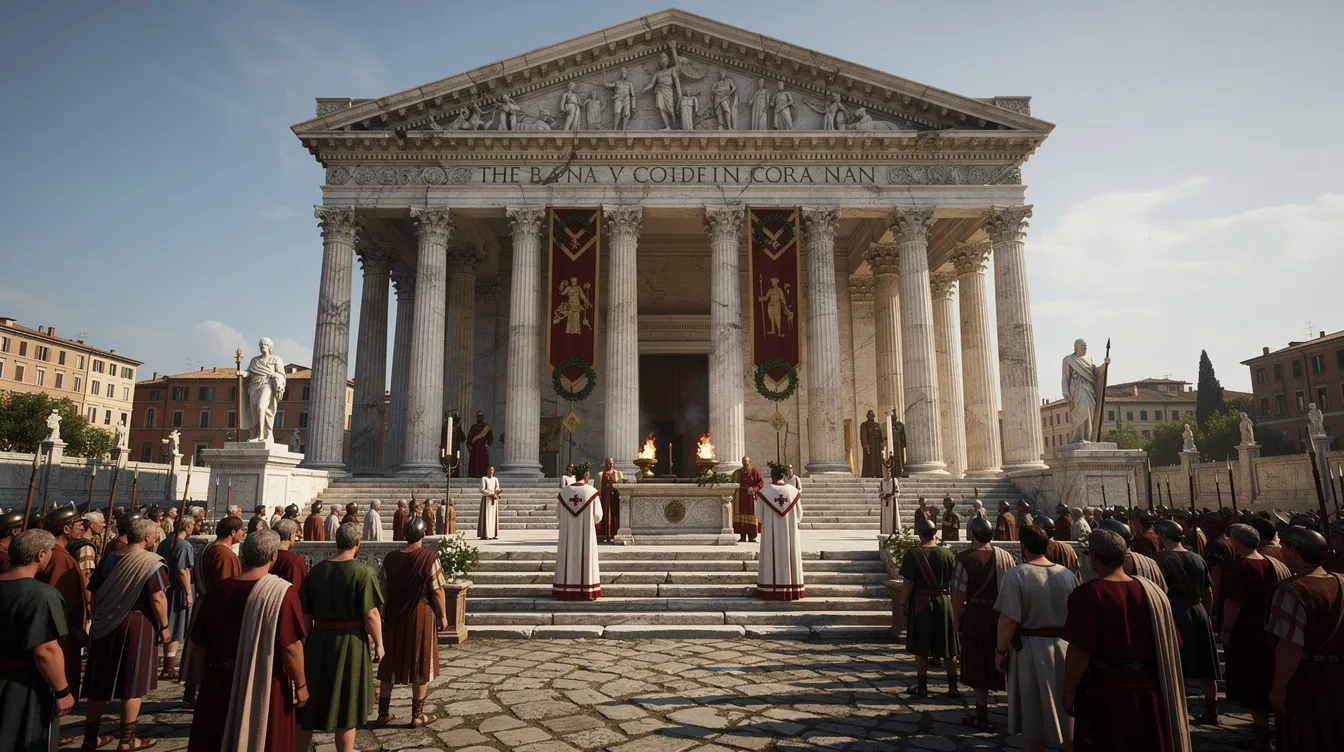
Emperor worship became common in the first century A.D. The imperial cult involved temples, altars, sacrifices, and festivals honoring emperors like Augustus, Nero, and Domitian as "lords," "saviors," or even divine figures. In some cases emperors were deified after death; in others, living emperors received divine honors.
Emperor worship was deeply tied to local patriotism, loyalty to Rome, and city identity, especially in Asia Minor. At least seventeen first-century temples or sanctuaries dedicated to emperors have been identified in Asia Minor alone. Participation in imperial cult activities was expected of free citizens; refusal could lead to social stigma, exclusion from civic office, or accusations of disloyalty.
New Testament texts reflect this tension. Revelation 13 depicts beasts demanding worship, and Revelation 2:12–17 addresses communities in cities like Pergamum where the imperial cult was present. The Christian confession "Jesus is Lord" implicitly challenged Caesar's claims to the same title. Christians believed that Jesus, not the emperor, held ultimate authority-a stance that could be interpreted as political subversion.
Scholars debate how strictly participation was enforced in the first century and whether Christian refusal was always overtly persecuted. The pressure, however, was real and pervasive.
23. Religious Commerce and Temple-Based Industries
Temples were not just places of worship-they were economic engines. Priesthoods, sacrifices, festivals, lodging, and craft production all supported local economies. Pilgrims purchased shrines, votive offerings, and souvenirs, blending devotion and profit.
Acts 19 provides a vivid example. In Ephesus, silversmiths who made shrines to Artemis started a riot when Paul's preaching threatened their trade. Demetrius the silversmith rallied his guild by arguing that Paul was destroying both their religion and their livelihood. The uproar shows that rejecting idolatry affected not only private belief but public markets, guilds, and workers' income.
Some converts in the new testament era had to leave trades tied directly to idol-making or ritual services, facing real economic hardship. The cost of faith was not only spiritual but material. Understanding religious commerce clarifies why certain political issues and economic conflicts surface so prominently in early Christian writings.
24. Magic, Divination, and Supernatural Practices
Across the Roman Empire, people commonly turned to magical means for protection, healing, and guidance. Curse tablets, amulets, incantations, astrology, and professional magicians operated alongside traditional religion. The boundary between "magic" and "religion" was often blurry.
The New Testament records several encounters with these practices. In Acts 8, Simon Magus tries to purchase spiritual power with money. In Acts 16, a slave girl with a spirit of divination earns money for her owners in Philippi-her liberation by Paul disrupts both a spiritual and an economic arrangement. In Acts 19, converts in Ephesus publicly burn their magical scrolls, a dramatic act of allegiance to Christ over competing spiritual powers.
Early Christian miracles and exorcisms were perceived within a world crowded with competing claims of supernatural authority. Allegiance to Jesus Christ entailed rejecting magical manipulation of the divine in favor of trust in God and prayer. The burning of scrolls in Ephesus was not merely symbolic-those texts represented significant financial value and deeply held beliefs about how the spiritual world worked.
25. Burial Customs and Competing Beliefs About Resurrection
Jewish burial practices in the first century involved rock-cut tombs, family caves, and ossuaries where bones were gathered after the flesh decayed. Ancestral burial places held deep significance. Pharisees believed in resurrection and divine providence, expecting that God would raise the righteous dead at the end of days. Sadducees rejected resurrection and oral laws of the Pharisees, holding only to the written Torah.
Greco-Roman practices varied: cremation, inhumation, and elaborate tomb monuments along roads. Beliefs about the afterlife ranged from shades in Hades to Platonic immortality of the soul to outright skepticism. Bodily resurrection-the claim that a dead person's physical body would be raised and transformed-sounded strange or laughable to many Gentile audiences.
In Acts 17, when Paul preaches resurrection (anastasis) in Athens, some Greek hearers scoff. In 1 Corinthians 15, Paul builds a careful argument for bodily resurrection, addressing Gentile assumptions directly. Jesus' burial and empty tomb fit Jewish patterns, while his resurrection combined Jewish expectations with the startling claim that the end-time renewal had already begun in one person-the resurrected Jesus.
26. Geography, Trade, and Regional Specialization
The eastern Mediterranean was connected by sea routes, Roman roads, and regional economies that shaped daily life in every community the New Testament addresses.
Galilee's fishing industry on the Sea of Galilee-centered in towns like Capernaum and Bethsaida-provides the backdrop for Jesus' life and the calling of his earliest disciples. Fishing was not a romantic occupation but a commercial enterprise regulated by taxation and distribution networks.
Lydia of Thyatira (Acts 16) dealt in purple-dye goods, a luxury trade linking Asia Minor to Macedonian and Italian markets. Her wealth and trade connections explain why she could host the Philippian church in her home.
Corinth sat on the strategic Isthmus connecting mainland Greece, with dual harbors at Cenchreae and Lechaeum. This geography made it a bustling, diverse commercial center-and explains why issues of idolatry, patronage, class, and sexual morality surface so prominently in Paul's Corinthian correspondence. Ephesus dominated as a gateway to the interior of Asia Minor, its economy intertwined with the temple of Artemis.
Understanding each city's local economy and geography clarifies why certain issues appear in particular New Testament letters and not in others.
27. Paul's Cultural Challenges in Mixed Communities
Paul stands at the intersection of multiple worlds. A Jewish Pharisee trained in Torah, a Roman citizen with legal privileges, and a Greek-speaking intellectual capable of engaging philosophers in Athens-he navigated these identities constantly. Paul's mission focused on spreading Christianity to Gentiles, a calling that brought him into conflict with fellow Jews. Acts 22:21 shows Jews' hostility towards Paul's Gentile mission, erupting when he describes God sending him to the nations.
In Galatia, the conflict was circumcision. In Corinth, it was food, status, spiritual gifts, and sexual behavior. In Rome, it was the relationship between Jewish and Gentile believers in a city where both communities existed in tension. Each letter addresses overlapping conflicts shaped by the specific assembly's composition and location.
Paul's teaching arises from practical pastoral problems, not abstract theorizing detached from real communities. The interaction between various cultural practices and beliefs helped shape early Christianity into a distinct movement. His letters became part of the New Testament precisely because they addressed recurring cultural tensions among early Christians.
People tend to read Paul as a rule-giver. He is better understood as a community builder working within the constraints and possibilities of his own culture and cultural moment-a moment when Jews, Greeks, and Romans were all trying to live together under one Lord.
28. Conclusion: From Rules to Real People in a Real World
These 25 cultural practices-circumcision, dietary laws, household structures, slavery, emperor worship, patronage, burial customs, and more-anchor the New Testament in real first-century circumstances. They remind us that every instruction was written to actual people groups navigating actual tensions.
The central question of this article is worth returning to: why an instruction was given is as important as what the instruction says. Paul did not write about food sacrificed to idols because he enjoyed dietary theory. He wrote because believers in Corinth walked past temple meat markets every day and needed to know how to live faithfully in that context.
Responsible testament study and testament understanding requires historically informed reading-recognizing both the continuity and the difference between the world of early Christian writings and our present day. Not every practice can be neatly translated into modern life, and some New Testament texts remain debated among scholars and communities of faith.
The last point to carry away is this: the New Testament records real people negotiating profound differences in religious background, social expectations, cultural identity, and community life. The four gospels show Jesus within Jewish settings; Paul's letters move through diverse Gentile cities; Revelation addresses congregations under imperial pressure. Together, they form a collection of early Christian writings that speaks across cultures because it was forged in the collision of cultures.
The invitation is ongoing: to study Jesus Christ and the early Christians within their original Jewish, Greek, and Roman worlds-and to let that historical context deepen, rather than diminish, how we hear God's word today.

FAQ
How much Greek philosophy actually shaped the New Testament?
The New Testament is deeply rooted in Jewish Scripture and tradition, yet it was written in the Greek language and addressed communities where Stoic, Epicurean, and Platonic ideas were widely discussed. Some terms-like logos in John 1-overlap with philosophical vocabulary used by Greek philosophers, but new testament authors consistently repurpose them around Israel's God and Jesus Christ. The relationship is one of interaction and dialogue with Greek culture, not wholesale adoption. Christianity was shaped by its encounter with Greek thought but remained anchored in the Old Testament and in belief in the resurrected Jesus as Lord.
Were all early Christians culturally the same?
Far from it. The early church included Aramaic-speaking Judean believers, Greek-speaking diaspora Jews, and Gentile converts from dozens of ethnic backgrounds across the Roman Empire. Practices varied significantly between Jerusalem, rural Galilee, and cosmopolitan centers like Corinth or Rome. Even within a single city, a congregation might include former pagans, God-fearers, Jewish converts, slaves, freed persons, and wealthy patrons. Church history reflects ongoing negotiation among these diverse communities. The New Testament itself is evidence that early Christianity was never a single, uniform culture but a movement constantly working through its internal diversity.
Does knowing historical context make biblical commands irrelevant today?
No. Historical context does not automatically cancel instructions-it helps us understand what issues they addressed and why they were framed as they were. Responsible interpretation asks both what a text meant in its original setting and how its underlying principles might apply now. For example, understanding Corinthian dining customs does not eliminate Paul's concern for unity at the Lord's Supper; it clarifies exactly what kind of disunity he was confronting. Cultural insight is a tool for wiser application, not an excuse to dismiss challenging passages. The distance between the ancient world and the modern world calls for careful thought, not casual dismissal.
How reliable is our knowledge of first-century culture?
Our knowledge draws on multiple types of evidence: archaeological discoveries (pottery, inscriptions, building remains), non-Christian texts (Josephus, Philo, Roman historians), the Dead Sea Scrolls, papyri, and early Christian and Jewish writings. Some practices are extremely well attested-Roman slavery, synagogue life, emperor worship in Asia Minor, and dietary observance in Judea all have strong evidentiary support. Other reconstructions are more speculative: the exact head-covering customs in Corinth, for instance, remain debated. Scholars published by Cambridge University Press and Oxford University Press continue to refine our understanding. Readers should hold firm conclusions and open questions together, recognizing where historians agree and where honest uncertainty remains.
Why focus so much on Paul when exploring New Testament culture?
Paul's letters are our most detailed first-century sources for everyday problems in early Christian assemblies across the Greco-Roman world. While the four gospels show Jesus within mainly Jewish settings in Galilee and Judea, Paul's mission moved through diverse Gentile cities-Corinth, Ephesus, Philippi, Thessalonica, Rome-where cultural clashes between Jews and Gentiles were most visible. His correspondence from cities in Grand Rapids of cultural collision (so to speak) provides especially rich windows into first-century negotiations over food, sex, status, worship, and identity. The article treats the whole New Testament, but Paul's writings offer an unmatched level of detail about what life actually looked like when people from different worlds tried to become one community in Christ.

Building a Personal Framework for Faith: A Foundation for Thinking, Growing, and Changing