Building a Personal Framework for Faith: A Foundation for Thinking, Growing, and Changing
Most people inherit their first understanding of God long before they develop the ability to examine it. Our earliest beliefs are often shaped by parents, churches, teachers, religious traditions, and the communities in which we grow up. We learn what Scripture means, which questions are appropriate, which beliefs are essential, and sometimes which conclusions should never be challenged. Over time, these influences become so familiar that we may no longer recognize them as influences at all. They simply become what we believe, but what happens when we encounter something that doesn't fit?
Perhaps a passage of Scripture seems to contradict what we've always been taught. Perhaps we discover that a cherished religious practice developed centuries after the biblical events it supposedly represents. Or perhaps we meet a thoughtful, compassionate Christian whose understanding of faith differs significantly from our own. These experiences can be unsettling, particularly when we've been taught that questioning established beliefs is evidence of spiritual weakness.
There is another way to approach these moments. Rather than treating every challenge as a threat, we can learn to examine the framework through which we understand faith. We can ask where our beliefs originated, what evidence supports them, how our assumptions influence our interpretations, and whether our understanding continues to reflect the life and teachings of Jesus. This process doesn't require abandoning conviction or rejecting the wisdom of others. It requires taking personal responsibility for the way our convictions are formed.
The purpose of a personal framework is not to protect our conclusions. It is to improve the way we arrive at them.
Everyone Has a Framework, Even If They Didn't Build It
A personal framework is the collection of assumptions, principles, convictions, interpretive habits, and experiences through which we understand Scripture, God, ourselves, and the world around us. It influences which questions we ask, which explanations seem reasonable, which authorities we trust, and how we respond when information challenges our expectations. We rarely notice this framework operating because it functions in the background of our thinking, much like a pair of glasses through which we see everything else.
Consider two people reading the same passage of Scripture. One was raised in a tradition that emphasizes God's sovereignty and predetermined purposes, while another grew up in a community that emphasizes human freedom and personal responsibility. Both may sincerely desire to understand the text, yet they may notice different details, emphasize different words, and reach different conclusions. Their disagreement does not necessarily mean that one is dishonest or unwilling to learn. It may reveal that they are approaching the passage with different assumptions about how God acts in the world.
These assumptions are not automatically wrong. Every reader brings prior knowledge and expectations to a text, and interpretation would be impossible without some existing framework of understanding. The difficulty arises when we confuse the framework itself with the truth we are attempting to understand. What we inherited may contain considerable wisdom, but inheritance alone does not establish accuracy. A belief deserves examination because it matters, not because we have already decided it must be mistaken.
The first step toward developing a personal framework is therefore recognition. Before asking what we should believe, we need to understand what has already shaped our thinking.
- Which convictions came from careful study?
- Which were accepted because a trusted authority taught them?
- Which developed through personal experience?
- And which have remained unexamined simply because everyone around us appeared to agree?
The Difference Between Having Beliefs and Understanding Them
A belief system and a personal framework are related, but they are not identical. A belief system describes the conclusions we hold about God, Scripture, morality, salvation, and other matters of faith. A framework helps us understand how we reached those conclusions, why we consider them credible, and what might cause us to reconsider them. One describes what we believe; the other shapes how we evaluate belief itself.
This distinction becomes especially important when someone encounters disagreement. Without an examined framework, disagreement may feel like a contest between competing authorities.
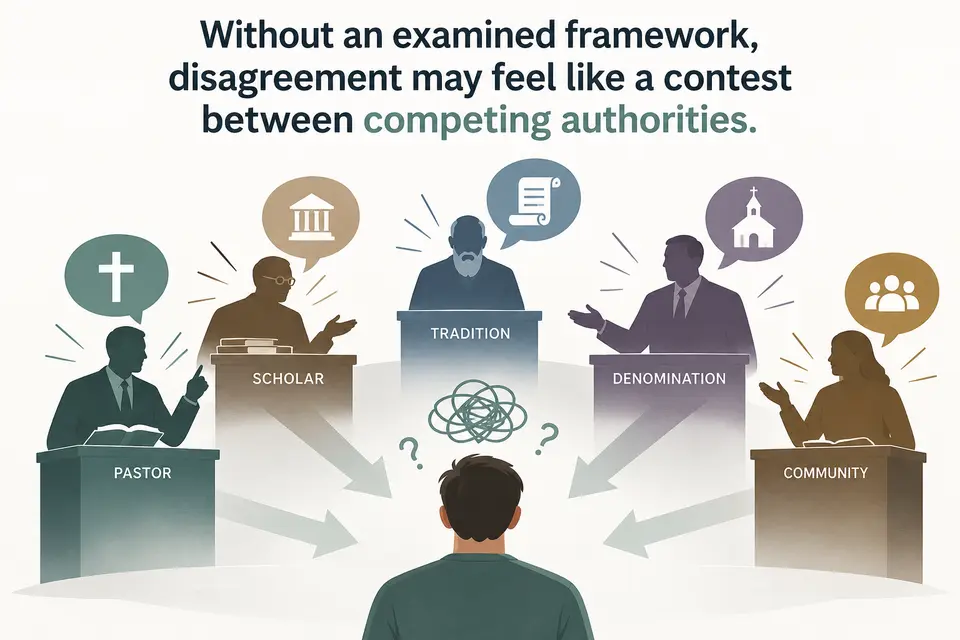
One pastor teaches one interpretation, another scholar proposes something different, and a denominational statement offers yet another conclusion. The individual may feel compelled to choose whichever voice seems most confident, familiar, or spiritually authoritative. Yet confidence is not evidence, and institutional position does not automatically guarantee interpretive accuracy.
An examined framework provides another approach. Instead of beginning with the reputation of the person making the claim, we can investigate the reasoning behind it. What does the passage actually say? What historical circumstances shaped its meaning? What assumptions are involved? Are alternative interpretations being considered fairly? Does the conclusion account for the broader biblical narrative, or does it depend on isolating a particular phrase from its context?
This does not mean every individual must become a professional historian, linguist, or biblical scholar. It means developing the habits necessary to distinguish a well-supported conclusion from an assertion that merely sounds persuasive. Personal responsibility is not the same as personal authority over truth. We do not determine what is true simply by deciding what we prefer to believe.
The Individual Owns the Framework
One of the most important principles in developing a personal framework is recognizing who is responsible for it. Churches, pastors, teachers, scholars, and religious communities can all contribute valuable knowledge and perspective, but the responsibility for examining and integrating that information ultimately belongs to the individual. No institution can fully perform the work of understanding, conviction, and discernment on someone else's behalf.
This principle is reflected in the familiar account of the Bereans in Acts 17:10–12. When Paul and Silas arrived in Berea, the people received their message with eagerness while examining the Scriptures daily to determine whether what they were hearing was so. The significance of the account is not that the Bereans rejected teachers or refused to listen to religious authority. They listened carefully, took the message seriously, and investigated its claims rather than accepting them solely because someone had presented them.
Their example illustrates a valuable relationship between teaching and personal responsibility. A teacher can introduce an idea, explain its context, and offer reasons for accepting it, but the listener still has a role in evaluating what has been presented. The process requires participation rather than passive acceptance. It assumes that faithfulness and thoughtful examination are not enemies.
This distinction is particularly important in religious environments where questioning a leader's interpretation is treated as questioning God Himself. Such an environment can make it difficult to distinguish loyalty to a community from loyalty to truth. When institutional authority becomes the final measure of acceptable belief, personal discernment may gradually be replaced by conformity. A person may learn to repeat the community's conclusions without ever developing the capacity to examine them independently.
Owning a personal framework does not mean rejecting correction or refusing to learn from others. It means remaining responsible for the process by which correction is evaluated and understanding is formed. The individual is neither intellectually isolated nor required to surrender judgment to another person simply because that person occupies a religious office.
Being Shaped by Community Is Not the Same as Being Governed by Community
Christian faith has never been exclusively an individual pursuit. The earliest followers of Jesus gathered for teaching, shared meals, worshiped together, cared for one another, and wrestled with questions about how their new understanding of God should shape their lives. Community provided encouragement, instruction, practical assistance, and opportunities to encounter perspectives beyond one's own experience. These relationships were essential to the development of the early Christian movement.
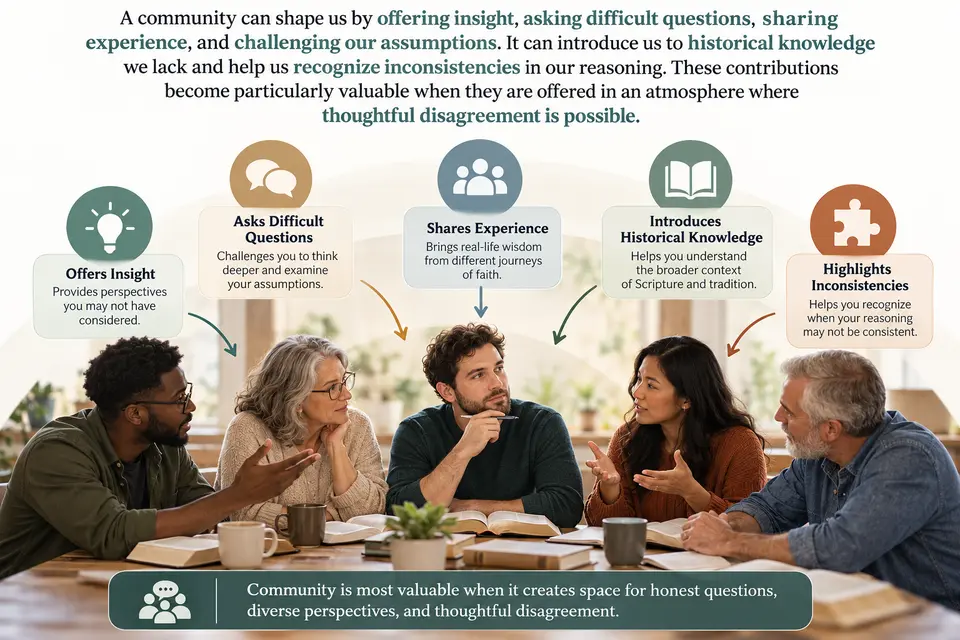
Yet there is an important distinction between a community that contributes to someone's formation and one that assumes ownership of that person's beliefs. A community can shape us by offering insight, asking difficult questions, sharing experience, and challenging our assumptions. It can introduce us to historical knowledge we lack and help us recognize inconsistencies in our reasoning. These contributions become particularly valuable when they are offered in an atmosphere where thoughtful disagreement is possible.
When Community Becomes Control
Governance over belief operates differently. It begins when an institution claims the authority to determine which interpretations an individual must accept, not simply as a condition of participating in a particular organization, but as a measure of spiritual legitimacy or faithfulness to God. In such an environment, disagreement can become a problem to be corrected rather than an opportunity for examination. The question shifts from whether an interpretation is well supported to whether the individual is willing to submit to the institution's conclusion.
This distinction should not be confused with the legitimate responsibilities of communities. Churches may establish shared beliefs, expectations for leadership, standards of conduct, and procedures for resolving conflict. Individuals may freely choose to participate in those arrangements, and communities may have legitimate reasons to define the commitments associated with particular roles. But organizational boundaries and authority over another person's conscience are not identical. A community's right to define its identity does not automatically establish that its interpretation of every disputed question is correct.
Early Disagreements
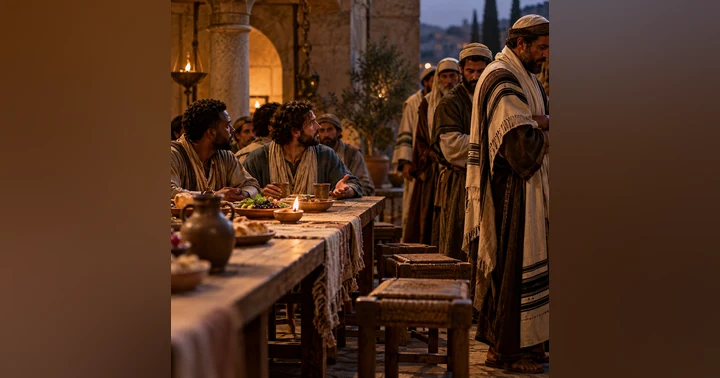
The New Testament itself reflects the complexity of communal discernment. In Acts 15, the early Jesus movement confronted a serious disagreement over whether Gentile believers needed to observe particular requirements of the Mosaic Law. The discussion involved testimony, debate, Scripture, and communal judgment. The account should not be reduced to a modern model of unrestricted individual interpretation, since its participants clearly exercised leadership and reached a collective decision. Nevertheless, it demonstrates that significant questions were engaged through deliberation rather than treated as though every inherited assumption were beyond examination.
"A healthy community should be capable of shaping people without demanding that they surrender the responsibility to think."
It should welcome thoughtful questions, distinguish disagreement from disloyalty, and recognize that spiritual maturity cannot be measured solely by conformity to institutional conclusions. Community is most valuable when it broadens understanding rather than narrowing the boundaries of permissible thought.
We can be shaped by a community without allowing that community to govern our conscience.
Establishing the Foundations of a Personal Framework
Building a framework begins with identifying the principles that will guide how we evaluate information and reach conclusions. Without these foundations, the process can become inconsistent. We may demand rigorous evidence for beliefs we dislike while accepting weak arguments for conclusions we already favor. We may criticize another tradition for relying on authority while quietly relying on our own preferred teachers in precisely the same way.
The Berean Project's interpretive process provides a useful starting point: Text, Context, Interpretation, Assumption, Tradition, and Application.
These categories help us distinguish what a passage says from what we think it means, recognize the influence of inherited beliefs, and consider how our conclusions should shape the way we live. They do not guarantee that every interpretation will be correct, but they establish a disciplined process for examining the reasoning behind our conclusions.
Text asks us to begin with what is actually written rather than what we remember being taught. Context requires attention to historical circumstances, literary genre, original audiences, and the larger narrative. Interpretation involves developing a reasoned understanding of the passage while recognizing that interpretation is a human activity. Assumption asks what expectations we are bringing to the reading, while Tradition helps us identify how centuries of religious teaching and practice may have influenced our understanding. Application considers how the resulting interpretation should affect our attitudes, relationships, and behavior.
A personal framework builds upon this process by establishing how we evaluate the conclusions it produces. We need to consider the quality of evidence, the strength of competing explanations, the limitations of our knowledge, and the degree of confidence appropriate to a particular claim. Not every question can be answered with equal certainty, and not every disagreement carries the same significance.
For example, someone might have strong confidence that Jesus taught His followers to love their enemies while remaining less certain about the precise interpretation of a difficult prophetic passage. Both questions deserve thoughtful attention, but they need not be assigned the same degree of certainty or importance. Recognizing these differences allows conviction and humility to exist together.
Learning to Distinguish Conviction from Certainty
One of the most difficult challenges in developing a framework is learning how to hold convictions without assuming that every conviction represents complete understanding. Religious communities sometimes reward certainty because confident answers provide reassurance, establish boundaries, and simplify difficult questions. Yet the strength with which a belief is held does not necessarily correspond to the quality of evidence supporting it.
Intellectual humility begins by recognizing the limits of our knowledge. We may misunderstand a historical setting, overlook a literary convention, rely too heavily on a particular translation, or fail to recognize how our cultural assumptions influence the questions we ask. These possibilities do not require us to abandon our conclusions, but they should encourage us to remain open to further examination.
A useful framework therefore distinguishes between what we consider well established, what we regard as probable, and what remains uncertain. This is not an invitation to treat every interpretation as equally plausible. Evidence matters, and some explanations are considerably stronger than others. The objective is to develop confidence that reflects the strength of the available evidence rather than the emotional importance of maintaining a particular conclusion.
This approach also changes the nature of disagreement. Instead of asking only whether another person agrees with us, we can ask how they arrived at their conclusion and whether their reasoning reveals something we have overlooked. We may ultimately remain unconvinced, but the exchange can still improve our understanding. Disagreement becomes an opportunity for examination rather than an automatic threat to identity or belonging.
A Living Framework Must Have a Shaping Mechanism
A framework should never be understood as a structure that is completed once and then permanently sealed. Human understanding develops through learning, experience, reflection, relationships, and the discovery of information we did not previously possess. If our framework cannot accommodate this process, it may eventually become another rigid system designed primarily to defend its own conclusions.
A living framework needs a shaping mechanism: a deliberate process through which existing beliefs can be examined, tested, strengthened, refined, or reconsidered. This process should not require constant uncertainty or the abandonment of every conviction that encounters opposition. Rather, it provides a responsible way to respond when new evidence, experience, or insight deserves attention.
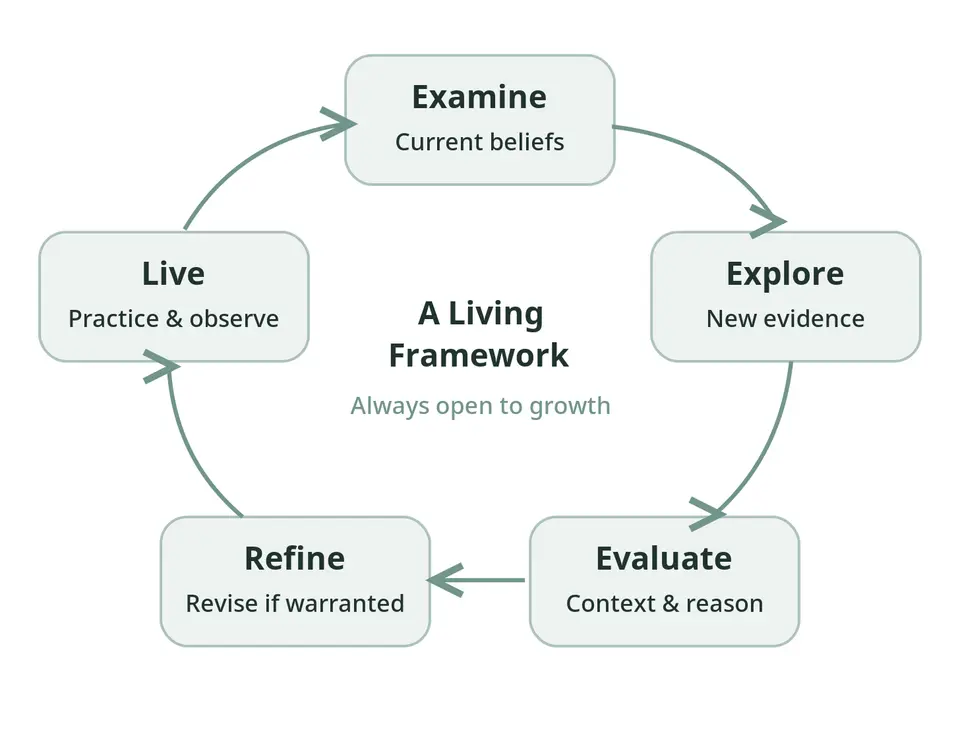
Five Movements of a Living Framework
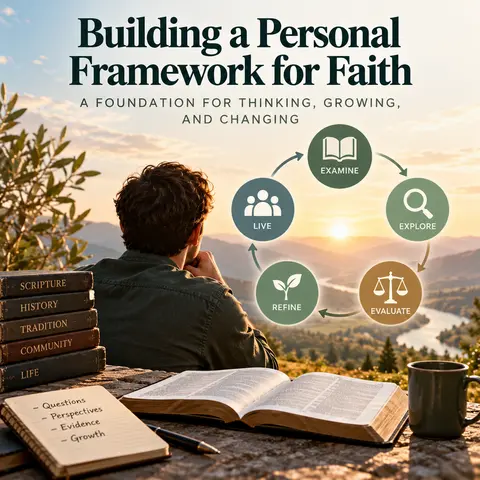
Examine: Understand what you currently believe. Begin by identifying the conviction or assumption under consideration. Where did it originate? What reasons support it? How confident are you in its accuracy, and have you ever seriously considered an alternative explanation? Examination is not an exercise in finding fault with everything we believe. It is an opportunity to become more aware of the foundations beneath our conclusions.
Explore: Encounter new information and perspectives. This may involve studying a passage in greater historical depth, consulting scholarly research, listening to someone from another Christian tradition, or reflecting on an experience that challenges our expectations. Exploration requires curiosity and a willingness to consider information that does not immediately fit our existing understanding. It also requires discernment, since encountering a new idea does not automatically make that idea credible.
Evaluate: Weigh what has been discovered. New information should be assessed carefully rather than accepted merely because it is unfamiliar or rejected because it is uncomfortable. Does the evidence support the proposed interpretation? Are the sources reliable? Does the explanation account for the broader context? Are we evaluating the idea itself, or reacting to the person or institution presenting it? Evaluation is where curiosity becomes disciplined reasoning.
Refine: Adjust the framework when warranted. Sometimes evaluation reveals that an existing belief remains well supported. At other times, it may show that an interpretation needs qualification, that an assumption was mistaken, or that a conclusion should be reconsidered. Refinement does not always mean dramatic change. It may involve becoming more precise, acknowledging an exception, distinguishing a core conviction from a secondary interpretation, or admitting that a question remains unresolved.
Live: Allow understanding to shape practice. A framework for faith cannot remain exclusively intellectual. Its conclusions should influence how we treat others, respond to conflict, participate in community, and make decisions. Lived experience may also reveal consequences or inconsistencies that deserve further examination. What we discover through practice becomes part of the information we bring into the next cycle of reflection.
These five movements form a continuing process rather than a checklist to be completed once. Examination leads to exploration, exploration invites evaluation, evaluation may produce refinement, and lived experience provides further opportunities for understanding. The framework remains stable enough to guide our thinking while flexible enough to respond responsibly to what we learn.
What Happens When the Framework Is Challenged?
Imagine someone who has always been taught that faithful Christians must avoid close relationships with people outside their religious community. The belief may have been reinforced through selected biblical passages, warnings from respected leaders, and years of social experience. Because the teaching is familiar, the individual may never have questioned whether it accurately reflects the broader biblical narrative.
Then that person begins studying the Gospels and notices how frequently Jesus shared meals with people regarded as outsiders. They encounter His conversations with Samaritans, His association with tax collectors, and His willingness to cross social boundaries that others considered important. These discoveries create tension between an inherited conviction and the example of Jesus.
A rigid framework may respond by dismissing the tension or finding ways to preserve the original conclusion without seriously considering the evidence. A living framework approaches the situation differently. The individual examines the inherited belief, explores the relevant passages and historical setting, evaluates possible interpretations, and considers whether the original conviction needs to be refined.
The resulting change might not be a rejection of every concern about relationships and influence. Instead, the person may develop a more nuanced understanding that distinguishes wise discernment from social exclusion. The framework has not collapsed. It has become more capable of accounting for the evidence and more consistent with the broader story of Jesus.
This example illustrates why the shaping mechanism matters. Without a process for reconsideration, even sincere convictions can become barriers to further understanding. With such a process, challenges can become opportunities for growth rather than occasions for fear.
Jesus as a Continuing Reference Point
For a Christian framework, the life and teachings of Jesus provide an essential reference point. This does not mean ignoring the rest of Scripture or reducing every difficult theological question to a simple slogan about love. It means recognizing that the Gospels present Jesus as central to understanding God's character, purposes, and the kind of life His followers are called to embody.
Jesus repeatedly challenged interpretations that preserved religious boundaries while overlooking mercy, justice, and human dignity. In Mark 3:1–6, He questioned those who opposed healing on the Sabbath, exposing the contradiction between their concern for religious observance and their unwillingness to recognize the goodness of restoring a suffering person. In Luke 10:25–37, He used the parable of the Good Samaritan to challenge assumptions about who should be regarded as a neighbor. In Matthew 23:23, He criticized religious leaders who carefully observed particular requirements while neglecting weightier matters of justice, mercy, and faithfulness.
These encounters offer more than isolated moral lessons. They demonstrate how Jesus examined the relationship between religious interpretation and its consequences for human beings. He did not simply ask whether a practice could be defended through an appeal to tradition or authority. He challenged His listeners to consider whether their understanding reflected the deeper purposes of God.
A personal framework should therefore include questions about its practical consequences. Does this interpretation encourage humility or superiority? Does it promote mercy or provide justification for indifference? Does it help us recognize the dignity of others, including those with whom we disagree? Are we becoming more attentive to the needs of people, or primarily more skilled at defending our religious positions?
These questions do not replace historical interpretation or careful reasoning. They help ensure that interpretation remains connected to the life it is intended to shape. A framework that produces increasingly sophisticated explanations but little growth in compassion, integrity, or love deserves serious examination.
The Danger of Building Another Rigid System
There is a subtle danger in the pursuit of intellectual independence. Someone who has experienced an overly controlling religious environment may become so determined to avoid external authority that personal autonomy becomes an unquestionable principle of its own. The individual may reject institutional interpretations reflexively, distrust anyone who speaks with confidence, or assume that arriving at a conclusion independently makes it more reliable.
But independence does not guarantee accuracy. We can be mistaken on our own just as easily as we can inherit mistakes from others. Personal experience can be misleading, confirmation bias can shape our research, and the desire to be different from a previous community can influence our conclusions as strongly as the desire to conform once did.
A healthy framework must therefore remain open to correction from sources outside ourselves. Scholarship, historical evidence, thoughtful disagreement, and the accumulated wisdom of Christian communities can all contribute to better understanding. The distinction is that these contributions are evaluated rather than accepted or rejected automatically because of their source.
The objective is not to become unteachable. It is to become more capable of learning responsibly. A mature framework should allow someone to say, "I believe this for these reasons, but I am willing to reconsider if better evidence emerges." That posture combines conviction with humility and recognizes that the pursuit of truth is more important than the preservation of personal consistency.
How to Begin Building Your Own Framework
For someone who has never consciously examined their religious framework, the process may initially seem overwhelming. There is no need to reconsider every belief at once or attempt to resolve centuries of theological disagreement before taking the first step. A framework develops gradually through repeated acts of thoughtful examination.
Begin with one belief that matters to you. It might concern the character of God, the meaning of salvation, the purpose of the church, the interpretation of a particular passage, or the way Christians are expected to relate to people outside their community. Write down what you currently believe and, just as importantly, why you believe it. Try to identify which parts of your understanding come directly from Scripture, which depend on interpretation, and which have been shaped by tradition or experience.
Next, investigate the belief using sources that offer more than confirmation of your existing conclusion. Examine the relevant biblical passages in context, consider credible historical scholarship, and listen to thoughtful perspectives that differ from your own. The goal is not to accumulate as many opinions as possible, but to understand the strongest reasons for and against the interpretations under consideration.
Then evaluate what you have discovered. Which explanations best account for the evidence? Which depend on assumptions that may not be justified? How much confidence is appropriate, and what remains uncertain? You may find that your original belief becomes stronger, that it requires some refinement, or that you need more time before reaching a conclusion.
Finally, consider how the resulting understanding should shape your life. If a belief has practical implications for how you treat others, participate in community, or make decisions, those implications deserve attention. A framework is not merely a private collection of ideas. It influences the way we live, and the consequences of our beliefs can reveal questions worth examining further.
Over time, this process becomes a habit rather than an occasional intellectual exercise. We become more attentive to our assumptions, more comfortable acknowledging uncertainty, and more capable of engaging disagreement without immediately becoming defensive. The framework develops through practice, not through the completion of a single study.
A Framework That Can Grow With Us
There is a tendency to imagine spiritual maturity as the point at which all the important questions have been answered and uncertainty has largely disappeared. From this perspective, changing one's understanding may seem like moving backward, while maintaining the same conclusions indefinitely becomes evidence of strength. Yet this assumes that growth primarily involves accumulating answers rather than developing greater wisdom in how we approach them.
The New Testament offers a more dynamic picture of growth. In Philippians 3:12–16, Paul describes himself as someone who has not already attained completion but continues pressing forward. His language does not suggest that conviction is meaningless or that every belief remains permanently unsettled. It reflects an ongoing process in which commitment and continued development belong together.
A personal framework should make room for that kind of growth. It should provide enough structure to support meaningful conviction while remaining open to refinement as understanding deepens. Some conclusions may remain stable throughout a lifetime, while others change considerably. The measure of maturity is not simply how often our beliefs change or how firmly we defend them, but whether we are engaging the process with integrity, humility, and a genuine desire to understand.
This is also where community can play one of its most constructive roles. People who know us well may recognize patterns in our thinking that we cannot easily see ourselves. They may challenge us when our actions contradict our stated convictions, introduce perspectives we have overlooked, or encourage us when difficult questions leave us uncertain. Such relationships can be profoundly formative without requiring the community to assume ownership of our conscience.
The Freedom and Responsibility of an Examined Faith
Building a personal framework is not an invitation to construct a version of Christianity that simply accommodates our preferences. Nor is it a rejection of the historical church, biblical scholarship, or the wisdom preserved through generations of believers. It is an invitation to participate responsibly in the process of understanding rather than allowing that process to be completed on our behalf.
"The individual owns the framework, but does not own the truth."
Community contributes to the framework, but need not govern the individual's conscience. Scripture provides the central material for Christian reflection, while historical context, careful reasoning, and thoughtful dialogue help us examine our interpretations. The life and teachings of Jesus continually challenge us to consider whether our understanding is producing the kind of people His message calls us to become.
Perhaps the most important characteristic of a healthy framework is that it remains capable of growth. It does not collapse whenever a cherished interpretation is challenged, nor does it automatically reject information that creates discomfort. It provides a way to examine, explore, evaluate, refine, and live out our understanding with increasing care.
A mature faith is not necessarily one that has stopped changing. It may be one that has learned how to change responsibly.
And perhaps that is one of the most meaningful expressions of discipleship: not simply learning what others have concluded about God, but developing the humility, curiosity, discernment, and courage to continue seeking understanding throughout our lives.
Historical Sources for Editorial Reference
Primary Ancient Sources
-
Acts 17:10–12: The Bereans' examination of Scripture in response to Paul's teaching.
-
Acts 15:1–29: The Jerusalem council and the communal deliberation surrounding Gentile inclusion.
-
Mark 3:1–6: Jesus' challenge to prevailing interpretations of Sabbath observance.
-
Luke 10:25–37: The Good Samaritan and Jesus' reframing of neighborly responsibility.
-
Matthew 23:23: Jesus' critique of religious practice that neglects justice, mercy, and faithfulness.
-
Philippians 3:12–16: Paul's description of continuing growth rather than completed attainment.
-
1 Corinthians 8:1–13: Paul's discussion of knowledge, love, conscience, and the effects of personal convictions on others.
-
Romans 14:1–23: Paul's treatment of disputed practices, individual conviction, mutual respect, and accountability before God.
Modern Scholarship
-
James D. G. Dunn, The Theology of Paul the Apostle (1998). Useful for examining conscience, communal identity, and the relationship between theological conviction and Christian practice.
-
N. T. Wright, Paul and the Faithfulness of God (2013). Explores Paul's worldview, the transformation of inherited Jewish understandings, and the formation of early Christian identity.
-
Amy-Jill Levine, Short Stories by Jesus (2014). Provides historical and Jewish context for Jesus' parables, particularly their capacity to challenge established assumptions.
-
Richard B. Hays, The Moral Vision of the New Testament (1996). Examines the relationship between biblical interpretation, communal discernment, and moral practice.
-
Peter L. Berger and Thomas Luckmann, The Social Construction of Reality (1966). A sociological reference for understanding how communities transmit assumptions and establish shared understandings of reality; not a work of biblical scholarship.
-
Anthony C. Thiselton, The Two Horizons (1980). A foundational work in biblical hermeneutics examining the relationship between the biblical text and the interpretive horizons of its readers.
When Outsiders Became Family: The Conflict That Shaped the Early Church