What Was a Denarius Worth in Jesus’ Day?
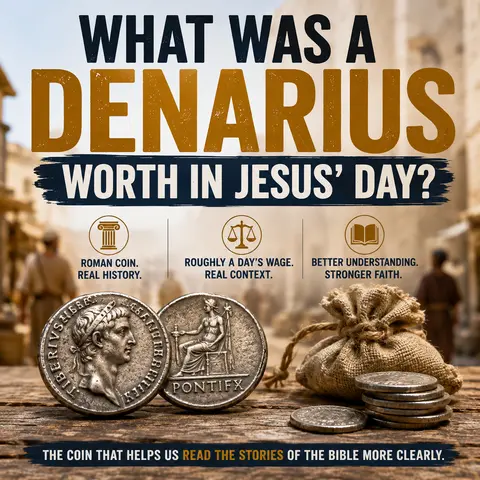
Few coins have shaped the economic and cultural trajectory of civilization quite like the Roman denarius. From the battlefields of the Second Punic War to the parables of the New Testament, this small silver coin served as the backbone of one of history's greatest empires. Understanding its origins, its gradual decline, and what it's worth today reveals a story that stretches across centuries and continents.
Coin Overview
-
The first denarius was minted around 214 BCE during the Roman Republic, and it served as Rome's primary currency unit for nearly 500 years.
-
Early denarii were struck in nearly pure silver at 95–98% purity, weighing about 4.55 grams, making them a trusted store of value across the Mediterranean world.
-
In the 1st century AD, one denarius was roughly a standard day's wage for a laborer, which is the economic backdrop behind New Testament references like the "denarius a day" parable in Matthew 20.
-
Progressive debasement under emperors like Nero, Septimius Severus, and Caracalla reduced the silver content of the denarius to only about 2% by 280 CE, eventually turning it into a copper coin with a silver wash.
-
Today, genuine Roman denarii are collected as ancient coins, with prices ranging from under a hundred dollars to tens of thousands depending on emperor, rarity, condition, and historical significance rather than silver melt value alone.
Origins of the Roman Denarius in the Roman Republic
By 214 BC, Rome was in crisis. Hannibal had marched his army across the Alps and was devastating the Italian peninsula. The costs of sustaining Roman armies in the field were staggering, and the existing hodgepodge of heavy bronze coinage and sporadic Greek-influenced silver pieces wasn't cutting it. Something had to change.
The silver denarius was introduced around 214–211 BC as part of a sweeping reform of Roman Republican currency. The goal was practical: create a standardized, trustworthy silver coin to pay troops, fund supply lines, and stabilize a war-torn economy. The denarius weighed about 4.55 grams at its inception and contained 95–98% silver purity, making it one of the most reliable coins in the ancient Mediterranean.
Rome's expanding conquests, particularly access to rich silver mines in Hispania, provided the precious metal needed to strike large volumes of denarii. This steady supply of ore from captured territories meant Rome could sustain mass production of silver coinage throughout the Republic's wars of expansion.
The denarius quickly became the standard silver coin of the Roman Republic, replacing earlier heavy bronze systems and circulating alongside smaller copper and bronze denominations. Its introduction laid the foundation for a monetary system that would carry Rome from a republic of citizen-soldiers to the sprawling Roman Empire.
The World's First Decimal Roman Currency
The denarius didn't just reform Roman currency; it introduced a remarkably clean decimal relationship that simplified trade and accounting across the growing republic.
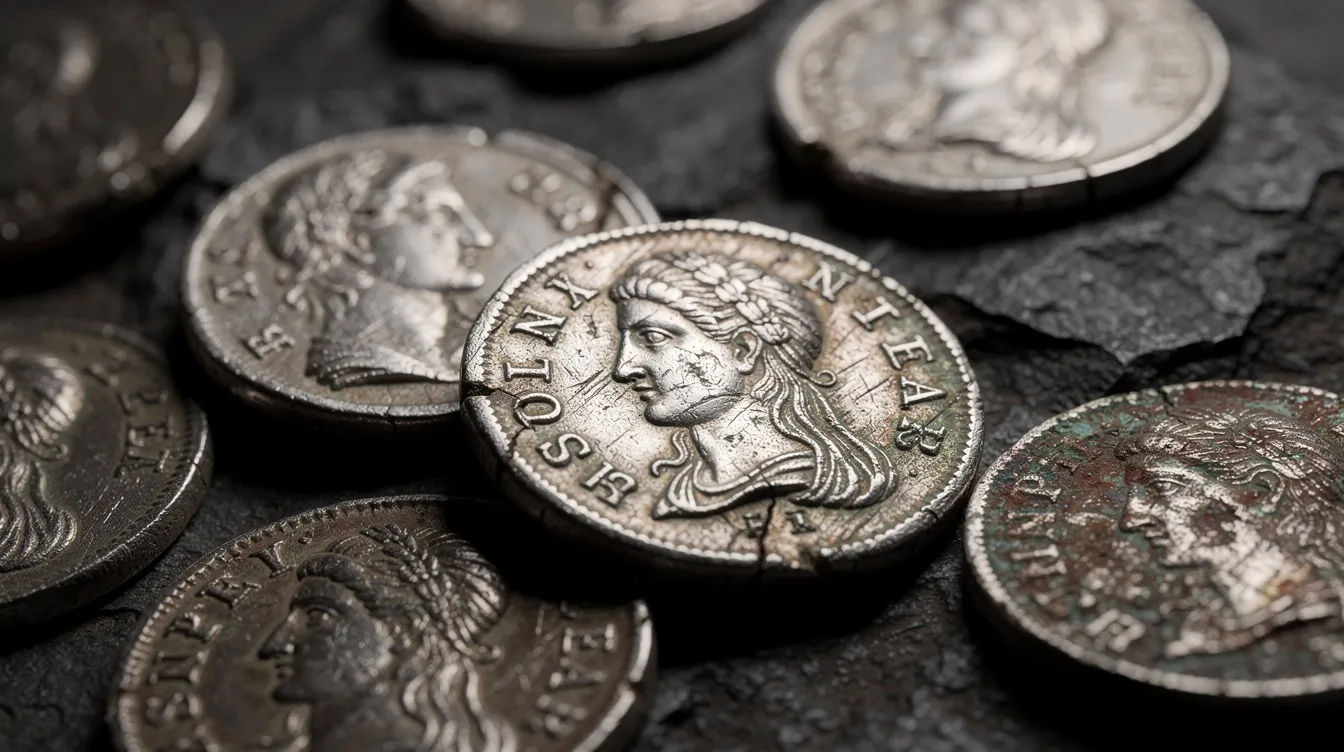
The name "denarius" itself is derived from the Latin word meaning "containing ten." Early denarii bore the value mark "X" on the obverse, indicating the coin was worth 10 bronze asses. This made the denarius arguably the world's first decimal currency unit, a system where values could be easily calculated in multiples of ten.
The value of the denarius was later adjusted to 16 asses around 141 BC, when the bronze as was reduced in weight, though the silver standard remained stable. Beyond the denarius, the system included other denominations that reinforced the decimal structure:
-
Quinarius - valued at 5 asses (half a denarius, marked "V")
-
Sestertius - valued at 2.5 asses (quarter of a denarius, originally minted in silver)
The early standard was approximately 4.55 g of near-pure silver per coin, later settling around 3.9 g while maintaining high purity through the 2nd century BC. This clear ratio system allowed soldiers' pay, taxes, and market prices to be reckoned in denarii, integrating silver and base-metal Roman coinage into a coherent monetary system.
Design and Iconography: From Roma to Emperors
The design elements on Roman denarii did far more than identify the coin. They expressed Roman identity, religious devotion, and political power, evolving dramatically as the Republic gave way to empire.
Early Republican denarii featured a helmeted head of Roma on the obverse, symbolizing the city's martial strength. The reverse commonly showed the Dioscuri, Castor and Pollux, charging on horseback - sometimes depicted alongside a two horse chariot - representing divine protection and military prowess. Designs included Roma and the Dioscuri on early coins as standard motifs for decades.
By the 2nd century BC, new reverse types emerged: Luna riding a biga, Victory driving a chariot, and other mythological scenes. Moneyers began adding their names and personal symbols from about 206–150 BC, turning Roman coins into vehicles for family prestige.
The late Republic saw powerful families illustrating ancestral achievements on the reverse side, using the imagery on denarii as political propaganda for military leaders and aspiring politicians. Julius Caesar shattered tradition in the 40s BC by placing his own portrait on the obverse of the denarius, something no living Roman had done before. This innovation foreshadowed the portrait coinage that would define the Roman Empire.
Under the empire, denarii typically bore the reigning emperor's portrait with titles on the obverse and propaganda scenes on the reverse: victories, gods, personifications, and commemorations. Roman emperors understood that every coin was a tiny billboard reaching millions of hands across Europe, Asia, and Africa.
Silver Content and Debasement: From Pure Silver to Plated Copper
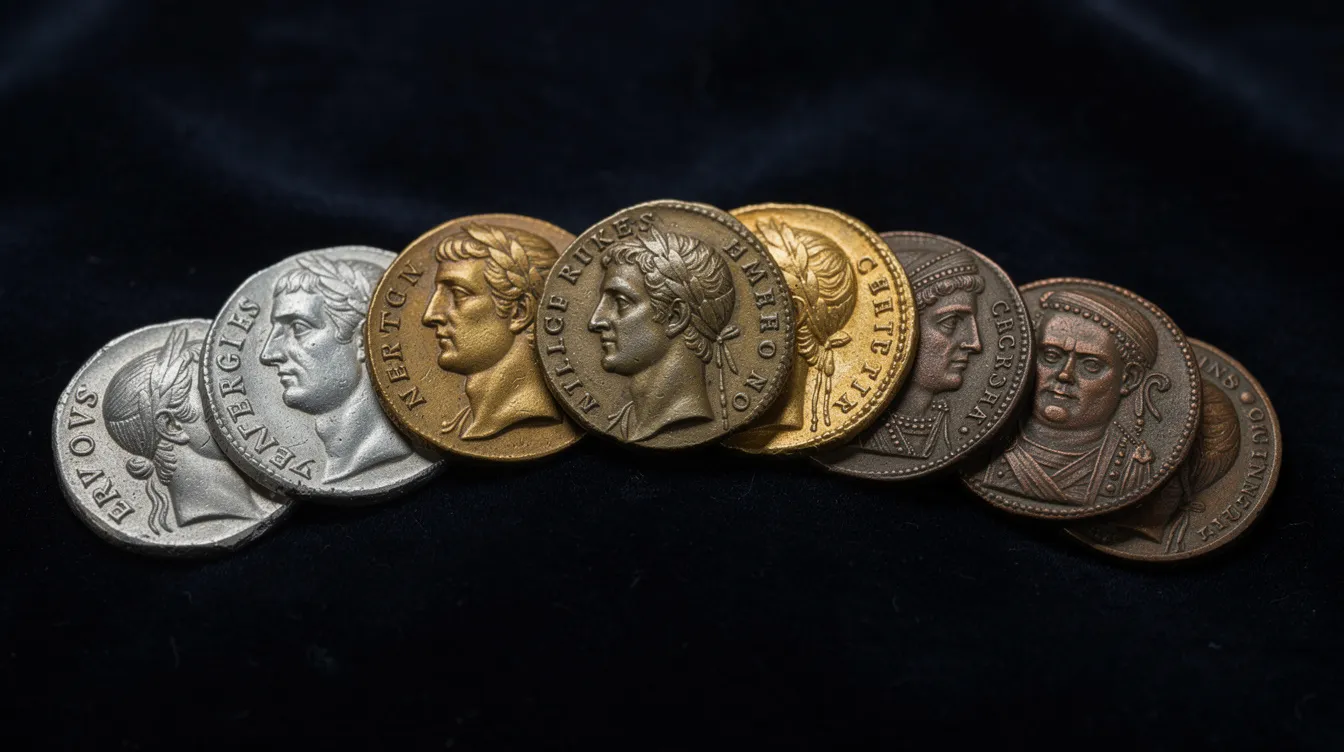
The denarius began as a high-silver coin, but over roughly three centuries, debasement of the denarius occurred as emperors mixed cheaper metals into the silver. This steady erosion of silver content mirrors the wider economic strains that eventually fractured the Roman Empire.
Under the late Republic and Caesar Augustus (27 BC–AD 14), denarii were around 95–98% pure silver, with a theoretical weight standardized near 3.8–3.9 g. This remained relatively stable through the early empire and into the reign of Tiberius.
Emperor Nero reduced the denarius's silver content by 20% in 64 AD, cutting weight to about 3.3–3.4 g while also lowering purity. This was partly to fund rebuilding after the Great Fire of Rome and to meet mounting military needs. It marked the first systematic reduction of the denarius standard.
From there, the decline accelerated:
| Period | Emperor(s) | Approx. Silver Content | Weight |
|---|---|---|---|
| 27 BC – AD 14 | Augustus | 95–98% | ~3.9 g |
| AD 64 | Nero | ~80% | ~3.3 g |
| AD 193–211 | Septimius Severus | ~50% | Variable |
| AD 215 | Caracalla | ~40–50% | Variable |
| AD 260–270 | Gallienus | Single digits (%) | Dropping |
| AD 280 | Late 3rd century | ~2% | Minimal |
Caracalla's antoninianus, a double denarius introduced c. AD 215, was officially valued at two denarii but contained only slightly more silver than one denarius. By the mid-third century, the denarius lost nearly all its intrinsic value. By 280 CE, the denarius had lost almost all its silver value, and by 300 AD, the denarius contained only about 2% silver. Many so-called silver coins were billon or copper with a thin silver wash. By the 3rd century AD, the denarius was primarily a copper coin with a silver wash.
This debasement fueled runaway inflation, military overextension, and loss of confidence in Roman currency, eventually forcing radical reforms under Diocletian and Constantine, including the introduction of the gold solidus.
The Denarius in the Economy of the Roman Empire
The denarius served as a medium for trade, taxation, and paying soldiers across the Roman Empire, functioning as the essential currency unit for everyday transactions, military payrolls, and provincial tribute.
The denarius became a key part of a hierarchy of coins under Emperor Augustus:
-
1 gold aureus ≈ 25 silver denarii
-
1 denarius = 4 bronze sestertii
-
1 sestertius = 4 copper asses
Under the late Roman Republic, a legionary earned roughly 112.5 denarii per year. Julius Caesar raised this to about 225 denarii, and by the reign of Domitian, it reached 300 denarii annually. A common soldier earned approximately 1 denarius per day during the Empire, making the coin deeply familiar to the men who built and defended Rome.
Taxes in the provinces were frequently assessed in denarii, and the coin facilitated long-distance exchange across the Mediterranean, Europe, and the Near East. The denarius was a crucial part of the Roman economy for centuries, providing the silver backbone against which all other denominations were measured.
The denarius' name and concept eventually survived into later currencies such as the medieval denier and the modern dinar, illustrating its lasting influence on global monetary history well into the middle ages and beyond.
The Denarius in the Bible and Daily Life Value in the 1st Century AD
The denarius appears in historical texts, notably in the New Testament, where it serves as the default economic yardstick for Jesus' audience.
In the time of Jesus (early 1st century AD, under Tiberius), one denarius was widely regarded as the standard daily wage for a laborer or farm worker. The parable of the workers in the vineyard in Matthew 20:1–16 explicitly describes hiring laborers for "a denarius a day." Revelation 6:6 prices wheat and barley at one denarius, further cementing the coin as the common person's economic reference point.
This day's-wage convention makes several parables more vivid. The Good Samaritan pays two denarii for the injured man's care at an inn, roughly two days' wages. The woman who anoints Jesus with expensive perfume valued at 300 denarii is spending nearly a full year's earnings, a staggering act of generosity.
While some Judean taxes and Temple payments were made in local or Tyrian silver coinage, the denarius still circulated broadly in the eastern Roman Empire. Jesus' audience in London-distant Palestine would have handled denarii regularly enough for the reference to land.
Comparing the denarius' biblical-era purchasing power to modern terms requires caution. Roughly speaking, if you think of one denarius as equal to a full day's unskilled manual labor today, perhaps $50–$100 depending on region, you get a useful but imperfect approximation. You can estimate costs in biblical stories by multiplying denarii into days of work: 100 denarii represents several months of wages, a sum no ordinary person would part with lightly.
Modern Value of a Denarius: Silver Melt vs Collector Price
The modern value of a Roman denarius depends far more on its historical and numismatic interest than on the precious metal it contains.
An early silver denarius at around 3.8–4 g and 95–98% pure silver contains roughly 3.6–3.9 g of actual silver. At current silver prices of approximately $0.80–$1.00 per gram (around $25–$30 per ounce), that translates to a melt value of only a few dollars.
Collector market value is a different world entirely:
| Category | Typical Price Range (USD) |
|---|---|
| Common imperial denarii, worn condition | $50–$200 |
| Republican denarii, good condition | $75–$5,000+ |
| Rare emperors or special reverses | $5,000–$50,000+ |
| Iconic issues (e.g., Caesar portrait types) | $50,000–$1,000,000+ |
The factors that drive price include: the issuing emperor, rarity, historic importance, state of preservation, style of the portrait and legend clarity, and provenance from documented collections. A coin of David-like obscurity among the emperors fetches far less than a well-struck denarius of a king-like figure such as Augustus or Nero.
In biblical studies, some scholars use average modern daily wages to give readers a rough modern equivalent for one denarius as a day's wage. Any such number is approximate, but it helps readers grasp the economic stakes in ancient narratives.
Collecting Roman Denarii as Ancient Coins
Roman denarii appeal to modern collectors as tangible links to the Roman Republic, the Roman Empire, and even to biblical narratives. Holding a coin minted two thousand years ago connects you directly to ancient Rome in a way few other artifacts can.
Common collecting themes include:
-
Famous emperors - Julius Caesar, Augustus, Nero, Trajan, Hadrian
-
Dynasty sets - Julio-Claudian, Flavian, Severan families
-
Reverse types - military victories, gods, buildings, personifications
-
Biblical-era coins - denarii of Tiberius (the "tribute penny" of the Gospels)
Condition grades such as Fine, Very Fine, and Extremely Fine dramatically affect desirability and price. A coin with a clear, readable legend and sharp portrait commands a significant premium over a worn, barely identifiable piece.
Provenance and legal considerations matter. Collectors should ensure coins were exported and traded in compliance with cultural property laws. Works published by Cambridge University Press and Oxford University Press, including the Oxford Handbook of Greek and Roman coinage, offer authoritative references for serious collectors.
For those interested in metallurgical history and silver content analysis, scientific studies of Roman silver denarii by Michael Crawford and David Sear provide detailed data on regional variations and debasement patterns across different periods.
Legacy and Influence of the Roman Denarius
Beyond its role as a coin, the denarius shaped monetary language and systems long after the fall of the Roman Empire.
The Latin "denarius" gave rise to currency names still in use today: the French denier, Italian denaro, Spanish dinero, and the Arabic dinar. The denarius influenced the naming of modern currencies across the world, from North Africa to Southeast Asia.
The decimal structure pioneered by the denarius' original value relationships anticipated later decimal currency systems used in modern states. When the Romans set one denarius equal to 10 asses, they created an accounting framework that eventually echoed through centuries of monetary innovation.
The denarius' long history - from nearly pure silver to highly debased copper-based issues - provides a powerful case study in how political decisions, war, and inflation can erode a currency's stability. Inflation in Rome reached 6,300% after Diocletian's price controls in 301 AD, a stark reminder of what happens when money loses public trust.
The Roman denarius stands as both a symbol of Rome's rise and a cautionary tale about monetary debasement. That lesson still resonates in contemporary discussions of money, inflation, and the value of sound currency policy.
Frequently Asked Questions
How can I tell if a Roman denarius is genuine?
Start by checking the coin's weight and diameter against known standards for its type and period. Genuine denarii typically fall within well-documented ranges (e.g., 3.3–4.5 g depending on era). Examine the style and lettering for consistency with published reference catalogs - forgeries often get subtle details wrong, such as letter spacing or portrait style. Aged silver has a distinctive patina that differs from modern castings. For any significant purchase, buy from established dealers, auction houses, or numismatic societies, and consider third-party authentication. Advanced tests like X-ray fluorescence analysis are sometimes used in academic or high-end collecting contexts to verify metal composition.
Did people in Judea actually use Roman denarii every day?
In 1st-century Judea, a mix of coins circulated: local bronze issues, Tyrian silver shekels (required for Temple tax), and Roman imperial silver including denarii. Roman denarii were common enough in the eastern provinces that Jesus' audience would have recognized and handled them regularly, even if certain taxes and religious payments required different silver coins. The gospel writers used the denarius as a familiar benchmark for a day's wage, making it an effective communication tool rather than a strict technical term for a specific local coin.
Were all Roman denarii made of pure silver?
No. Early denarii from the Republic through Augustus were struck in high-grade silver at about 95–98% purity. However, silver content declined significantly over the following centuries. By the Severan period (early 3rd century), purity had dropped below 50%. By 280 CE, many coins called "denarii" or their successors contained only about 2% silver, with a copper core and thin silver wash. If you want precise silver content data by emperor and period, consult reference works such as those published by Oxford University Press or specialized numismatic databases.
Is a Roman denarius a good investment today?
Roman denarii should be viewed primarily as historical artifacts and collectibles rather than guaranteed financial investments. Prices can appreciate over time for rare, high-quality pieces, but the market is specialized and can be illiquid. Transaction costs, authentication expenses, and the need for expertise all play significant roles. If you're considering significant purchases, learn basic numismatics first, focus on coins you personally find interesting, and buy from reputable sources. Treat any financial appreciation as a bonus rather than the primary motivation.
How does the value of a denarius compare across different emperors?
In antiquity, the face value of a denarius remained nominally the same regardless of who minted it, but the intrinsic value depended heavily on silver content, which varied by emperor and era. Today, collector value differs sharply. Coins of famous or short-reigning emperors, or those tied to major events like Julius Caesar's lifetime portrait issues, often command dramatically higher prices. Newcomers to collecting should consider starting with more common imperial denarii - those of Trajan, Hadrian, or Septimius Severus, for example - before pursuing rare or high-priced rulers. This approach builds knowledge while keeping initial costs manageable.
Why Historical Context Matters When Reading Scripture
Understanding the value of a denarius illustrates why historical context matters when reading Scripture. A sum that seems insignificant to a modern reader might represent months of wages to someone hearing Jesus speak in the first century. Without understanding the economic circumstances of the original audience, we can easily miss the significance of a biblical story. This is one reason reading Scripture in its historical and cultural context is so important.
The Roman denarius is just one example of how understanding the ancient world can change the way we read Scripture. But it also raises a larger question: What else might we be missing when we read ancient texts through modern assumptions? These are the kinds of questions we explore in Questions Worth Wrestling With, where curiosity, context, and thoughtful examination invite us to look beyond familiar interpretations and discover a deeper understanding of Scripture.
When Outsiders Became Family: The Conflict That Shaped the Early Church