Aug. 8, 2026
The Chicken Coop
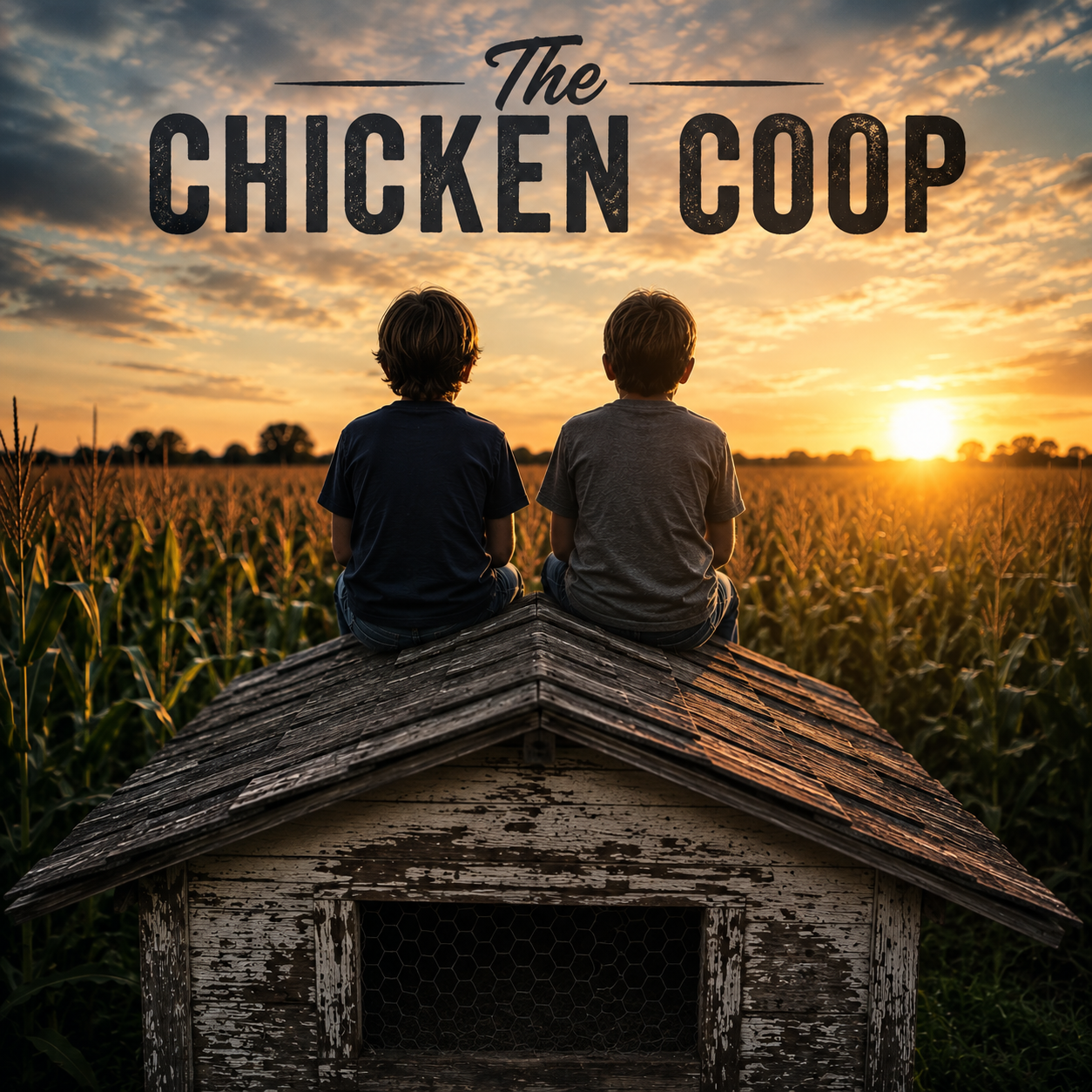
When I was about 10 or 12 years old, we lived out in the country. Our next-door neighbors had eight kids, and one of them was about my age. We spent a lot of time exploring the woods, fields, and anything else that looked interesting.
Behind their giant garden sat a chicken coop. It wasn’t just a little shed—it was a well-built structure with a shingled roof that was easy to climb onto. One afternoon, we scrambled up there and sat looking out over the cornfields. The view was incredible. More importantly, nobody could hear us.
For some reason, I was mad about something. I don’t remember what it was anymore. Maybe he was too. But that afternoon, sitting on top of that chicken coop, we decided to explore something we had never explored before. What happens if you just say exactly what’s on your mind? So we did. That was the day I learned how to curse.
I’d never been allowed to use those words before, but out there, hidden behind the garden with nothing but cornfields around us, every word I could think of came flying out. My buddy joined right in. Oddly enough…It was therapeutic.
Looking back, I don’t think the cursing was really the point. What we had discovered was something much deeper. We had accidentally created a safe place. No audience. No adults. No fear of getting in trouble. No pressure to filter every thought before it left our mouths. Two kids simply letting the pressure escape.
The words themselves weren’t magical. They were just the tools we had available. What mattered was finally having a place where we could express emotions we didn’t yet know how to process. As adults, we often confuse emotional honesty with emotional immaturity. We tell people to keep it together, choose better words, or bottle it up. Yet every one of us needs places where we can be completely honest before we can become completely healthy.
That doesn’t mean every feeling belongs on social media or every frustration should be dumped on the people around us. But it does mean that human beings need safe containers for their emotions, places where they can tell the truth without fear. Sometimes that’s a trusted friend (thanks Ed). Sometimes it’s a counselor. Sometimes it’s a journal. And sometimes it’s the roof of an old chicken coop, hidden behind a garden, surrounded by cornfields, where two kids accidentally discovered that being heard is often more important than being polished.
I think there’s a season for that.
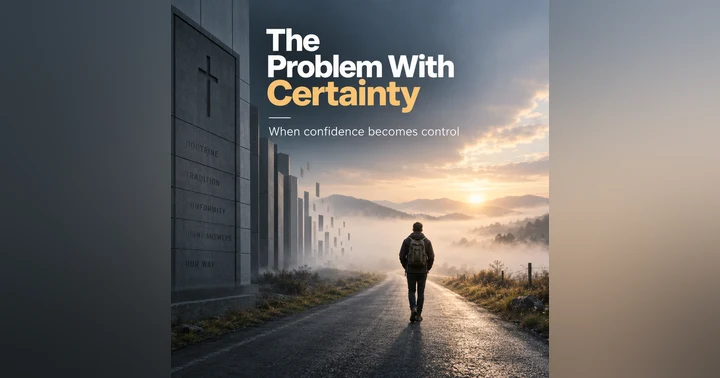
The Problem With Certainty
Certainty feels good. It gives us solid ground, tells us where we stand, and removes the need to keep investigating something we believe we have already settled. There are plenty of things we should be certain about. The earth orbits the sun. Gravit…

What Is Empire in the Bible and Why Does It Matter?
Empire Overview The Bible unfolds in a world shaped by powerful empires. Egypt, Assyria, Babylon, Persia, Greece, and Rome ruled enormous territories, controlled economies, moved populations, influenced cultures, and shaped the everyday lives of …