What Is Identity Language in the Bible? Understanding "I Am" and Identity Statements in Scripture
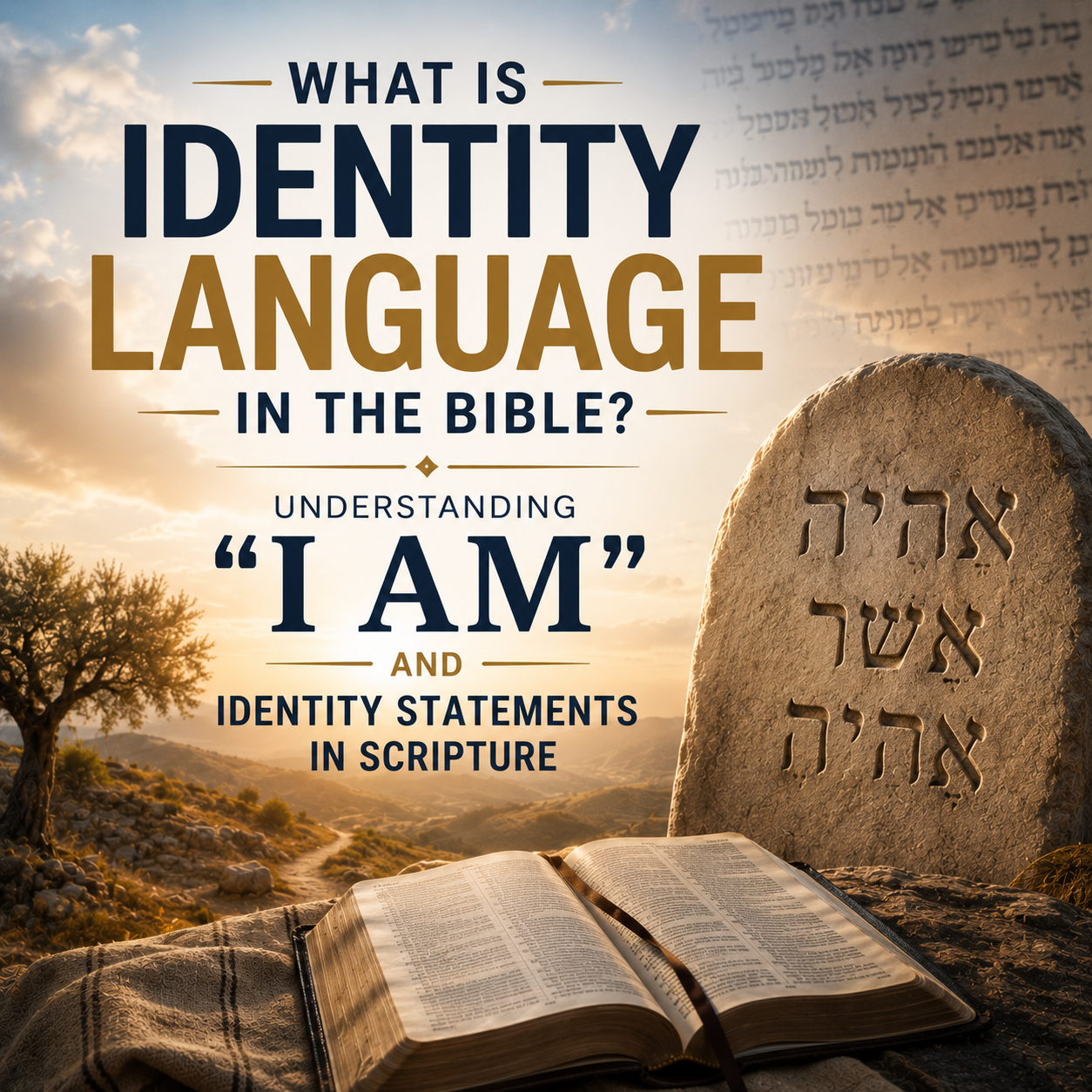
What Is Identity Language in the Bible? Understanding "I Am" and Identity Statements in Scripture
The question of "who am I?" is one every human being asks at some point. The Bible doesn't leave that question unanswered. From the burning bush in Exodus to the letters of the apostle paul, scripture is packed with identity statements that define who God is and who we are in relation to Him. This article unpacks what identity language in the bible actually means, why it matters, and how it reshapes everyday life.
Highlights
-
"Identity statements" or "identity language" in the bible refers to how scripture talks about who God is ("I AM") and who we are in relation to Him - made in God's image, sinners, new creations, god's children, and more.
-
While the English word "identity" rarely appears in most bible translations, the bible is full of identity-shaping phrases like "in Christ," "children of God," "new creation," and "in the heavenly places."
-
There are two main kinds of biblical identity language: (1) God's own self-revelation, especially His "I AM" statements, and (2) God's declarations about believers' union with Christ Jesus.
-
Modern self identity talk can conflict with biblical identity when it defines us mainly by feelings, sins, or diagnoses instead of our status in christ. Biblical identities are defined by divine declarations rather than worldly achievements.
-
The holy spirit plays a vital role in applying these identity truths so they become lived realities, not just theological ideas.
What Do We Mean by "Identity Statements" or "Identity Language" in the Bible?
"Identity statements" are biblical phrases that answer two questions: "Who is God?" and "Who am I?" Examples include "I am who I am" (Exodus 3:14), "in Christ" (throughout Paul's letters), "children of God" (John 1:12), and "new creation" (2 Corinthians 5:17).
The term "identity" itself is modern, but the reality is ancient. The bible shapes identity through names, titles, covenants, and repeated phrases like "you are…" and "I am…" across both Testaments. Identity statements provide a remedy for spiritual amnesia by reminding believers of their true value - anchoring them in what god says rather than what the world suggests.
There is an important distinction between descriptive language and definitive identity language. Descriptive language captures experience: "I feel anxious," "I am struggling." Definitive identity language declares status: "I am in Christ," "you are my people." Scripture leans heavily on the latter. A biblical understanding of identity starts not with how we feel but with what God has declared.
This article moves through four layers: first, god's own identity language; second, human identity in God's image; third, fallen identity in sin; and fourth, new identity in Christ Jesus through union with him. We'll then explore how this plays out in everyday faith, counseling, and discipleship.
God's Self-Identity: "I AM WHO I AM" and the Name of the Lord
In Exodus 3:13–15, Moses stands before a burning bush and asks God for His name. God's answer is the foundational identity statement in all of scripture: "I AM WHO I AM… Say this to the people of Israel: 'I AM has sent me to you.'"
This is not a name humans assigned to God. God defines Himself. The Hebrew phrase ehyeh asher ehyeh carries the sense of self-existence, sovereign freedom, and unshakeable faithfulness. God is not defined by anything outside Himself. He simply is - eternally present and actively working.
From this self-revelation flows the divine name YHWH (translated "The Lord" in most English Bibles), which became central to Israel's worship, covenants, and self-understanding. All human identity in the bible is derivative - grounded in who God is first.
God repeatedly ties His identity to His saving actions. In Exodus 20:2, He declares: "I am the LORD your God, who brought you out of the land of Egypt." In Leviticus 19:2 He says, "You shall be holy, for I the LORD your God am holy." His name is not abstract theology. It is a word spoken into history, defining reality for His people.
Jesus' "I Am" Statements: Christ's Divine Identity in the New Testament
In the Gospel of John, Jesus takes up God's "I AM" language and makes explicit identity claims that reveal Him as God the Son and savior. These are not casual metaphors. They are declarations of who jesus christ is and what He came to do.
Several of Jesus' key "I am" statements include:
-
"I am the bread of life" (John 6:35) - Jesus as the one who truly sustains us, satisfying the deepest hunger of the soul.
-
"I am the light of the world" (John 8:12) - Jesus as the one who reveals god and guides our steps out of darkness into marvelous light.
-
"Before Abraham was, I am" (John 8:58) - Jesus echoing Exodus 3:14, claiming divine pre-existence. The Jewish leaders recognized this as a claim to deity and attempted to stone Him.
-
"I am the good shepherd" (John 10:11) - Jesus as the one who knows, leads, and lays down His life for god's sheep.
-
"I am the way, and the truth, and the life" (John 14:6) - Jesus as the exclusive way to the father, the source of eternal life.
These statements define Jesus' person and mission, and they demand a response of faith or rejection. Each one reveals the lord Jesus as the fulfillment of Israel's scriptures and the answer to humanity's deepest needs.
Christian identity language - being "in Christ" - is meaningful only because of who Christ Jesus says He is. He is God's only son, the word made flesh, and the one through whom all things hold together. Without His identity, ours has no anchor.

Made in God's Image: The Bible's First Word About Human Identity
Genesis 1:27 states God created us in His image: "So God created man in his own image, in the image of God he created him; male and female he created them." This is scripture's first and foundational word about every human being.
What does "God's image" mean? At a high level:
-
We are created to reflect god's character - righteousness, creativity, relational love. We are made to reflect God's love, compassion, and holiness.
-
We are given dominion and stewardship over creation (Psalm 8; Genesis 1:28). God created humanity to represent Him in the world.
-
Every human being has inherent dignity, value, and purpose, regardless of abilities or status. Being created in God's image affirms our inherent dignity.
"Image of God" is scripture's foundational category for human self-understanding - prior to nationality, profession, or personality. In God's eyes, every person matters. Knowledge of one's identity as God's creation fosters a sense of intrinsic value and purpose.
Psalm 8:5 says humans are crowned with glory and honor. Psalm 139:14 declares we are remarkably and wondrously made. These are not empty affirmations. They reflect the truth about God's creation. Every person - whether they know Christ or not - bears this image. This is why Christian teaching upholds human rights, justice, and love for neighbor. In one sense, this is the most universal identity statement the bible makes.
Fallen Identity: Sinners, Unclean, and in Need of Rescue
The shift from Genesis 1–2 to Genesis 3 is catastrophic. The fall into sin distorts the image of God in humanity - though it does not erase it entirely. The bible is unflinching in its description of the human condition apart from grace:
-
Isaiah 6:5: "Woe is me! For I am lost; for I am a man of unclean lips." Seeing God exposes our uncleanness.
-
Romans 3:23: "All have sinned and fall short of the glory of God" - a universal sin problem that no human being escapes.
-
Ephesians 2:1–3: Paul describes humanity as spiritually dead, following the course of this world, children of wrath by nature - an enslaved identity apart from Christ.
Scripture does not flatter us. Our natural identity apart from God's redemptive work is not "basically good." We are rebels, enemies of God (Romans 5:10), and slaves to sin (John 8:34). The bible's honest identity language about sin serves a purpose: it prepares us to receive a new heart and a new identity in Christ Jesus.
Modern culture tends either to deny sin or to make sin a core identity - "I am my desires," "I am my past." The bible takes a different path. It names sin clearly and honestly, but it refuses to let sin be our final label. The point of negative identity language is always to drive us toward the gospel, toward rescue and hope.
Old Testament Identity Language: Names, Covenants, and God's People
In the Old Testament, names often function as identity statements. Biblical names often signify character and purpose, reflecting changes in identity and mission. When God renames Abram to Abraham (Genesis 17:5), He signals a new calling: "Father of many nations." When Jacob becomes Israel (Genesis 32:28), it marks a transformation tied to God's promises.
God also uses covenant identity phrases for His people Israel:
-
"You shall be my people, and I will be your God" (Jeremiah 30:22).
-
"You shall be to me a kingdom of priests and a holy nation" (Exodus 19:5–6).
-
"I have called you by name, you are mine" (Isaiah 43:1).
Israel's identity as God's treasured own possession is corporate: "chosen people," "holy nation." Believers are described as a chosen and holy people set apart for God's purposes. This language anticipates the New Testament identity phrases in 1 Peter 2:9, where the church is called a chosen race, a royal priesthood, and a holy nation.
One striking example comes from Hosea. God instructs the prophet to name his children with devastating identity labels - "Not My People," "No Mercy" - to expose Israel's sin. But then God reverses the judgment: "You shall be called 'Children of the Living God'" (Hosea 1:10). God leads His people through judgment and back into mercy. Identity in the Old Testament tracks with God's saving acts and promises across centuries.
Identity in Christ: "New Creation" and Union with Christ Jesus
"Therefore, if anyone is in Christ, he is a new creation. The old has passed away; behold, the new has come" (2 Corinthians 5:17).
This verse is the hinge of the bible's identity story. You are a new creation in christ. Identity in the New Testament emphasizes union with christ, defining believers' relationship with god in radically new terms. The apostle Paul uses "identity in Christ" language not as a motivational slogan but as a theological reality rooted in what god has done.
What does union with Christ mean in accessible terms?
-
We are spiritually joined to Christ by the Holy Spirit at conversion. In Christ, we are made spiritually alive.
-
What is true of Christ legally - righteous, accepted, raised - is counted true of us in Him. Through faith in Christ, we are transformed into new creations.
-
Over 150 "in Christ," "with Christ," and "through Christ" phrases appear in Paul's letters alone, spanning Ephesians, Romans, Colossians, and more.
This union with Christ creates an entirely new identity set:
-
Justified - declared righteous before god (Romans 5:1).
-
Forgiven - sins removed through His blood (Ephesians 1:7).
-
Adopted - brought into God's family by His decision (Ephesians 1:5).
-
Seated with Christ "in the heavenly places" (Ephesians 2:6), even while we live on earth.
-
No longer defined by past sins, ethnic status, or worldly labels (Galatians 3:28).
The old has passed away; the new has come. Believers are new creations in Christ. This is not self-improvement or a better version of the old self. Paul describes it as putting off the old man and putting on a new self, created after the likeness of God in true righteousness (Ephesians 4:22–24). Through faith, god gives us new life - a new identity that the world cannot grant and cannot revoke.

Children of God: Adoption, Family Language, and God's Children
One of Scripture's dearest identity statements for believers is "children of God." You are a child of God (John 1:12) - not a metaphor, but a legal and relational reality secured by God's own decision.
Key texts make this unmistakable:
-
John 1:12: "To all who did receive him, who believed in his name, he gave the right to become children of God."
-
1 John 3:1–2: "See what great love the Father has lavished on us, that we should be called children of God!" God loves us with a love that redefines us.
-
Romans 8:14–17: "The Spirit himself bears witness with our spirit that we are children of God, and if children, then heirs - heirs of God and fellow heirs with Christ." Romans 8:16 states we are children of God and heirs.
-
Galatians 4:4–7: God sent His only son so that we might receive adoption. "So you are no longer a slave, but a son, and if a son, then an heir through God." Believers are co-heirs with christ according to Galatians 4:7. You are an heir of God.
God decided to adopt us into His family. Ephesians 1:5 affirms our adoption into God's family. In the ancient Roman world, adoption granted full legal rights as sons and heirs - including inheritance. We are called children of God through adoption, and adoption by God brings a spirit of freedom, not fear. As adopted children, we are heirs of God's kingdom. As children of God, we inherit eternal riches of His kingdom. Heirs of God are promised a share in His boundless love. God's adoption gives us a new identity and belonging.
There is a distinction worth noting: all people are God's creatures, but being god's children is relationally specific to those who believe in christ (John 8:42–44 draws this line). You are loved, worthy, and accepted by God - not because of performance, but because of His grace.
The practical implications are profound:
-
Our deepest identity is relational: beloved sons and daughters, not spiritual orphans.
-
This combats shame, rejection, and the need to "perform" for acceptance. Identity in Christ offers security and self-worth, helping believers overcome anxiety and shame.
-
The Holy Spirit bears witness to this identity in our hearts (Romans 8:16).
Heavenly Places: Our Position in Christ Beyond Earthly Labels
The letter to the Ephesians uses "heavenly places" language repeatedly (1:3; 1:20; 2:6; 3:10; 6:12), describing a spiritual reality that reshapes how believers see themselves in this world.
Ephesians 1:3–4 tells us:
-
Believers are blessed with "every spiritual blessing in the heavenly places" in Christ.
-
We were chosen in christ before the foundation of the world - identity rooted in God's eternal purpose, not in our recent performance.
Ephesians 2:5–6 goes even further:
-
God made us alive together with christ, raised us up, and seated us with Him in the heavenly places.
-
This is an objective, spiritual reality: our truest location is with christ, even while we live on earth. Believers are considered citizens of heaven, emphasizing a non-earthly identity.
As Tim Keller once observed, the gospel gives us an identity that is not based on what we do but on what has been done for us. Because our true identity is anchored in heavenly places, earthly markers - status, ethnicity, success, failure - become secondary. We are fellow citizens with the saints and members of the household of God (Ephesians 2:19). This identity gives courage in suffering, temptation, and persecution.
Your life is not a desperate climb to earn a position. It is the outworking of a secure heavenly position already given by grace.
Identity Language and Self-Identity: "I Am" Statements in Everyday Life
Self identity is how people speak and think about who they are, especially through everyday "I am…" statements. "I am a failure." "I am anxious." "I am non-redeemable." These words carry weight. They shape how we live, relate, and hope.
The bible's strong use of "I AM" for God and "you are…" for believers invites caution: we should not casually attach ultimate, defining "I am" labels to our sins, wounds, or diagnoses. Identity statements provide a remedy for spiritual amnesia - and in the same way, careless identity language can create a kind of spiritual amnesia in reverse, causing us to forget what God has declared true.
A few practical examples of shifting language to align with scripture:
-
Instead of "I am my addiction," say, "I am a child of God who currently struggles with addiction."
-
Instead of "I am worthless," say, "I feel worthless, but in Christ I am chosen, loved, and redeemed."
This is not denial. It is honesty layered with truth. Some secular therapeutic models encourage making brokenness the core of self. The bible takes a different approach: it names the struggle, but it refuses to let the struggle have the final word about your true identity.
Let God's identity statements - "new creation," "beloved," "forgiven," "God's workmanship" - supply the loudest and final word about who you are in god's eyes. These biblical themes emphasize transformation through god's grace rather than instant perfection.
The Role of the Holy Spirit: Experiencing Your Identity in Christ
Knowing biblical identity language is not enough. The Holy Spirit must make these truths real in our hearts and behavior. Without the spirit, identity in christ remains theory.
Concrete scriptures show how this works:
-
Romans 8:15–16: The Spirit of adoption cries "Abba! Father!" within us. The spirit confirms our identity as God's children.
-
Ephesians 1:13–14: The Spirit is the seal and guarantee of our inheritance - a down payment on everything god has promised.
-
2 Corinthians 3:18: The Spirit transforms us into christ's image from one degree of glory to another.
You are a temple of the Holy Spirit (1 Corinthians 3:16). This means god dwells within every believer, actively working to align our lived experience with our declared identity. The Spirit:
-
Reminds us of Jesus' words (John 14:26), including identity promises.
-
Convicts us when we live out of old identities - slaves to fear, lust, or pride.
-
Produces the fruit of the spirit (Galatians 5:22–23) as evidence of new-creation life.
Practical responses include:
-
Pray specific identity promises (e.g., Ephesians 1–2) asking the spirit to make them "land" in your heart.
-
Invite the spirit to expose false identities you've believed and to replace them with truth.
Identity Language in Counseling and Discipleship
While the word "identity" isn't a technical biblical term, counselors and pastors use it to summarize the bible's teaching about who we are in relation to God. It is a useful shorthand for a massive scriptural theme and its not always a correct teaching.
Christian counseling should:
-
Start with God's identity and actions (Creator, Redeemer, lord).
-
Name real suffering and sin honestly - no denial or minimization.
-
Rebuild self-understanding around union with christ, adoption, and new-creation language.
Consider someone who says, "I am nothing but damaged goods." A counselor grounded in scripture might gently point to being created in God's image, deeply loved, and made new in Christ , while still validating the reality of past harm. This is not about pasting a bible verse over a wound. It is about locating the person within God's larger story and allowing them to be shaped by it.
A caution: turning "identity in Christ" into a slogan that bypasses grief, repentance, or trauma work is harmful. Identity statements must sit within the bible's full narrative arc - creation, fall, redemption, and restoration. The gospel does not skip steps.
Discipleship in the local church - mentoring, small groups, preaching - is where believers repeatedly hear and practice biblical identity language together. Great care must be taken to make sure that the community understands context and practices its use. The body of Christ is the community where new identity takes root.
Living Out Your Identity: From Identity Statements to Daily Practice
Identity language is meant to lead to transformed living. Who we believe we are shapes how we worship, work, relate, and suffer. Believers are called to embody their identity through transformed behavior and ethics - walking in a manner worthy of the calling we have received (Ephesians 4:1).
Several concrete practices help:
-
Meditating on and memorizing key "identity in Christ" passages (Ephesians 1–2; Romans 6–8; Colossians 1–3; 1 Peter 2:9–10).
-
Rewriting common negative self-talk as biblically grounded identity statements.
-
Participating in the Lord's Supper as a regular enactment of union with Christ and union with His body, the church.
Behavior flows from identity. Scripture tells us what this looks like:
-
As "God's workmanship" (Ephesians 2:10), we walk in good works that god prepared beforehand. God's workmanship refers to believers being created for good works.
-
As God's children, we imitate the father's love, holiness, and generosity (Ephesians 5:1–2). Jesus said those who abide in Him bear much fruit (John 15:5).
-
As "ambassadors for Christ" (2 Corinthians 5:20), we carry the message of reconciliation into ordinary conversations and into god's kingdom work in the world.
Measure growth not just by feelings but by increasingly living as those who know their true identity in christ jesus. The new self is not a costume we put on. It is who we are becoming by the spirit's power.

Common Misuses and Distortions of Biblical Identity Language
Identity language can be misused in several ways:
-
Reducing the gospel to self-esteem: "God thinks you're awesome, so just believe in yourself." This strips the cross of its weight and turns grace into flattery.
-
Using "identity in Christ" to dismiss real pain: "Just remember who you are and move on." This silences grief rather than healing it.
-
Treating identity verses as magic mantras divorced from repentance and obedience.
Another distortion is over-spiritualizing:
-
Ignoring embodied, emotional, and relational realities under the banner of "I'm a new creation," as if Christians no longer struggle. Romans 7 and Galatians 5 contradict this. The christian life involves real tension between the old man and the new self.
Syncretism is also a risk: blending biblical identity statements with incompatible systems - defining self primarily through horoscope, personality type, or sexual desire, then layering "in Christ" on top. These frameworks compete for the same throne. Scripture demands that god's word, not cultural categories, have the final say.
A robust biblical theology of identity always:
-
Starts with God's glory, not our worthiness.
-
Moves through the cross and resurrection of Christ Jesus - through His redemptive work on our behalf.
-
Includes ongoing sanctification and the hope of future glory.
Test identity language - in books, songs, social media - by scripture's categories: image of God, sinner, new creation, child of God, member of Christ's body.
Conclusion: Your True Identity in the Story of God
The bible tells a single, sweeping identity story. God defines Himself ("I AM") and so defines reality. We are created in God's image, ruined by sin, and offered a new identity in union with christ as new creations and god's children. The Holy Spirit applies these truths so we can live as fellow citizens of the heavenly places and members of god's family - even now.
Anchor your self identity in God's unchanging word rather than in shifting cultural narratives, feelings, or failures. Scripture tells us who we are. The world offers guesses. The difference matters for everything - worship, relationships, suffering, and hope.
For believers: renew your minds daily with biblical identity language. Walk in step with the spirit. Let the gospel - not performance - define your new life in the Lord Jesus Christ.
For seekers: turn to Christ Jesus in repentance and faith. Receive adoption, a new name, and a new identity from God Himself. He offers what no earthly label can - eternal life, belonging, and a place in His story.
FAQ: Identity Statements and Identity Language in the Bible
Below are common questions that arise when people first encounter the idea of "identity language" or "identity statements" in scripture.
Does the Bible ever use the word "identity"?
Most English translations do not use the word "identity," but they use many equivalent concepts: "image," "name," "new creation," "children," "citizenship," "people," and "in Christ." Theologians and counselors use "identity" as a shorthand way to talk about how scripture answers "Who is God?" and "Who are we?"
Is it wrong to talk about my mental health or struggles with "I am" statements?
It is not automatically wrong to say "I am depressed" or "I am anxious," but we should be careful not to let struggles become our deepest identity. A more biblical approach is to speak both honestly about symptoms and truthfully about identity: "I am in Christ, and I am battling depression right now."
How can I start replacing false identities with biblical ones?
It is super important to understand the story of God and more importantly that it is God's story, not yours. Understanding identities is a good step in realizing that you or I are not the center of this story.
What if I don't feel like a new creation or a child of God?
Biblical identity statements are first declarations of what is objectively true in Christ Jesus, not descriptions of our fluctuating feelings. Bring your lack of feeling to God honestly. Stay rooted in scripture and Christian community. Trust the Holy Spirit to align your emotions with truth over time. Feelings follow faith - not the other way around.
When Outsiders Became Family: The Conflict That Shaped the Early Church