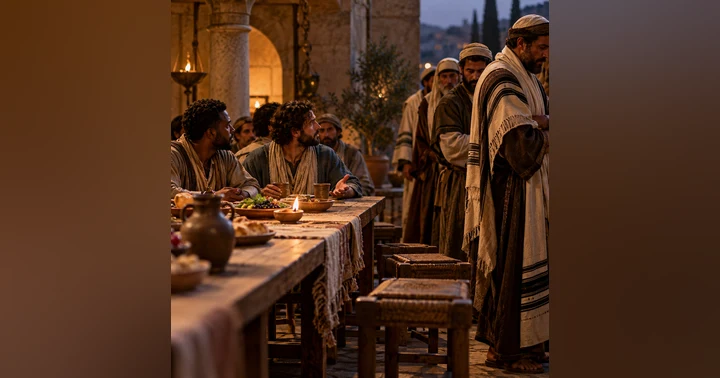
What Is the Significance of Mountains in the Bible?
What Is the Significance of Mountains in the Bible?
Mountains are far more than scenic backdrops in Scripture. They are sacred stages where heaven and earth meet, where covenants are forged, and where God repeatedly draws near to humanity. From the smoke-covered peak of mount sinai to the prophetic heights of mount zion, the bible uses mountains to mark its most defining moments.
Overview
Mountains in the bible function as meeting points between the divine and the human. They are holy mountain settings where God reveals his character, establishes covenants, tests faith, and shapes salvation history. Mountains symbolize the intersection of heaven and earth in the bible, and many biblical figures experience significant events on mountains, from Abraham to Moses to Jesus himself. Covenants are established and maintained on mountains throughout scripture.
The most significant mountains in the bible include:
-
Mount Ararat - where Noah's ark rested after the flood
-
Mount Moriah - where Abraham was to sacrifice Isaac
-
Mount Sinai / Horeb - where moses received the ten commandments
-
Mount Zion - the Lord's chosen dwelling place in jerusalem
-
Mount Carmel - site of Elijah's confrontation with Baal's prophets
-
Mount Tabor - associated with military victory and, in tradition, Christ's transfiguration
-
Mount Nebo - where Moses viewed the promised land before dying
-
Mount of Olives - central to Jesus' ministry, prayers, and ascension
Mountains are recurring symbols in the bible that highlight spiritual themes, moving from physical locations in israel's history toward a final holy mountain vision in the new jerusalem, where god permanently dwells with his people. This article traces that arc from Genesis to Revelation.
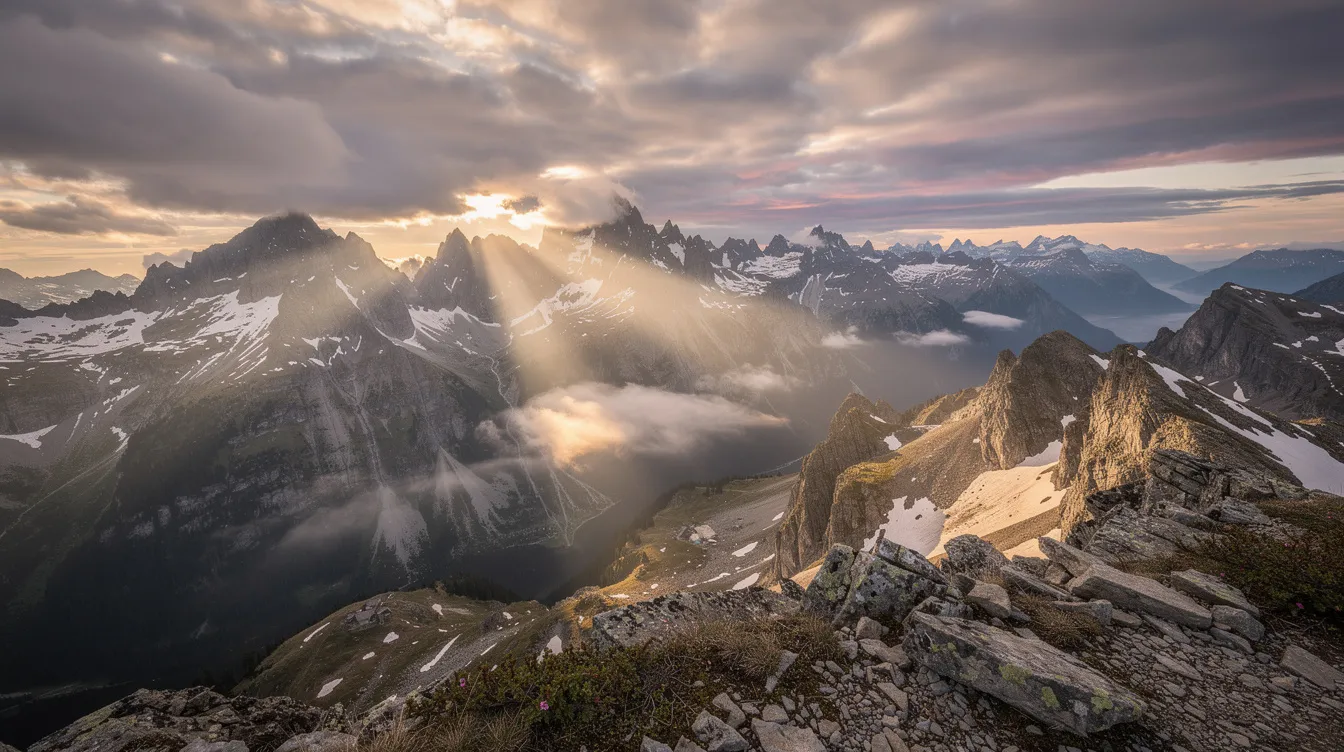
Why Mountains Matter in the Bible: Heaven and Earth Meet
Ancient peoples, including israel, naturally associated mountains with the divine. Peaks rise toward the sky, pierce the clouds, and stand apart from the flatlands of ordinary life. In the ancient Near East, these elevated places were regarded as bridges between the heavenly realm and the human world, spaces where the two domains overlap.
In biblical theology, a holy mountain is not simply high ground. It is a consecrated place where god's presence breaks into human experience. Mountains are settings for important divine encounters in scripture, whether that means receiving law, witnessing glory, or offering sacrifice. When a biblical narrative moves to a mountain, the reader should expect encounter, decision, and revelation. Mountains serve as places of divine revelation in biblical texts.
Consider Genesis 28, where Jacob dreams of a ladder reaching heaven at Bethel. Though the text does not label it a mountain, the vision of a "gate of heaven" captures the same vertical symbolism. God's realm and the human realm intersect at an elevated point.
There is also a critical distinction between pagan "high places" in Canaan (condemned in texts like 1 Kings 14:23) and the singular holy mountain of the lord. In jewish and christian cultures alike, the difference is not altitude but allegiance. Israel was called to worship at one chosen mountain, not at scattered shrines dedicated to rival gods.
Eden as the First Holy Mountain
Genesis never uses the word "mountain" for Eden. Yet later scripture hints at sacred elevation. Ezekiel 28:13–14 describes Eden as a garden on "the holy mountain of God," suggesting that israel's prophets pictured the original paradise as a cosmic mountain where heaven and earth meet fully.
Eden functions as the prototype: God walked with humanity there (Genesis 3:8), and humans were placed in this elevated sanctuary to extend blessing, order, and life across all the earth. Living on this mountain top required trusting God's wisdom, symbolized by the boundaries around the tree of knowledge (Genesis 2:16–17).
When Adam and Eve seized wisdom on their own terms, they were expelled from Eden's high place. This pattern of losing access to God's presence through disobedience echoes throughout scripture. Israel's later exile from the land mirrors the same logic: covenant-breaking leads to separation from the dwelling place of God.
The tabernacle and temple designs reinforce this connection. Solomon's temple featured cherubim, palm trees, and floral carvings (1 Kings 6–7), recalling Eden's garden. The tabernacle instructions given at Sinai (Exodus 25–31) created a portable "mountain" of divine presence in the wilderness. Every later holy place is, in a spiritual sense, a miniature restoration of that first mountain garden.
Mount Ararat: A New Beginning After the Flood
Mount ararat is where Noah's ark came to rest after the flood. Genesis 8:4 records that the ark settled "on the mountains of Ararat" on the seventeenth day of the seventh month, in the highland region of ancient Urartu, corresponding to modern eastern Turkey and Armenia.
Ararat functions as a reset point for humanity. After the waters recede, Noah exits the ark and builds an altar, offering a burnt offering to God (Genesis 8:20). The lord god responds by establishing a covenant: never again will all flesh be destroyed by floodwaters. The rainbow seals the promise (Genesis 9:8–17).
Like Eden, Ararat is a high place associated with fresh commissioning. God tells Noah and his family to "be fruitful and multiply and fill the earth" (Genesis 9:1), renewing the original mandate to carry God's image across the whole earth.
While Ararat is not later termed a holy mountain, its role in the redemptive storyline is foundational. It marks the place of rest after chaos, of divine faithfulness visible in covenant promise. It sets the stage for every mountain-covenant event that follows.
Mount Moriah: Testing, Sacrifice, and Provision
Mount moriah is where Abraham was to sacrifice Isaac, making it one of the most significant mountains in the bible. In Genesis 22, God tells Abraham to take his son isaac, his only son, to "the land of Moriah" and offer him as a burnt offering on a mountain God will designate.
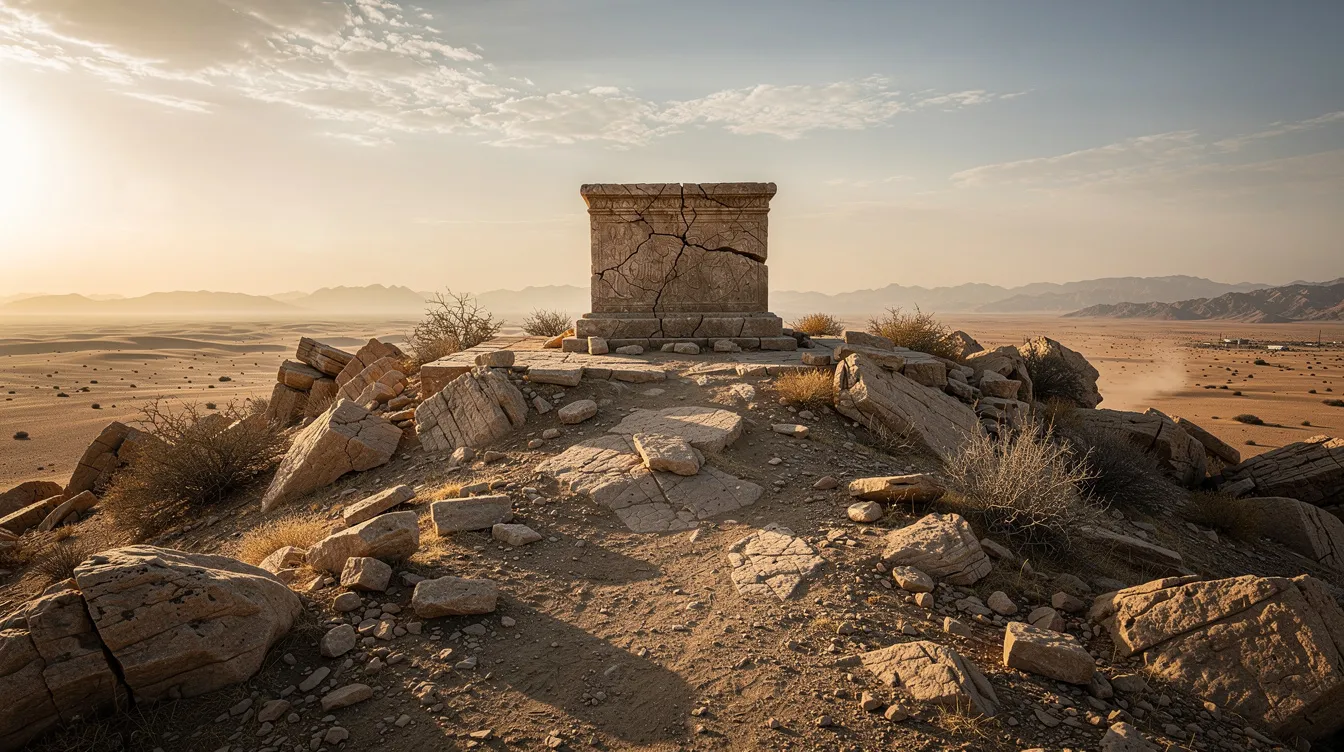
The narrative unfolds in concrete steps: a three-day journey, father and son climbing together, Isaac's question about the lamb, and Abraham's answer, "God himself will provide." At the altar, with the knife raised, God intervenes, providing a ram caught in a thicket. Abraham names the place "The LORD will provide" (YHWH Yireh).
Mount moriah is associated with Abraham's faith and divine provision. Mountains serve as testing grounds for faith in biblical narratives, and Moriah is the defining example. God's command to sacrifice isaac tested everything Abraham believed about God's promises.
The connection deepens in 2 Chronicles 3:1, which explicitly locates Solomon's temple on mount moriah in jerusalem. The same mountain where Abraham offered his only son became the permanent sacrificial center of israel's worship. Christian interpreters see in this a foreshadowing: the place of substitutionary sacrifice points toward the ultimate provision in Christ.
Mount Sinai (Horeb): Covenant Law and the Nation's Birth
Mount sinai, also called mount horeb, stands as one of the most significant mountains in the old testament. Scripture identifies it as "the mountain of God" (Exodus 3:1), and it dominates the narrative from Exodus 19 through Numbers 10.
Moses' first encounter at Horeb sets the stage. At the burning bush, God reveals His name-"I AM WHO I AM"-and promises that israel will worship Him on this very mountain after deliverance from Egypt (Exodus 3:12). It is a personal commissioning on holy ground.
The events of Exodus 19–20 are among the most dramatic in all of scripture. Thunder, lightning, thick cloud, trumpet blasts, and boundary markers surround the mountain as the lord descended in fire. Moses ascends while the people tremble below. On this same mountain, moses received the ten commandments, the foundational law that would define israel as a covenant nation. Sinai is where Moses received the Ten Commandments, and where God formally constituted israel as His people.
Beyond the commandments, Sinai is where God gives instructions for the tabernacle (Exodus 25–31), a portable sanctuary that would carry divine presence through the wilderness. The tabernacle is, in essence, a mobile Sinai-a dwelling place where God's people could approach Him through sacrifice and priesthood.
A striking later echo occurs in 1 Kings 19. The prophet Elijah, fleeing for his life, travels to the same mountain. There, God passes by-but not in a great and powerful wind, not in an earthquake, not in fire. Instead, God speaks in a gentle whisper. The mountain of terrifying law also becomes a place of intimate, renewed prophetic calling, revealing that the God of Sinai is both transcendent and near. This transformative encounter reshaped Elijah's mission entirely.
Mount Zion and Jerusalem: The Lord's Chosen Holy Mountain
Mount zion is a symbol of God's presence in Jerusalem, and it occupies a central place in the Hebrew Bible's theology of worship. Historically, Zion began as a Jebusite fortress that King David captured around 1000 BC (2 Samuel 5:6–9). Under Solomon, the adjacent hill became the site of the temple, and "Zion" expanded to encompass the whole sacred complex.
The Psalms celebrate Zion lavishly. Psalm 48:2 declares it "beautiful in elevation, the joy of the whole earth… the city of the great king." Psalm 132 affirms that the lord has chosen zion as His dwelling place forever. Mount zion symbolizes God's presence and the Jerusalem temple, serving as the spiritual center of israel's worship and identity.
Prophets like Isaiah and Micah cast an even grander vision. Isaiah 2:2–4 envisions a day when "the mountain of the LORD's house shall be established as the highest of the mountains," and all the nations will stream to it for instruction and peace. The wolf and lamb imagery of Isaiah 65:25-where the lion will eat straw like the ox, and dust will be the serpent's food on God's holy mountain-portrays a restored creation of total harmony.
Yet there is tension. Historical jerusalem often failed morally. Micah 3:9–12 warns that Zion itself could be "plowed as a field" because of injustice. How, then, will the mountain promises be fulfilled?
The new testament answers in Hebrews 12:22–24, where believers are said to have come to "Mount Zion," the "heavenly jerusalem," and to Jesus, the mediator of a new covenant. The geographical hill becomes a spiritual reality, accessible through Christ to God's people everywhere.
Other Significant Mountains: Carmel, Tabor, Nebo, and the Mount of Olives
Several additional significant mountains in the bible highlight different facets of God's dealings with His people.
Mount Carmel. Located in northern israel along the Mediterranean coast, mount carmel is the setting for one of Scripture's most dramatic confrontations. In 1 Kings 18, Elijah challenges 450 prophets of Baal to a public test: two altars, two sacrifices, and whichever God answers with fire is the true God. Fire from heaven consumes Elijah's offering, vindicating Yahweh over Baal and reclaiming a high place for the true God. Rain returns to the land, ending a three-year drought.
Mount Tabor. Mount tabor, a dome-shaped hill in lower Galilee, appears in Judges 4–5 as the staging ground for Deborah and Barak's victory over Sisera's army. In christian cultures and tradition, Tabor is often identified as the site of Jesus' transfiguration, though scripture does not name the specific mountain.
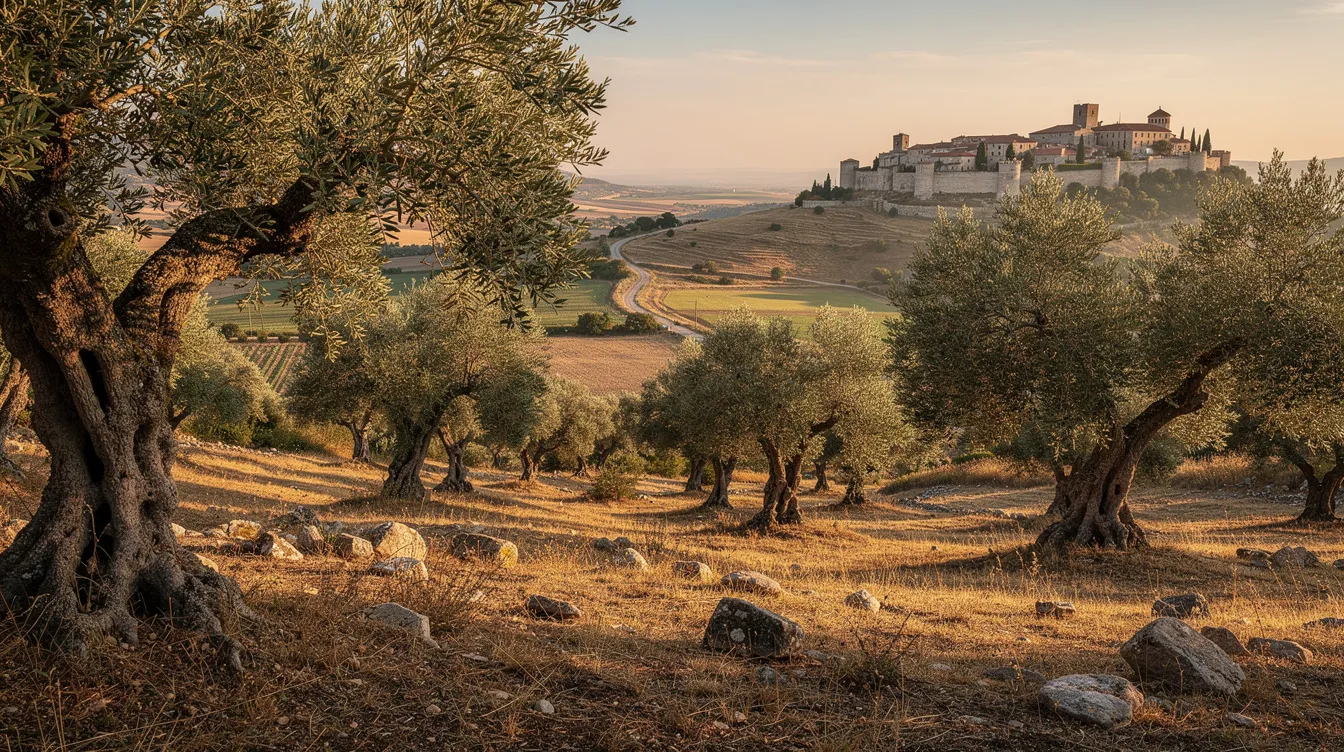
Mount Nebo. From mount nebo, east of the Jordan in modern Jordan, Moses viewed the promised land before dying (Deuteronomy 34:1–5). Standing at approximately 700 meters above sea level, Moses could see the Jordan Valley, Jericho, and the Judean hills. The scene emphasizes both the faithfulness of God's promise and the consequence of Moses' disobedience at Meribah.
Mount of Olives. The Mount of Olives is significant in Jesus' ministry and prayers. East of jerusalem, this ridge is where Jesus teaches about the end times (Matthew 24), where he goes to pray in Gethsemane on its slope (Luke 22), and where he ascends to heaven (Acts 1:9–12). Zechariah 14:4 prophesies that the lord will stand on the Mount of Olives in the final days, splitting it in two.
Jesus and the Mountains: Sermon, Transfiguration, Cross, and Commission
The new testament frames Jesus' life and ministry repeatedly through mountains, presenting Him as the fulfillment and climax of the bible's holy mountain theme.
Sermon on the Mount. In Matthew's gospel, Jesus delivers his famous sermon from a hillside in Galilee (Matthew 5–7). Jesus delivered the Sermon on the Mount in Matthew 5, sitting like a new Moses and offering authoritative teaching that deepens the law given at mount sinai. In this teaching, Jesus delivers a vision for kingdom life where heaven's values reshape earth. The faith of a mustard seed, the call to pray without pretense, the radical ethic of enemy-love-all flow from this mountain top instruction.
Transfiguration. Jesus takes Peter, James, and John up a high mountain (Matthew 17:1–8). There His face shines like the sun, His clothes become dazzling white, and Moses and Elijah appear beside Him. God speaks from a cloud: "This is my beloved Son; listen to Him." The law and the prophets converge in Jesus, and the disciples witness a glory that surpasses anything seen on Sinai or Carmel.
The Cross. While the Gospels do not call Golgotha a mountain, early christian tradition understood the place of crucifixion near jerusalem as theologically connected to zion and moriah. On the same mountain range where abraham nearly offered his only son, God provides the ultimate sacrifice.
Great Commission. After the resurrection, Jesus meets his disciples on a mountain in Galilee (Matthew 28:16–20) and commissions them to "make disciples of all the nations." This echoes every old testament scene where God meets a leader on a mountain to send them out on mission. Mountains represent God as a refuge and symbol of security, but they are also launching pads for God's purposes in the world.
The New Testament's Heavenly Mountain: Zion and the New Jerusalem
The New Testament reinterprets the Old Testament's mountain imagery through the language of a heavenly Mount Zion and a descending new jerusalem.
Hebrews 12:18–24 draws a vivid contrast. The terrifying earthly mount sinai-with its fire, darkness, and trembling-gives way to a joyful approach to the heavenly jerusalem through the blood of Jesus. Where Sinai's boundaries said "stay back," the heavenly zion says "come near." The shift is from terror to access, from exclusion to celebration.
In Revelation 21:9–10, John is carried "in the Spirit to a great mountain" to see the holy city, new jerusalem, descending out of heaven from God. This is the final holy mountain vision for redeemed creation: a great mountain that is simultaneously a city, a temple, and a garden.
Revelation 22:1–5 completes the picture. A river of the water of life flows from God's throne through the city. The tree of life stands on its banks, "healing the nations." This echoes Eden's garden-mountain and prophetic promises like Isaiah 65:25, where peace reigns on God's holy mountain and the lion will eat straw like the ox, while dust becomes the serpent's food. The curse is reversed.
In this final vision, heaven and earth fully meet. There is no separate temple because God and the Lamb themselves are the dwelling place. The entire city functions as an expanded, worldwide mountain-temple. The bible's mountain story, which began with a lost garden, ends with an eternal city where God's people dwell in unbroken communion with their Creator.
Symbolism and Application: Mountains as Faith, Challenge, and Promise
The bible frequently uses mountains metaphorically to convey theological truths, and this imagery continues to shape christian life and worship in both jewish and christian cultures.
Psalm 121:1–2 invites reflection: "I lift up my eyes to the hills-where does my help come from? My help comes from the LORD, who made heaven and earth." The hills are not the source of help; the God who made them is. Jesus' teaching about faith that moves mountains (Matthew 17:20; Mark 11:23)-faith as small as a mustard seed-uses the mountain as a symbol of seemingly immovable obstacles overcome by trust in God.
Mountains can symbolize both challenge and inheritance. Caleb's bold request, "Give me this mountain" (Joshua 14:12), models a faith that claims what God has promised despite visible opposition. In a spiritual sense, every believer faces mountains that demand the same courage.
The biblical holy mountain theme is not a call to seek literal high places, but an invitation to live in the presence of God through Christ, who now embodies the meeting point of heaven and earth (John 1:14; John 4:21–24).
Practically, reading mountain narratives devotionally can frame prayer for trust in God's wisdom, courage in trials, and hope in the final restoration. The church does not need to climb a physical peak to encounter God. Through Christ, every believer already stands at the heavenly mount zion, welcomed into the life of the age to come.
Frequently Asked Questions
Below are brief answers to common questions about the significance of mountains in the bible that are not fully addressed in the main sections above.
Are all mentions of mountains in the Bible symbolic, or are some just geographical?
Many mountains-Mount Ararat, Mount Carmel, Mount Nebo-are real geographical locations with verifiable historical significance. Biblical writers, however, often invest these real places with symbolic meaning by situating key covenant or revelation events there. Not every mountain reference should be over-spiritualized. Some texts, particularly the boundary descriptions in Joshua, use mountains simply as landmarks. Context must guide interpretation: when a narrative places a major character on a mountain for encounter with God, symbolism is almost certainly at work. When a text lists geographic borders, the mountain is functioning as terrain.
Do scholars know the exact locations of biblical mountains like Sinai and Moriah?
Some identifications are biblically explicit and widely accepted. Mount moriah is identified with the temple mount in jerusalem in 2 Chronicles 3:1. Mount nebo's traditional site in modern Jordan is well-anchored by geography and centuries of pilgrimage. Mount sinai, however, is debated. Traditional views place it at Jebel Musa in the southern Sinai Peninsula, while some modern proposals locate it in northwestern Arabia. Scripture itself does not give precise coordinates. While archaeology and geography can enrich understanding, the theological message of these mountains does not depend on pinpointing their exact modern location.
Why does God often choose mountains instead of valleys or cities for major revelations?
Mountains provide physical separation from everyday life, creating fitting conditions for solitude, prayer, and concentrated revelation. Moses ascended Sinai alone (Exodus 24), Elijah fled to Mount Horeb in isolation (1 Kings 19), and Jesus withdrew to mountains to pray (Luke 6:12–13). Culturally, higher places were associated with the heavenly realm, so God's choice of mountains both uses and redefines existing symbolic expectations-contrasting His holy mountain with pagan high places. That said, God also reveals Himself in valleys, fields, cities, and even on the open sea. Mountains are prominent but not exclusive, serving as especially vivid backdrops when the narrative wants readers to sense a crossing-point between heaven and earth.
How should Christians today relate to physical holy mountains or pilgrimage sites?
Visiting biblical sites such as Jerusalem, the Mount of Olives, or traditional locations for Sinai and mount tabor can be spiritually enriching. Historical and geographical context deepens faith. However, the new testament emphasizes that God's presence is not confined to any single mountain (John 4:21–24). In Christ, believers already have access to the heavenly mount zion wherever they are (Hebrews 12:22–24). Physical pilgrimage is valuable as a reminder of God's story in the land, but spiritual life does not depend on geography. The focus remains on Jesus as the true dwelling place where heaven and earth meet permanently.

Building a Personal Framework for Faith: A Foundation for Thinking, Growing, and Changing