Who Were the Pharisees; And Have We Misunderstood Them?
Quick Summary
-
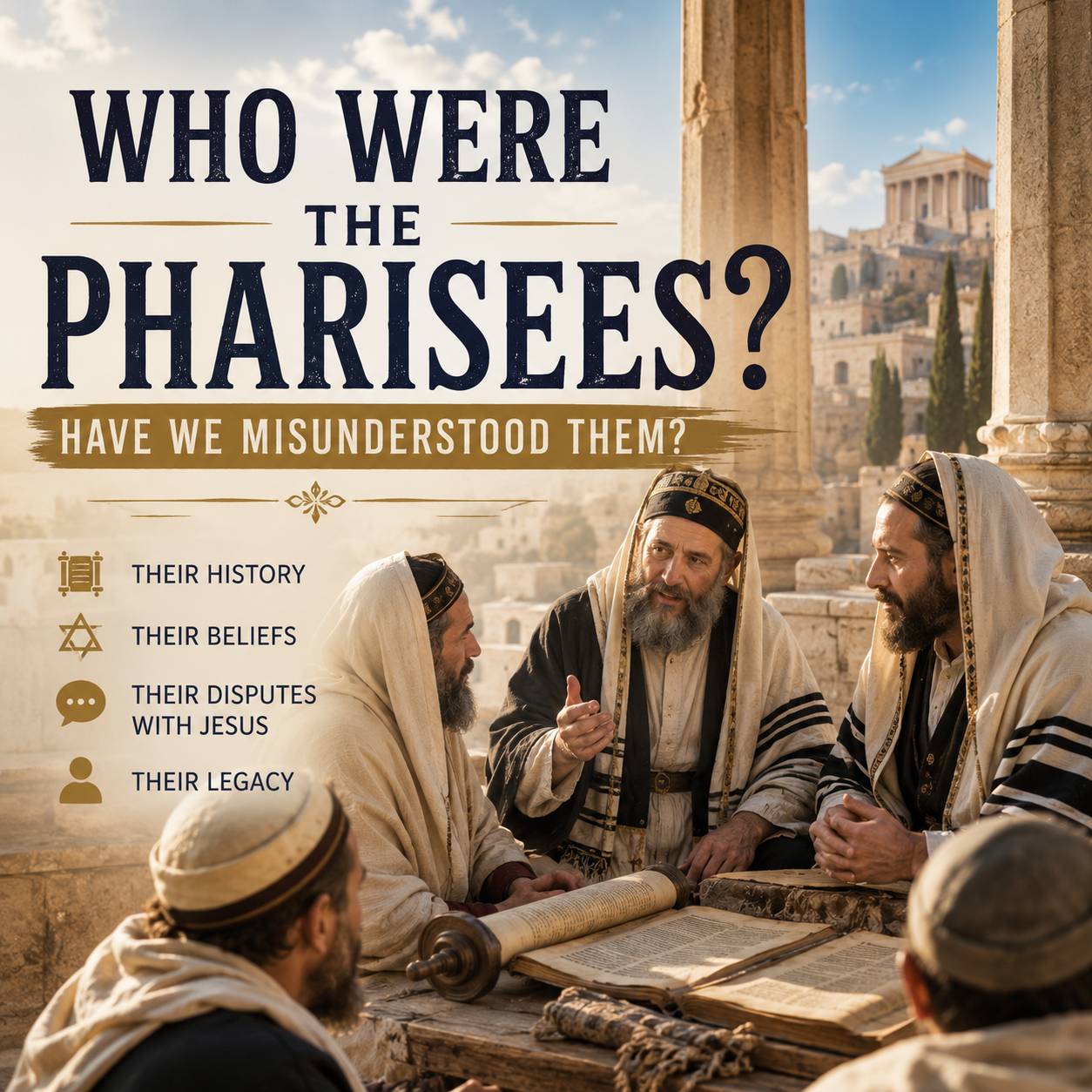
Pharisees were a popular lay movement in first-century Judaism with roughly 6,000 members, focused on scripture, oral tradition, and ritual purity in everyday life.
-
Jesus and the Pharisees shared core beliefs including the authority of Torah, the resurrection of the dead, and devotion to God; many of their disputes were "family arguments" within Judaism.
-
Later Christian readings flattened Pharisees into stock villains, fueling centuries of anti-Jewish misunderstandings that modern scholarship has worked to correct.
-
The Pharisees were not a uniform group but were internally diverse in beliefs and practices, with figures like Paul, Nicodemus, and Gamaliel representing different postures toward Jesus.
-
Understanding Pharisees in their historical context helps us read the Old Testament, New Testament, and stories of Jesus Christ with more accuracy and humility today.
Introduction: Why the Pharisees Matter for Christians Today
Most Christians first meet the Pharisees as the antagonists of the Gospels: the men who test Jesus with trick questions, accuse him of breaking the Sabbath day, and eventually conspire to have him killed. The term "Pharisee" has become synonymous with hypocrisy and legalism in Western culture. But who were the Pharisees really, and have we misunderstood them?
Modern scholarship, Jewish sources, and careful readings of the Gospels suggest a more complex picture than the one most of us absorbed in Sunday School. Pharisees functioned as community teachers and spiritual guides. They cared about scripture, prayer, tithing, and holiness. Many of their convictions overlap with what Jesus taught.
Understanding Pharisees affects how we read stories about Jesus and the Pharisees, how we interpret Paul's letters, and how Christians think about Jewish law and its relationship to grace. This article walks through their history, beliefs, disputes with Jesus, the caricatures that developed after the New Testament period, and what all of it means for believers reading the Bible today.
Who Were the Pharisees in the Time of Jesus Christ?
The Pharisees were a Jewish lay movement active from the second century BC until about AD 70. In Jesus' time, they were one of several Jewish sects competing for influence over how the Jewish people should live under God's covenant. Pharisees were active from the 2nd century BC until 70 AD, placing them at the center of Jewish religious life for roughly two centuries.
The Pharisees were primarily middle-class householders and tradespeople, not priests. Their ranks included scribes, teachers, merchants, and small landowners with strong influence in synagogues and among regular Jews. This set them apart from the Sadducees, who drew their power from the Jerusalem temple and the ruling class. Josephus described Pharisees as respected and influential among ordinary Jews, noting that "a word from them against king or high priest meets with instant belief."
What drove them was personal piety and holiness in everyday life, not just in Temple rituals. Pharisees believed that holiness should be practiced in everyday life, not solely at the Temple. They studied the Law, debated its application, and taught others to observe it with care.
The Pharisees had about 6,000 members during Jesus' time, according to Josephus. That number likely counts only full members, not broader supporters. Some scholars estimate Pharisees made up about 5% of the Jewish population in Judea. Small in raw numbers, they punched well above their weight in influence.
The Pharisees were not a uniform group but were internally diverse in beliefs and practices. Some well-known New Testament figures were Pharisees: the apostle Paul (Philippians 3:5), Gamaliel (Acts 5), and Nicodemus (John 3). Their presence in the early church story shows that Pharisaic Judaism and Christianity were intertwined from the beginning, not simply enemies.
Historical Context: From Old Testament to New Testament
The world of Jesus looks different from the world of Ezra and Nehemiah. Between the last events of the Old Testament and the birth of Christ, roughly four centuries passed. During that time, the Jewish landscape shifted in ways that produced the groups we meet in the Gospels.
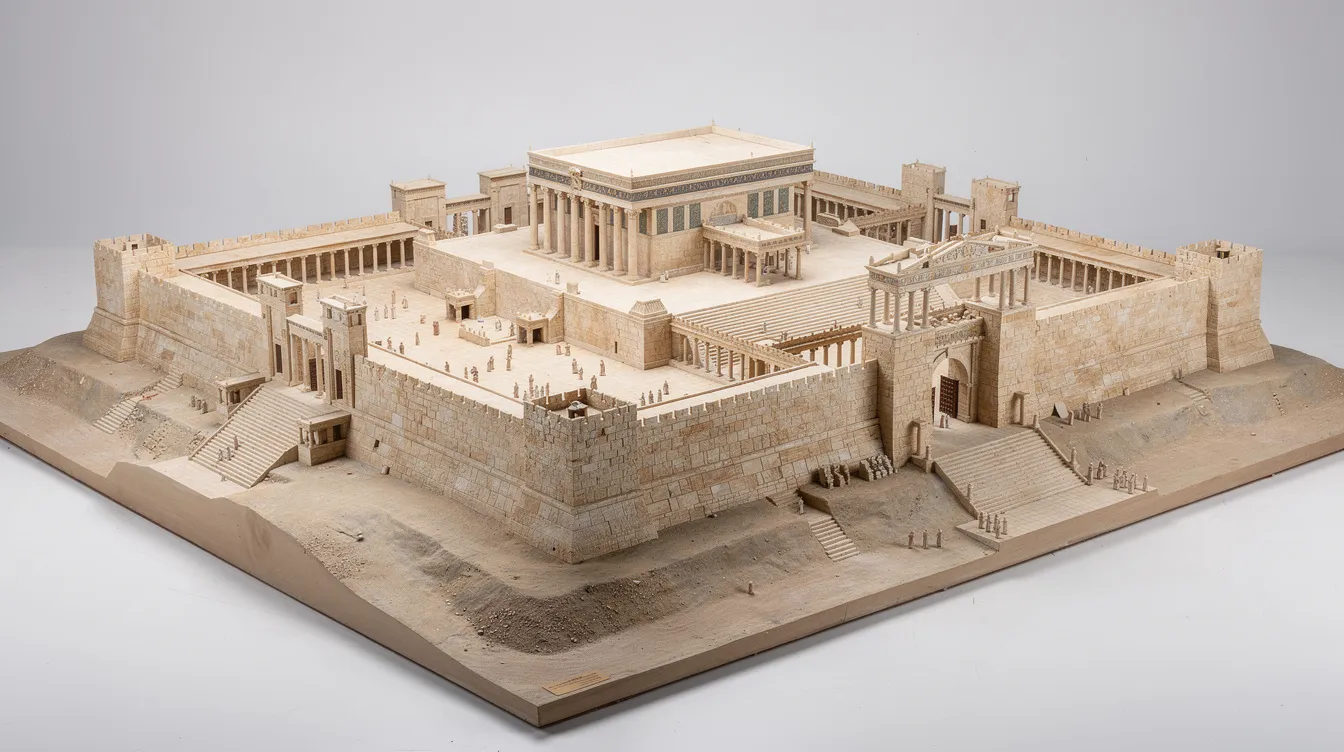
After the Babylonian exile (597-587 BC), Jews returned under Persian rule beginning in 539 BC. They rebuilt the Second Temple, completed in 515 BC, and reestablished priestly leadership. For centuries, priests held dominant authority in Jewish life. The Torah shaped communal identity, and the temple in Jerusalem remained the center of worship.
Then came the Greeks. After Alexander the Great's conquests, Hellenistic culture pressed into every corner of Jewish society. Under the Seleucids, pressure to adopt Greek language, customs, and even pagan worship escalated until 167 BC, when Antiochus IV desecrated the Temple. The Maccabean Revolt (167-160 BC) restored Jewish worship and produced the Hasmonean dynasty, which combined priestly and political power under one roof.
These upheavals generated multiple Jewish responses. Some Jews accommodated pagan culture. Others withdrew (the Essenes at Qumran). Others took up arms (the Zealots, later). And others pursued a path of intense Torah study, ritual purity, and lay-led holiness. This last group became the Pharisees.
By the time Jesus appears in the first century, Jews already have Pharisees, Sadducees, Essenes, and other groups debating how best to keep God's covenant. That diversity is the backdrop for nearly every Gospel scene.
Origins and Development of the Pharisees
Pharisees did not appear overnight. They emerged from the turmoil of Second Temple Judaism over several generations.
The term Pharisees likely derives from the Hebrew word perushim, meaning "the separated ones." Scholars debate what "separated" referred to. The most common view is that it described separation from ritual impurity and from practices that compromised Torah observance, not social withdrawal from other Jews as a whole. The Pharisees' roots trace back to a Jewish purity movement called the Hasidim, the "pious ones" who resisted Hellenization and insisted on fidelity to Mosaic law during the Maccabean period.
The Pharisees emerged around 145 BC during Jonathan's high priesthood, based on Josephus's earliest references. Under various Hasmonean rulers, their political influence rose and fell. Alexander Jannaeus (103-76 BC) clashed with them violently; his wife Salome Alexandra (76-67 BC) gave them considerable power. But their primary identity was always religious and social rather than political.
Pharisees actively engaged in legal and theological debate, which contributed to their doctrinal evolution over time. They gradually shifted Jewish religious life away from exclusive dependence on Temple sacrifice toward Torah study, prayer, and synagogue worship. Pharisees played a key role in developing the synagogue system as centers for worship and education. This shift would prove decisive after AD 70, but its seeds were planted long before.
Holiness, Ritual Purity, and Everyday Life
The driving vision behind Pharisaic practice was Exodus 19:6: Israel as "a kingdom of priests and a holy nation." Pharisees took that literally. If all Israel was priestly, then priestly standards of purity should extend beyond the Temple into ordinary homes, meals, and workplaces.
Ritual purity laws in Torah addressed clean and unclean foods, bodily states, and contact with certain objects or substances. Pharisees emphasized ritual purity in daily life, applying rules that the written law originally associated with priests and Temple service to the tables and kitchens of ordinary Jews. Pharisees advocated for democratizing Jewish practice, making ritual purity accessible to all, not just the priestly class.
Concrete examples:
-
Washing hands before meals, not just after contact with something ritually impure
-
Tithing even small garden herbs like mint and dill
-
Monitoring which vessels, cups, or pots might have become unclean through market exposure
-
Strict attention to food preparation and who you ate with
This was not mere fussiness. For Pharisees, these practices were a sincere attempt to live every part of everyday life before God in holiness and obedience. Pharisees emphasized the importance of Torah interpretation and application in daily life, and their purity concerns reflected that commitment.
These same practices created friction with Jesus. Disputes over handwashing (Mark 7), table fellowship with "sinners," and contact with Gentiles or the ritually unclean fill the Gospels. Understanding why Pharisees cared about ritual purity laws helps us read those conflicts as genuine disagreements about holiness rather than simple villainy.
Scripture and Oral Tradition: Two Sources of Authority
Pharisees honored two streams of authority: God's word in written scripture, and an oral tradition they believed carried equal weight.
They accepted the full Hebrew Bible; Law, Prophets, and Writings; what Christians call the Old Testament. On this point there was no dispute with Jesus. Scripture was authoritative, binding, and central to covenant life.
Where Pharisees went further was in their belief in an oral law, a body of interpretation and application they traced back to Moses himself. They upheld both written and oral traditions as authoritative. Pharisees taught that Moses received not only the written Torah at Sinai but also explanations and applications passed down through generations of elders. Over time, these oral traditions became elaborate and specific.
The classic metaphor is a "fence around the Torah." If God's law says "do not work on the Sabbath," the oral tradition specifies exactly what counts as work, creating a buffer zone to prevent accidental violation. In Pharisaic thought, these traditional laws were not additions to scripture but protective boundaries around God's law.
This dual authority; written law and oral tradition; became foundational for rabbinic Judaism. The oral tradition was eventually codified in the Mishnah (c. AD 200) and developed further in the Talmud. Rabbinic literature to this day reflects categories and concerns that originated with Pharisees.
Jesus' sharpest disputes often centered on this oral tradition, specifically on cases where, in his judgment, human tradition overrode or nullified God's written command.
Core Beliefs of the Pharisees
Several doctrines set Pharisees apart from other Jewish sects in the first century.
Resurrection of the dead. Pharisees believed in the resurrection of the dead, a future bodily resurrection in which God would reward the righteous and punish the wicked. Acts 23:6-8 records Paul appealing to this shared belief in a Sanhedrin hearing: "I am a Pharisee, a son of Pharisees. It is with respect to the hope and the resurrection of the dead that I am on trial." Pharisaic teachings included a belief in angels and spiritual afterlife, differing from those of the Sadducees who denied both.
Free will and God's foreknowledge. Pharisees believed in free will alongside God's foreknowledge. Josephus notes that they held a middle position between the Essenes (who leaned toward determinism) and the Sadducees (who denied fate altogether). The later rabbinic statement in Pirkei Avot 3:15, "Everything is foreseen, yet freedom of choice is given," echoes this Pharisaic balance.
Covenant obedience. Pharisees were known for their meticulous observance of the Law. They believed careful obedience; shaped by both scripture and oral tradition; was the proper response to God's covenant grace. This is not the same as thinking you can purchase salvation with good behavior, a distinction that matters for the "legalism" question below.
Angels and spirits. Acts 23:8 states plainly: "The Sadducees say there is no resurrection, nor angel, nor spirit; but the Pharisees confess both." These beliefs fed into a larger apocalyptic hope for God's future kingdom and final justice.
Pharisees, Sadducees, Essenes, and Other Jewish Groups
Pharisees were one party within a diverse Jewish landscape. First-century Judaism was not monolithic, and understanding other groups throws Pharisaic distinctives into sharper relief.
| Feature | Pharisees | Sadducees | Essenes |
|---|---|---|---|
| Social base | Lay teachers, middle class | Aristocratic priests, ruling class | Separatist communities |
| Scripture | Torah + Prophets + Writings | Primarily Torah (written law only) | Torah + own sectarian writings |
| Oral tradition | Accepted and developed | Rejected | Own distinct traditions |
| Resurrection | Affirmed | Denied | Affirmed (in their own framework) |
| Angels/spirits | Affirmed | Denied | Affirmed |
| Political stance | Varied; mostly accommodating | Allied with Temple power | Withdrawn from politics |
Sadducees drew their authority from the Jerusalem temple and priestly lineage. When the Temple fell in AD 70, their power base vanished. Essenes, possibly linked to the Qumran community, emphasized strict purity, common property, and apocalyptic expectation, but they withdrew from mainstream society rather than engaging it.
Zealots pursued armed resistance to Rome, a more political and military path. These other groups form the backdrop for many Gospel scenes, especially in the first century. When Jesus debates resurrection with Sadducees (Matthew 22:23-33) or purity with Pharisees (Mark 7), he is entering existing Jewish arguments, not inventing new ones.
Jesus and the Pharisees: Shared Ground and Sharp Disputes
This is the heart of the matter. We must see both agreement and conflict between Jesus and the Pharisees to read the Gospels accurately.
Where they agreed:
-
Commitment to the God of Israel and the authority of the Torah
-
Belief in the resurrection of the dead and a final judgment
-
The importance of prayer, almsgiving, fasting, and holiness
-
The reality of angels and spirits
-
The conviction that God's word demands obedience, not just admiration
Jesus taught resurrection, affirmed the Law and Prophets, quoted scripture as authoritative, and insisted on personal righteousness. On all these points, he stood closer to the Pharisees than to any other Jewish group.
Many disputes between Jesus and the Pharisees; Sabbath observance, divorce, purity regulations, fasting practices; were "in-house" Jewish debates about how best to obey God, not about whether to obey him at all. Scholars note that the harsh rhetoric used against Pharisees in the Gospels reflects internal Jewish debate, the kind of sharp exchange common among teachers who share fundamental commitments but disagree on application.
Jesus often ate with Pharisees, visited their homes (Luke 7:36; 11:37; 14:1), and told parables that assumed his audience understood and sometimes admired Pharisaic piety. The parable of the Pharisee and the tax collector (Luke 18:9-14) works precisely because the audience recognized the Pharisee's devotion as genuine, making the twist about self righteousness all the more pointed.
Jesus' most intense critiques were reserved for those closest to his own convictions. Prophets in Jewish history had always been harshest with Israel, not with Babylon or Egypt. Jesus followed that pattern.
Were the Pharisees Legalists? Rethinking a Common Charge
Many Christians today equate "Pharisee" with "legalist." Modern views often mischaracterize Pharisees as strictly legalistic, ignoring their humane legal interpretations. Is the label historically accurate?
In Christian speech, "legalism" usually means trying to earn God's favor through works rather than trusting his grace. But ancient Judaism, including Pharisaic beliefs, emphasized covenantal nomism rather than salvation by works. The term "covenantal nomism," coined by scholar E.P. Sanders, describes a system where God first chooses and saves his people (grace), and obedience follows as a response to that grace, not as its cause.
Consider Israel's own story. God rescued Israel from Egypt before giving the Law at Sinai. The Exodus came first; commandments came second. Pharisees based their understanding of Torah law on this sequence. Obedience was the proper response to a God who had already acted in mercy. Joseph Sievers and other scholars have pointed out that Pharisees' legal discussions often prioritized mercy and human welfare within the framework of Torah observance.
Many Pharisees prioritized human life and health over strict adherence to biblical laws. Rabbinic sources preserve debates in which Pharisaic teachers ruled that saving a life overrides Sabbath restrictions, a principle later codified as pikuach nefesh.
The distortions Jesus condemned were real: hypocrisy, pride, neglect of mercy, and using oral tradition to sidestep clear commands. But these are distortions of a system, not the system itself. Jesus pointed to the gap between what Pharisees taught and what some of them practiced, not to a fundamental flaw in caring about obedience.
Why Did Jesus Criticize the Pharisees So Strongly?
Passages like Matthew 23 contain some of the strongest language in the Gospels. Jesus calls certain Pharisees whitewashed tombs, blind guides, and hypocrites. Jesus often criticized the Pharisees for hypocrisy. Why so severe?
First, Jesus affirms their basic teaching authority. In Matthew 23:2-3, he tells the crowds: "The scribes and the Pharisees sit on Moses' seat, so do and observe whatever they tell you, but not the works they do." Jesus is not rejecting the content of Pharisaic Torah teaching. He is rejecting the inconsistency between their words and their lives.
The specific critiques in Matthew 23 include:
-
Tying up heavy burdens on others without helping carry them
-
Doing religious acts for human approval rather than for God
-
Cleaning the outside of the cup while leaving the inside full of greed
-
Neglecting "the weightier matters of the law: justice, mercy, and faithfulness" while tithing herbs (Matthew 23:23)
Jesus was not condemning all Pharisees as individuals. He was naming patterns of spiritual blindness that can appear in any religious sect or movement. Even contextual commentaries note that Jesus was not simply rejecting everything Pharisaic but calling for deeper, heart-level obedience aligned with God's character.
The Gospels reflect intra-Jewish polemical language rather than an objective depiction of every Pharisee who ever lived. Reading these passages as a blanket condemnation of all Pharisees, or of Judaism as a whole, goes beyond what the text says.
Oral Tradition vs. God's Command: Jesus' Disputes in Detail
Some of Jesus' sharpest clashes centered on how Pharisees used oral tradition in specific cases.
The Corban dispute (Mark 7:9-13). Pharisaic tradition allowed a person to declare property or money "Corban," dedicated to God, which then could not be used to support aging parents. Jesus pointed out that this tradition effectively nullified the fifth commandment: "Honor your father and mother." An ossuary inscription bearing the word "Qorban" found at Ketef Hinnom confirms that this dedication formula was used in everyday life, supporting the Gospel account. Jesus' complaint was specific: human tradition had overridden God's explicit command.
Sabbath disputes. Jesus healed on the Sabbath, challenging Pharisaic interpretations of what constituted "work." In Luke 13:10-17, he heals a woman bent over for eighteen years, and the synagogue ruler objects because it happened on the Sabbath day. Jesus broke the expected pattern by prioritizing mercy and human need: "Does not each of you on the Sabbath untie his ox or his donkey from the manger and lead it away to water it?" He did not abolish the Sabbath. He insisted that its proper interpretation serves human wholeness.
The broader principle. Jesus distinguishes between God's commandments and "commandments of men" that had been elevated to divine status (Mark 7:7-8). The warning applies beyond the first century. Churches today develop their own laws, customs, and expectations that can quietly acquire the weight of scripture. The question Jesus raises is timeless: does this tradition serve God's word, or has it replaced it?
Famous Pharisees in the New Testament Story
Not all Pharisees look the same in the New Testament. Several stand out as seekers, allies, or complex figures.
Paul the apostle. Paul of Tarsus identified himself as a Pharisee in Philippians 3:5: "a Hebrew of Hebrews; as to the law, a Pharisee." In Acts 23:6 he declares before the Sanhedrin, "I am a Pharisee, a son of Pharisees." Paul's Pharisaic training gave him deep knowledge of scripture, Torah law, and the hope of resurrection. His encounter with the risen Christ reoriented his understanding of righteousness based on faith rather than on works of the law, but he never abandoned his respect for the God of Israel or the scriptures that Pharisees taught.
Gamaliel. In Acts 5:34-39, Gamaliel, a respected Pharisee and member of the Sanhedrin, counsels restraint toward the apostles: "If this plan or this undertaking is of man, it will fail; but if it is of God, you will not be able to overthrow them." His caution suggests that Pharisaic circles could be fair-minded, not reflexively hostile to new movements.
Nicodemus. In John's Gospel, Nicodemus visits Jesus at night (John 3), asks sincere questions about being "born again," later defends Jesus' right to a hearing before the Sanhedrin (John 7:50-51), and helps prepare Jesus' body for burial (John 19:39). His trajectory suggests genuine openness.
These figures show that Pharisaic Judaism and early Christianity were intertwined. Most Jews in the early church came from backgrounds shaped by Pharisaic teaching. The good guys in early Christian traditions sometimes wore Pharisee credentials.
From Pharisees to Rabbis: What Happened After the Temple Fell?
In AD 70, Roman armies destroyed the Second Temple. The event reshaped Judaism permanently.
The Sadducees, whose power rested on the temple and priesthood, largely disappeared. The Essenes faded. But Pharisaic teachers survived. Yohanan ben Zakkai was the first patriarch after the Temple's destruction, establishing a center of learning at Yavneh where Jewish life could be reorganized around Torah study, prayer, and deeds of mercy rather than animal sacrifice. Pharisaic traditions contributed to the survival and evolution of Judaism after the Temple's destruction in 70 CE.
After the Second Temple's destruction, Pharisees became dominant in Jewish life. Over the next centuries, their oral traditions crystallized into the Mishnah (codified c. AD 200 under Rabbi Judah ha-Nasi, drawing on teachers like Rabbi Akiva) and later into the Talmud. Pharisaic Judaism is considered the progenitor of rabbinic Judaism, and modern Judaism; Orthodox, Conservative, and Reform; traces its roots through that lineage.
When Christians use "Pharisee" as an insult, they are caricaturing the ancestors of mainstream Judaism. That has consequences for how Jews hear Christian preaching, and it should give us pause.
Have Christians Misunderstood the Pharisees?
Christian tradition has often flattened the Pharisees into stock villains. The results have been harmful.
After the church and synagogue separated in the second and third centuries, Gospel portrayals of Pharisees were sharpened into broad-brush condemnations. What began as intra-Jewish debate between Jesus and fellow Jews became, in later Christian reading, evidence that "the Jews" as a whole rejected God. Modern scholarship indicates that popular understandings of the Pharisees have been misrepresented through centuries of this layered interpretation.
Reading every "Pharisee" in the New Testament as a symbol of all Judaism ignores the fact that Jesus, his disciples, and most early Christians were themselves Jews. Jesus' prophetic critique targeted hypocrisy within his own community. Using his words to cast a negative light on Jewish people as a whole distorts both the Gospels and Jewish history.
Jewish-Christian scholarship since the mid-twentieth century has corrected older stereotypes. Scholars have recovered Pharisaic beliefs and practices in their own terms, showing them as a movement committed to God's covenant, Torah study, and communal holiness. This leads to more nuanced readings of the New Testament, seeing Jesus' disputes as debates within a shared faith rather than one religion condemning another.
The distinction matters: Jesus' prophetic critique of hypocrisy is a timeless warning for all religious people. Anti-Jewish prejudice that misuses his words is something else entirely.
Pharisees and the Spiritual Life: Lessons and Warnings for Today
The Pharisees are not merely "them back then." They are a mirror for religious people now.
Lessons from their strengths:
-
Love of scripture and commitment to knowing God's word in detail
-
Seriousness about obedience as a response to God's grace
-
Dedication to community and to teaching others
-
The desire to honor God in every area of life, not just on the Sabbath day or inside the church building
Warnings from the patterns Jesus exposed:
-
Prioritizing minor rules over major virtues like justice, mercy, and faithfulness
-
Performing devotion for human approval
-
Using knowledge to burden others rather than to serve them
-
Separating external observance from inner love of God
Church leaders, Bible teachers, and serious Christians can guard against becoming "Pharisees in the making" by asking regularly: does my practice serve God and neighbor, or does it serve my reputation? The answer is not to abandon devotion or doctrine. It is to seek heart-deep transformation by grace so that knowledge and practice flow from love of Christ, not from self righteousness.
Jesus Christ, the Law, and the Hope of Resurrection
Pharisees and Jesus both cared about Torah law and the coming age. They understood them differently.
Jesus fulfills the Law and Prophets (Matthew 5:17) rather than abolishing them. He calls for a righteousness based not on ignoring Moses but on going deeper than the scribes and Pharisees: "Unless your righteousness exceeds that of the scribes and Pharisees, you will never enter the kingdom of heaven" (Matthew 5:20). This is not anti-Pharisaic; it is intensely pro-Torah, pushing past external compliance to the heart of God's law.
On resurrection, Jesus and the Pharisees share the hope that God will raise the dead. But for Christians, Jesus' own resurrection transforms that hope. Paul, drawing on his Pharisaic training, re-reads the resurrection of the dead in light of Christ's empty tomb. In 1 Corinthians 15:20, he calls Christ "the firstfruits of those who have fallen asleep," the beginning of God's new creation.
Christians inherit not only the scriptures but also the Pharisaic insistence that God will raise the dead and put the world right. That hope is now centered on Jesus Christ, the risen Messiah. Modern Jews share the same ancient hope in their own terms, rooted in the same Pharisaic tradition. Christian traditions and modern Judaism stand on common ground here, even where they diverge on who the Messiah is.

Reading the Gospels Responsibly: How Context Changes What We See
Knowing the historical context of Pharisees changes how we read the Gospels.
When you encounter a Pharisee in Matthew, Mark, or Luke, ask three questions before drawing conclusions:
-
Who is speaking? Is this Jesus addressing a specific group, or is it the Gospel writer summarizing a pattern?
-
Which Jewish group is in view? Pharisees, Sadducees, scribes, and elders are not interchangeable. Each has distinct concerns.
-
What law or tradition are they debating? Knowing whether the dispute is about written law, oral tradition, or proper interpretation of a specific commandment changes the meaning of the scene.
Compare parallel passages. Matthew, Mark, and Luke each shape the same stories to make particular theological points. Mark 7 emphasizes purity and Gentile inclusion. Matthew 23 collects Jesus' critiques into a single speech. Luke often softens the picture by including scenes of Pharisees welcoming Jesus to meals.
Hold together Jesus' harsh rebukes with scenes where Pharisees listen, invite him to dinner, or show openness. A one-sided reading dishonors both the New Testament text and the Jewish people whose scriptures Christians share.
Conclusion: Beyond Caricature to Honest Understanding
Pharisees were sincere, complex, and deeply influential Jews whose story is tied to the story of Jesus, the early church, and modern Judaism. They were not cartoon villains. They were teachers, debaters, and ordinary people who wanted to live holy lives in a world under foreign occupation.
We have often misunderstood Pharisees by turning them into symbols of legalism rather than real people striving for holiness under first-century conditions. Jesus' critiques still search the hearts of religious people today; hypocrisy, pride, and self righteousness are not ancient problems. But those critiques belong in the category of prophetic correction, not ethnic condemnation.
Honest understanding of Pharisees can deepen Christian discipleship and foster more humble, respectful dialogue between Christians and Jews. The next time you open the Gospels and meet a Pharisee, read slowly, ask what they actually believed, and let the text surprise you.
FAQ
Here are answers to questions that readers often raise about Pharisees after studying their history.
Were all Pharisees opposed to Jesus?
No. The Gospels mention Pharisees who were curious, cautious, or supportive. Nicodemus visits Jesus, asks genuine questions, and later helps with his burial (John 3; 19:39). Gamaliel defends the apostles before the Sanhedrin (Acts 5:34-39). Acts 15:5 mentions Pharisees who became believers in Jesus. Opposition was real but not universal. Most Jews who followed Jesus in the earliest years came from communities shaped by Pharisaic teaching.
Did Jesus ever agree with Pharisaic teaching?
Yes. Jesus aligns with Pharisees on core doctrines: resurrection of the dead, the reality of angels and spirits, and the authority of scripture. In Matthew 23:2-3, he tells the crowd to do what the scribes and Pharisees teach from Moses' seat. When Sadducees challenge Jesus on resurrection (Matthew 22:23-33), his answer echoes Pharisaic convictions. The disputes recorded in the Gospels are about application and priority, not about whether God's word matters.
Is it wrong to call someone a "Pharisee" today?
Using "Pharisee" as an insult is historically misleading and can echo anti-Jewish stereotypes. The Pharisees were the ancestors of rabbinical Judaism. Calling a modern person a "Pharisee" collapses a first-century religious sect into a one-dimensional insult. It is more precise and more honest to name specific problems; hypocrisy, pride, legalism; without labeling people with a term that carries centuries of prejudice.
How did Pharisees shape early Christianity after Jesus's resurrection?
Many early believers were Jews shaped by Pharisaic teaching. Paul brought Pharisaic categories of Torah, covenant, and resurrection into his theology, reinterpreting them in light of Christ. Early church debates over the role of Jewish law (Acts 15), the proper interpretation of scripture, and the hope of bodily resurrection all move within frameworks that Pharisees developed. The church did not emerge from a vacuum; it grew in soil that Pharisees had tilled.
Do modern Jews consider themselves descendants of the Pharisees?
Modern Jews do not usually call themselves Pharisees. But mainstream rabbinic Judaism historically grew out of Pharisaic traditions, especially in its focus on Torah, oral law, synagogue life, and communal study. The Pharisaic movement's emphasis on lay participation, scriptural interpretation, and holiness in everyday life became the backbone of Judaism after the Temple's destruction. Understanding this continuity helps Christians appreciate that critiquing "the Pharisees" touches a living tradition, not a dead one.

The Problem With Certainty