Why Jesus Spoke in Parables and What They Reveal
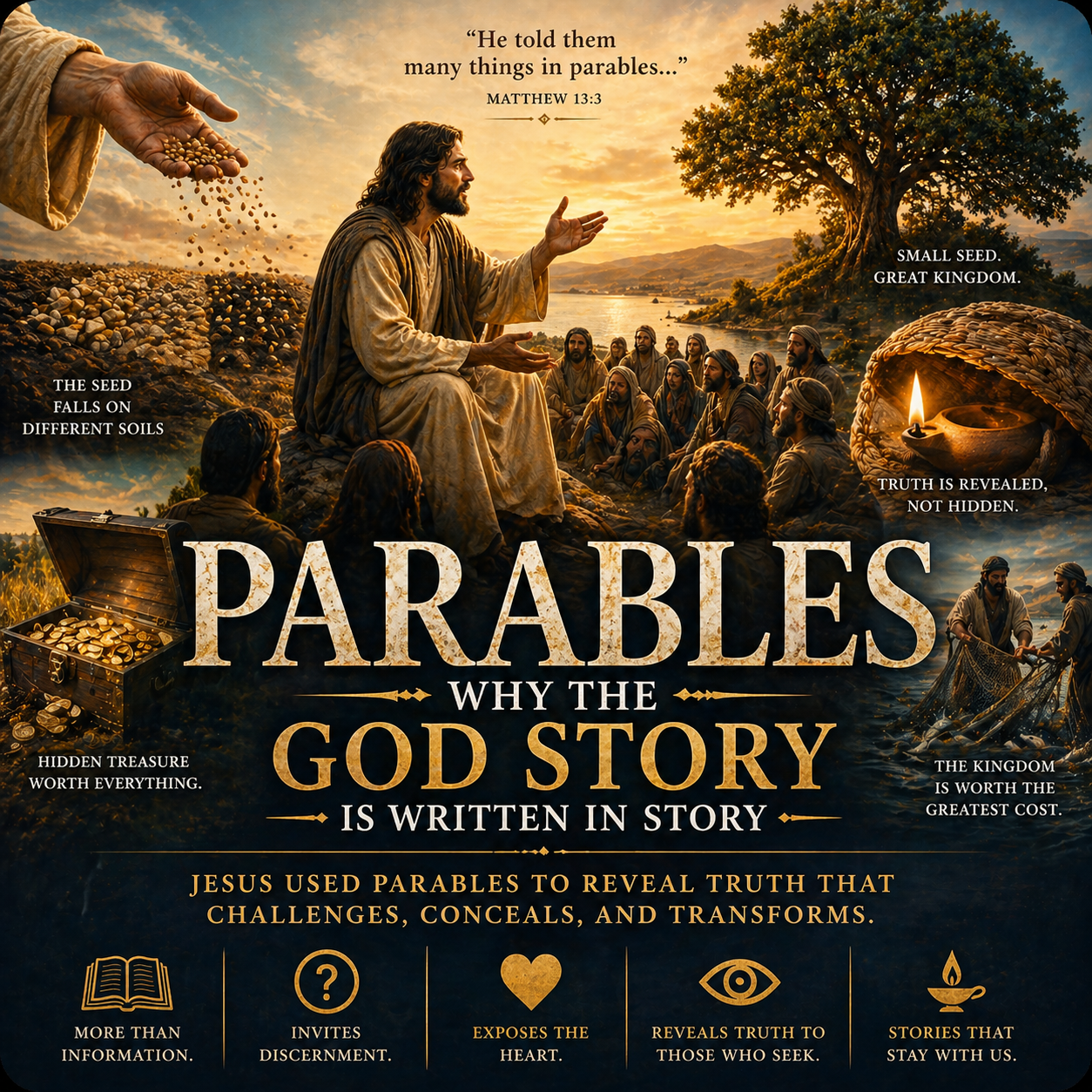
The Divine Subversion: Why the "God Story" is Written in Parables
For years, many of us treated the Bible like a technical manual—a collection of data points and "proof texts" used to win arguments or solidify doctrines. But if you look at how the story is actually told, especially by Jesus, you’ll notice he rarely gave a PowerPoint presentation. Instead, he gave us parables.
If we want to partner with God as He "puts the world back together," we have to understand the tools He uses to recruit us. A parable isn't just a "nice story"; it is a narrative invitation into the melody of redemption.
What Exactly is a Parable?
The word "parable" comes from the Greek parabolē, which literally means "to cast alongside." Imagine you are trying to explain a complex, invisible reality (the Kingdom of God). You "cast alongside" it a familiar, visible reality (a mustard seed, a lost coin, a stubborn son) so the two can be compared.
In the Hebrew tradition, this is known as a mashal—a riddle, a proverb, or a provocative story.
The Modern Definition: A parable is a subversive narrative that uses the "everyday" to bypass our intellectual defenses and re-image what is possible in God’s world.
Why Authors Used Them: The "Narrative Bomb"
Why didn't the biblical authors just give us a list of rules? Why did Jesus speak in riddles that even his closest friends didn't always get? There are three primary reasons:
1. To Bypass the "Intellectual Immune System"
When you state a doctrine (e.g., "You should love your enemies"), the human brain often goes into "defense mode," looking for loopholes. But when you tell a story about a man beaten on the side of the road and a "hated foreigner" being the only one to help, the listener’s defenses are down. They find themselves rooting for the hero before they realize the hero is the person they hate.
2. To Filter the Listeners
Jesus often said, "Let him who has ears, hear." Parables were designed to be "transparent to the seeker but opaque to the casual." They act as a sorting mechanism. If you just want information, a parable is frustrating. If you want transformation, a parable is a treasure map.
3. To Honor Human Agency
A lecture demands "agreement." A parable demands participation. By leaving the ending open or the application slightly mysterious, the author invites the reader to step into the story and decide which character they are going to be.
Contextual Application: The "Melody" in the Story
To apply a parable today, we can't just rip a verse out of context. We have to look at the "thorough context"—both the historical setting and the overarching "God Story."
-
The Historical Layer: When Jesus talks about a "Shekel" or a "Samaritan," those aren't generic terms. They carried massive political and social weight. A Samaritan wasn't just a "nice person from another town"; they were a religious and ethnic rival. To miss that is to miss the "melody" of reconciliation God was playing.
-
The Narrative Layer: Every parable is a "riff" on the larger theme of restoration. If the Bible is the story of God putting the world back together, then the Parable of the Prodigal Son isn't just about a naughty boy; it’s about the Father’s refusal to let the world stay broken and divided.
Moving From "Interpretation" to "Partnership"
If we treat parables as "lessons to be learned," we remain students. If we treat them as "scripts to be performed," we become partners.
The takeaway? Don't just look for the "point" of the parable. Look for the rhythm. Look for where God is acting to heal, find, or restore, and then ask yourself: How can I join that specific verse of the song today?
When Outsiders Became Family: The Conflict That Shaped the Early Church