Who Were the Zealots in the Bible?
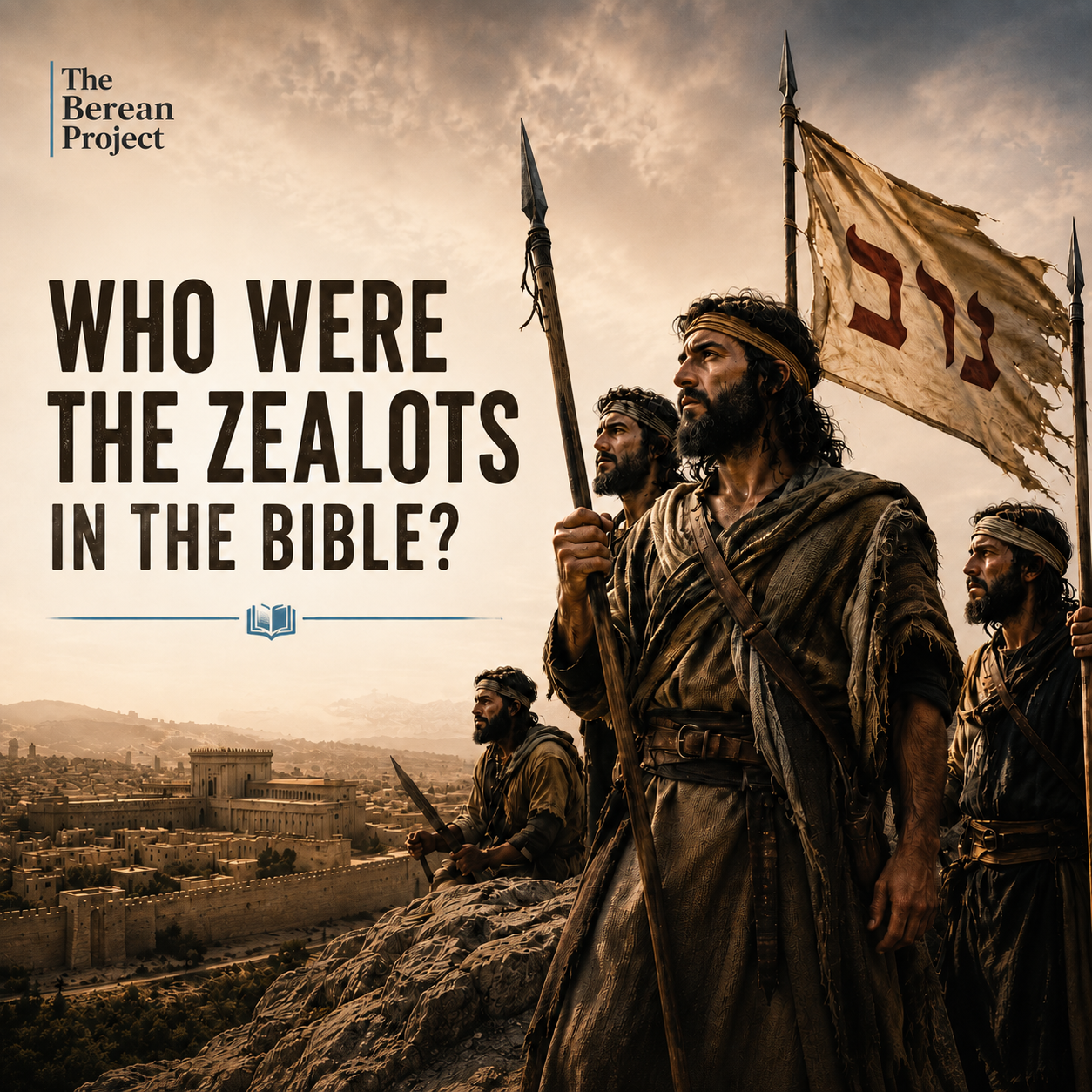
The Zealots were a prominent socio-political and religious movement among Judean Jews during the first century. They sought to overthrow Roman rule in Judea, and their fierce resistance ultimately reshaped the course of Jewish and Christian history. Understanding who they were unlocks many of the political tensions running beneath the surface of the Gospels.
Key Overviews
-
The Zealots were a militant Jewish sect that opposed Roman occupation of Judea before 70 CE, believing that God was Israel's only ruler and that paying taxes to Rome was treason against God.
-
The term Zealots comes from the Greek meaning "emulator" or "zealous follower," and it could encompass several militant Jewish resistance groups operating in first-century Palestine.
-
The Great Jewish Revolt began in 66 CE, led largely by the Zealots, and ended with Romans destroying Jerusalem and the Second Temple in 70 CE. The Zealots at Masada committed mass suicide in 73 CE to avoid capture.
-
Simon the Zealot was one of Jesus' twelve disciples, representing how closely the movement intersected with the earliest Christian community.
-
Jesus Christ taught a non-violent kingdom of God that sharply contrasted with Zealot militancy, clarifying debates about taxation, Roman soldiers, collaboration by local leaders, and expectations of a revolutionary Messiah.
Historical Background: Roman Rule and Second Temple Judaism
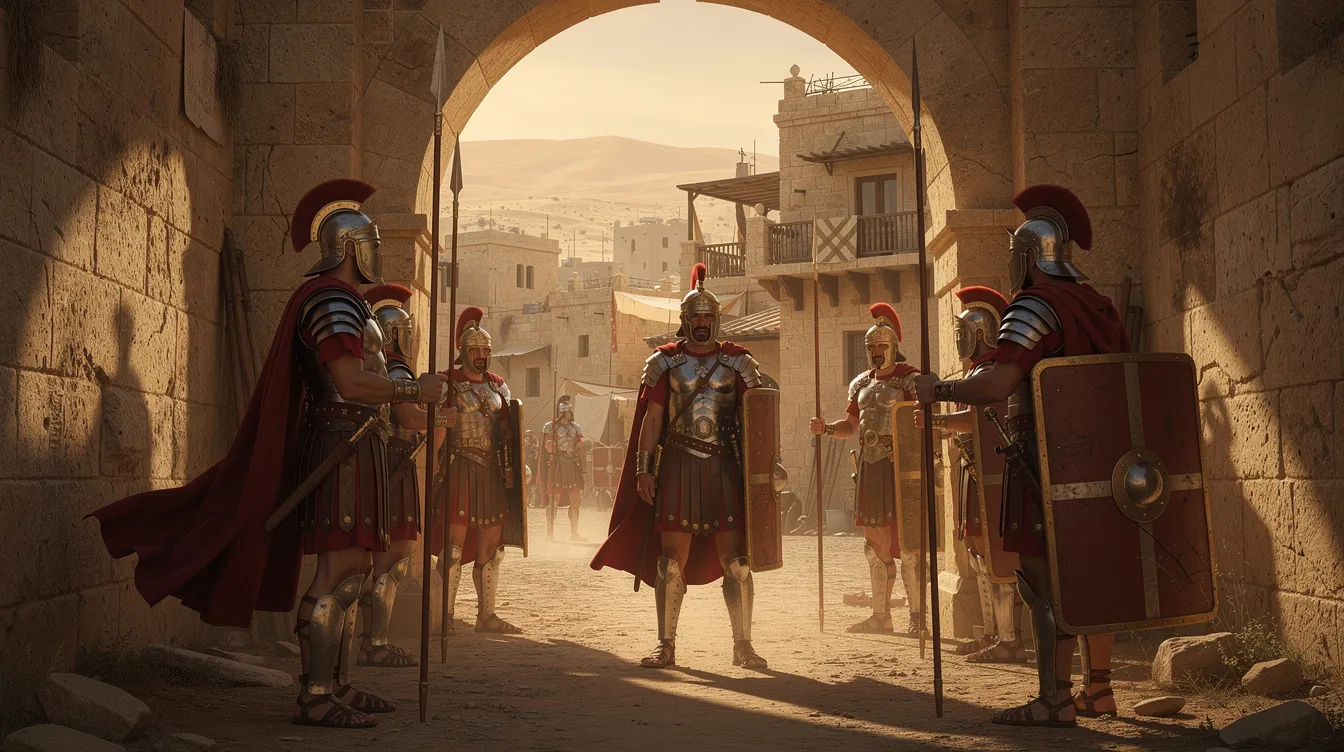
First-century Judea was a pressure cooker. After Herod the Great died around 4 BCE, his son Archelaus governed so poorly that Rome deposed him in AD 6 and converted Judea into a Roman province, directly administered by prefects like Pontius Pilate. This shift placed the Jewish people under the direct weight of the Roman Empire.
Roman rule brought heavy taxation, census-taking, military garrisons, and symbolic demands that subjects honor the Roman emperor. For Jews living under an inviolable attachment to the Torah's command that "you shall have no other gods," these impositions were not merely political but deeply religious affronts.
At the center of Jewish life stood the Second Temple in Jerusalem, rebuilt after the Babylonian exile and massively expanded by Herod the Great. Control over the Temple and its priesthood was intensely political. Into this volatile setting, different groups emerged with competing responses to Roman occupation:
-
Pharisees emphasized strict observance of the Law and oral traditions
-
Sadducees focused on Temple worship and often cooperated with Rome
-
Essenes withdrew into ascetic desert communities
-
Zealots formed a fourth group that combined religious devotion with armed resistance
The Jewish historian Flavius Josephus described these as the four philosophies of Judaism. This political and religious context is the world in which Jesus taught, the apostles ministered, and the Zealot movement emerged.
Origins and Beliefs of the Zealot Movement
The Zealots were a militant Jewish movement in first-century Judea that fused intense devotion to God with active resistance to Roman rule. Judas of Galilee founded the Zealot movement around 6 CE, during the census imposed by the Roman governor Quirinius. Alongside a Pharisee named Saddok, Judas urged Jews to refuse submission to Roman taxation, calling it a form of slavery.
Josephus labeled this movement the "fourth philosophy," distinguishing it from the Pharisees, Sadducees, and Essenes. Its core teaching was that God alone was Israel's only ruler, and acknowledging any other political lord was intolerable. The Zealots shared many pharisaic notions, including belief in resurrection and devotion to the Law, but diverged sharply on politics.
Their beliefs included:
-
Refusal to pay Roman tribute, because the Zealots believed that paying taxes to Rome was treason against God
-
Rejection of emperor worship and imperial images
-
Willingness to use violence to defend God's law and Israel's freedom
-
Conviction that God would vindicate their resistance
The Zealots viewed armed rebellion as a religiously justified duty against Roman rule. They drew inspiration from Old Testament models like Phinehas (Numbers 25), Elijah, and the Maccabees. Not all sympathizers took up arms, but the movement's ideology prepared the ground for later open revolt against Rome.
Zealots, Sicarii, and Masada
The term Zealot could encompass several militant Jewish resistance groups, but ancient sources distinguish related factions. The Sicarii were a splinter group of the Zealots, named after the curved daggers called sicae they concealed in cloaks. They targeted Romans and Jewish collaborators for assassination, striking in crowded public places and disappearing into the chaos. These dagger men carried out notorious operations, including the murder of the high priest Jonathan. Menahem ben Judah was an early leader of the Sicarii who seized Masada's armory at the revolt's outset.
During the Great Jewish Revolt, Zealot factions took control of Jerusalem, purged perceived collaborators among their fellow Jews, and contributed to devastating internal civil war even as Roman forces advanced. The Sicarii held Masada as a stronghold during the revolt, a desert fortress perched on a plateau near the Dead Sea.

After Jerusalem fell in 70 CE, the remaining Sicarii under Eleazar ben Yair, a relative of Judas the Galilean, held Masada against a Roman siege led by the governor Lucius Flavius Silva. According to Josephus's account, roughly 967 defenders committed suicide rather than surrender. In modern writing, Masada is often linked to the Zealots broadly, but historically it was more precisely a Sicarii stronghold.
Zealots in the New Testament
The New Testament assumes readers understand the tension of Jewish life under Roman occupation and does not systematically explain the Zealot movement. Yet its pages are saturated with that reality. The Zealots attacked and assassinated Roman authorities in Judea, creating a climate of fear and suspicion that shaped every public gathering.
The Gospels reflect a world charged with anti-Roman sentiment. When Pharisees and Herodians ask Jesus whether it is lawful to pay tribute to Caesar (Matthew 22:15–22), the question directly echoes Zealot refusal of taxation. Jesus' answer navigates between submission and revolution.
Roman crucifixion was commonly reserved for insurgents and rebels. The execution of Jesus between two "bandits" evokes association with political violence. Jesus' message was often interpreted in political terms by Zealots and sympathizers who hoped he would lead an uprising.
Paul later instructed Christians to pay taxes and honor governing authorities (Romans 13:6–7), while Acts 5:29 affirmed that believers must obey God rather than human rulers. These New Testament passages negotiate the same tension the Zealots forced into the open: loyalty to God versus submission to Rome.
The political tensions surrounding the Zealots remind us that the New Testament was written in a world very different from our own. Questions about taxation, loyalty, religious identity, and Roman authority carried implications that modern readers may not immediately recognize. When we encounter Jesus' teachings or Paul's letters without understanding those circumstances, we risk hearing their words through assumptions shaped by our own time rather than theirs. This raises an important question: Why does understanding the Old Testament world help us understand the New Testament? The biblical story unfolds across generations of history, and the expectations people brought into the first century did not develop in isolation.
Simon the Zealot and Other Possible Zealot Connections
The clearest biblical link to the Zealot name is Simon the Zealot, one of Jesus' twelve disciples. He appears in the apostle lists in Luke 6:15, Acts 1:13, Matthew 10:4, and Mark 3:18. Scholars debate whether "Zealot" denotes formal party membership or simply a zealous, nationalistic temperament.
What stands out is the striking contrast among Jesus' apostles: Simon the Zealot on one hand and Matthew, a tax collector who worked for Rome, on the other. Jesus united natural political enemies in one community of disciples, a radical statement in Roman Palestine.
Paul described himself as "zealous for the traditions of my fathers" (Galatians 1:14) and violently persecuted the early church, but there is no evidence he belonged to the armed movement. His zeal was theological rather than military.
The disputed idea that Judas Iscariot's name might link him to the Sicarii has attracted attention from scholars, but most believe "Iscariot" refers to his hometown of Kerioth in Judea. While some individuals in the Bible clearly displayed zeal, only Simon is explicitly called "the Zealot," and the texts carefully distinguish Jesus' mission from armed resistance.
Zealots, Jesus, and the Politics of the Kingdom of God
Many Jews in Galilee and Judea longed for a Messiah who would overthrow Rome. The Zealots believed the Messiah would lead them against Rome in a decisive military victory. Jesus announced the kingdom of God but refused to lead an armed revolt.
His actions could be read politically. His entry into Jerusalem on a donkey amid shouts of "Hosanna" evoked royal imagery. His cleansing of the Temple challenged both religious corruption and imperial exploitation. The inscription "King of the Jews" on his cross, though mocking, reflected how Roman authorities perceived any figure with popular support. Yet Jesus repudiated Zealot methods. He told Peter to put away the sword (John 18:11), taught love for enemies (Matthew 5:43–48), and declared his kingdom was "not from this world" (John 18:36).
This stance exposed him to suspicion from both sides. Rome executed him as a potential rebel king. Zealot-minded Jews were likely disappointed that he chose peace over insurrection. Understanding the Zealots illuminates why crowds could shift from adoration to rejection and why Rome reacted so severely to any figure claiming to be lord and king of Israel.
The Great Jewish Revolt and the Fall of the Second Temple
Rising tensions between the Jewish people and their Roman overlords finally Rome broke into open warfare. The Zealots played a primary role in the outbreak of the First Jewish–Roman War. In 66 CE, the Great Jewish Revolt began, led by the Zealots, when Jewish forces defeated a Roman garrison in Jerusalem and expelled Roman officials.
Key causes included corrupt governors like Gessius Florus, religious provocations, heavy taxation, and long-standing anger over occupation. Zealot militancy contributed to civil conflict among the Jewish population. The Zealots deeply fractured Jewish society and intensified anti-Roman sentiment. Inside Jerusalem, rival factions burned food supplies and fought each other even as Vespasian and then his son Titus advanced with Roman forces.
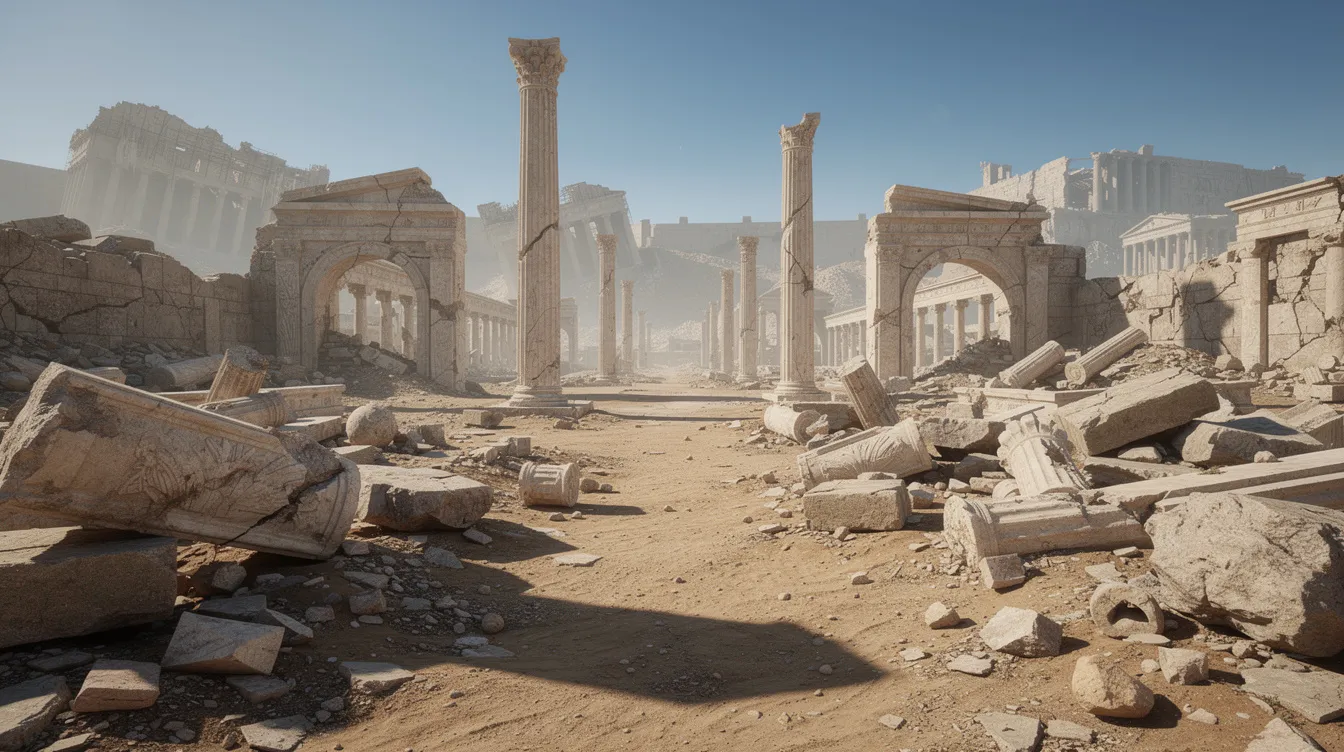
In 70 CE, Romans destroyed Jerusalem and the Second Temple. The Temple's destruction was a catastrophic turning point. Today, only the Western Wall remains as a visible remnant. The Zealots' uncompromising stance ultimately led to catastrophic consequences for Judea.
The final phase saw scattered resistance ending with the fall of Masada in 73 CE, where the Zealots committed mass suicide to avoid capture. The consequences were profound: diaspora, the loss of the Temple sacrificial system, and a transformed context for both Judaism and emerging Christianity. Later Jewish revolts, including the Bar Kokhba revolt of 132–135 CE, echoed some of the same aspirations but could not undo the destruction.
Legacy and Interpretation of the Zealots
The Zealots have been remembered as freedom fighters, religious fanatics, or reckless extremists, depending on perspective. Some Jewish traditions admire their courage and faithfulness to God's kingship, while others blame them for bringing catastrophe on the city and its people. In the Jewish Encyclopedia, the movement is discussed with attention to both its idealism and its destructive outcomes.
Josephus's critical portrayal must be read with awareness: as a former rebel commander who surrendered and wrote under Roman patronage, his account carries political bias. Modern historians debate the organization and size of the Zealot movement, including whether "Zealots" describes a single party or a cluster of affiliated groups that took a leading role at different moments.
The Zealots and their legacy influenced early Jewish and Christian history. For Christians reading the New Testament, the Zealots' story is a reminder that faith in Jesus Christ first spread in a world of occupation, revolt, and fierce arguments over how God's people should respond to empire. Studying the Zealots deepens understanding of Jesus' non-violent path, the early church's struggles, and enduring questions about religion, politics, and the death that violence inevitably brings.
FAQ
Were the Zealots mentioned by name in the New Testament?
The New Testament uses the term "Zealot" explicitly only for Simon the Zealot (Luke 6:15; Acts 1:13). Elsewhere, words like "zeal" or "zealous" describe religious fervor in a general sense, as when Paul calls himself zealous for ancestral traditions, without naming the Zealot party. The movement itself is part of the assumed background rather than a topic the Testament explains directly.
How did Zealots differ from Pharisees and Sadducees?
Pharisees focused on strict Torah observance and believed in resurrection. Sadducees were priestly elites who cooperated with Roman authorities. Zealots shared many Pharisee beliefs but insisted that God was Israel's only ruler and therefore rejected Roman rule entirely, often resorting to violence. Essenes, by contrast, withdrew from society altogether. Josephus described the Zealots as a fourth philosophy distinct from these other groups.
Did Jesus ever support Zealot-style rebellion?
No. The Gospels consistently portray Jesus rejecting armed revolt. He commands love for enemies, pays the temple tax, tells people to give Caesar what belongs to Caesar, and rebukes disciples who draw swords. His kingdom was spiritual and moral, not advanced through military force.
Were early Christians persecuted by Zealots as well as Romans?
The New Testament mainly records persecution from Jewish religious leaders and Roman officials, not specifically from Zealots. However, Christians who refused to join armed resistance may have been viewed as disloyal by militant nationalists. The texts do not name Zealot-specific persecution directly.
What sources outside the Bible tell us about the Zealots?
Almost all detailed information comes from Flavius Josephus, particularly his works "Jewish War" and "Antiquities of the Jews." Supplementary references appear in later rabbinic texts like the Talmud. Scholars use these sources with caution because of Josephus's complex loyalties as a former rebel who wrote under Roman patronage. Archaeological evidence at Masada and Roman siege works helps corroborate key events.
Understanding the World Behind the New Testament
The story of the Zealots reveals how deeply the political, religious, and cultural circumstances of the first century shaped the world in which Jesus lived. Understanding those circumstances does not automatically resolve every question about the New Testament, but it gives us a more informed starting point for exploring what its authors were communicating. It also invites us to reconsider how easily we can overlook the assumptions and expectations of the original audience when reading familiar passages. These are the kinds of questions explored in Questions Worth Wrestling With, where historical context, thoughtful examination, and curiosity help us engage Scripture more carefully and discover connections we might otherwise miss.

The Problem With Certainty