How Did Purity, Honor, and Shame Shape the Biblical World?
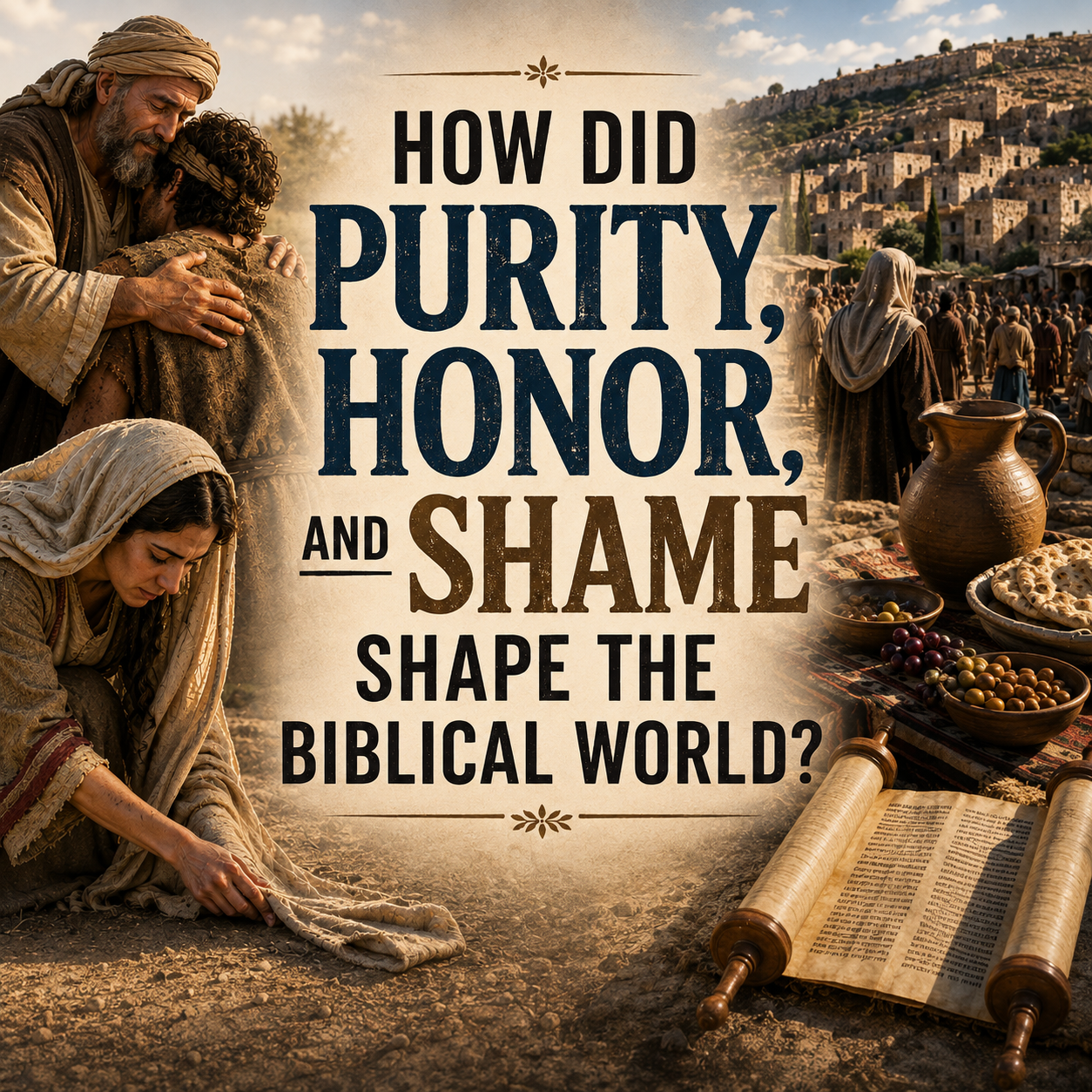
The purity and honor codes of the Bible shaped how ancient communities worshiped God, related to one another, and judged what was acceptable or scandalous. These codes still influence how believers understand holiness, sin, and moral conduct today. Understanding them in context will give you a clearer picture of Scripture and a stronger foundation for living a holy life in the modern world.
Highlights
-
Purity in the Bible refers to both ritual cleanness and moral uprightness, and it is essential for access to God in biblical faith.
-
Honor represents the public worth of a person within their community, while shame involves the loss of public standing or community respect.
-
Old Testament purity laws protected people from sacred power dangers and taught Israel about the boundaries between the ordinary and the sacred.
-
Jesus redefined purity, focusing on inner moral cleanliness rather than external rituals, and His power to cleanse is greater than impurity's power.
-
Purity codes influence modern behavior and societal norms, and believers today are called to pursue Spirit empowered sanctification rather than legalism or moral compromise.
Overview
Purity in the Bible means being clean and fit to approach a Holy God. Honor codes explain how a person gains respect and avoids shame within the community. In the Old Testament, purity laws in books like Leviticus and Deuteronomy regulated food, bodily fluids, disease, and worship in order to protect Israel in the presence of God. The New Testament centers purity in the heart and mind. The Lord Jesus Christ fulfills and reshapes earlier laws so that inner holiness matters more than ritual status. Honor and shame worked powerfully in biblical societies. Lepers were excluded from the camp, and a father ran publicly to embrace a prodigal son. Today, purity and honor codes call readers to reject both legalistic purity culture and shameless immorality in favor of Spirit empowered holiness and Christlike honor.
Defining Purity And Honor In The Bible
Purity involves ritual cleanliness and moral uprightness in relation to God. In Hebrew, the word tahor means clean while tamei means unclean. Purity codes defined boundaries between holy and common, determining who could enter worship and who could not. Purity is linked to holiness in biblical teachings, and purity and honor codes in the Bible define clean versus unclean behavior across both testaments.
Honor in biblical teaching means recognizing the worth of God and others. The Hebrew word kavod and Greek word timē refer to public recognition of a person's value. Shame involves the loss of public standing or community respect, which in an honor shame culture could be more devastating than private guilt. The Bible joins purity and honor together: impurity often brings shame, while holiness leads to honor from God. Both Old Testament and New Testament writers use this language, yet they apply it in different ways.
Background: Honor And Shame In The Ancient World
Honor shame culture dominated the ancient Near East and the Mediterranean world during the first century. In cities like Jerusalem, Corinth, and Rome, family reputation often mattered more than individual achievement. A person's identity was deeply social, and one's worth depended on what others thought.
Public meals, clothing, seats of honor, and greetings in the marketplace all signaled status. Scandalous behavior could destroy entire families. Consider a young man who squanders his inheritance with prostitutes, or a woman speaking with unrelated men in public. These acts brought collective disgrace on the family and the community.
When Jesus told parables like the Prodigal Son, He used these cultural expectations to reveal the heart of God. The father running to embrace his disgraced son was itself scandalous, because dignified men in that culture did not run. True honor comes from seeking God's approval rather than human applause, and this truth shattered conventional wisdom about who deserved respect.

Purity Laws In The Old Testament
The Old Testament emphasizes clean and unclean categories through a detailed system found in books such as Leviticus chapters 11 through 15 and Numbers 5. These purity laws governed daily life near the holy presence of God in the tabernacle and later the temple. Purity is essential for access to God in the tabernacle, and purity regulations provided a mechanism for sinful people to approach a Holy God.
Main areas covered by the purity codes include:
-
Clean and unclean animals (Leviticus 11)
-
Bodily discharges including blood and seminal emissions (Leviticus 15)
-
Skin diseases such as tzaraʿat (Leviticus 13 and 14)
-
Corpse contact (Numbers 19)
-
Regulations for priests entering the sanctuary
Ritual impurity can result from normal human experiences associated with mortality, not necessarily from personal sin. Biblical purity laws teach about the boundaries between the ordinary and the sacred. For example, the Day of Atonement in Leviticus 16 allowed only the high priest to enter the Holy of Holies. Mosaic law required lepers to declare themselves unclean and live outside the camp. Purification rituals involving water, sacrifice, and washing restored a person to the community. Old Testament purity laws protected people from sacred power dangers and provided both physical and spiritual protection in biblical times. These laws trained Israel to treat God as uniquely holy and to see that death and impurity could not casually enter His presence.
Honor Codes And Scandal In Old Testament Narratives
Stories in the Old Testament illustrate how purity and honor codes worked during political and family crises. Purity codes were prevalent in both the Old and New Testaments, and narrative examples reveal their social force.
King Uzziah in 2 Chronicles 26 entered the temple to burn incense, an act reserved for priests. God struck him with leprosy, making him ceremonially unclean and socially dishonored. His honor, his throne, and his body were all damaged by this single act of presumption.
The scandal of David and Bathsheba involved adultery, murder, and abuse of royal power. David's sin created both moral impurity and national shame before other nations. Only after Nathan the prophet confronted him did David's public repentance begin to restore some measure of honor.
In other accounts, eating forbidden foods, contact with idols, or touching a corpse brought disgrace until proper cleansing was performed. Israel learned that ignoring God's holiness damaged both their covenant relationship with God and their public honor among the nations.
The Lord Jesus Christ And The Transformation Of Purity In The New Testament
The Lord Jesus Christ did not abolish holiness but fulfilled the Law and reoriented purity toward the heart. Jesus redefined purity, focusing on inner moral cleanliness rather than external ceremony. He redefined traditional purity maps in the New Testament by touching those whom religion declared impure.
Consider these scenes: Jesus touches a leper in Galilee, heals a woman with a flow of blood, and raises a dead girl. Each act would normally transmit ritual impurity, yet Jesus' power to cleanse is greater than impurity's power. His holiness flows outward instead of contamination flowing inward.
In Mark chapter 7, Jesus rejected the Pharisees' emphasis on hand washing traditions and declared that nothing entering from the outside makes a person unclean. Evil thoughts, lust, and desire from the heart produce true defilement. Moral purity involves one's interior character and conduct more than rituals. Jesus' table fellowship with tax collectors and sinners was scandalous because it appeared to break honor and purity codes, yet He honored the dishonored by offering forgiveness and freedom.
The cross itself was the greatest shame in Roman society. Death on a cross was designed to strip honor from its victim. Yet God turned this public disgrace into supreme glory and the final cleansing sacrifice for sin, proving that the gospel reverses the world's categories of honor and shame.

Honor Shame And Purity In The Early Church
The apostles applied purity and honor codes to communities in cities such as Corinth, Ephesus, and Rome. Apostle Paul wrote letters addressing scandalous sins including incest, temple prostitution, and lawsuits among believers, which brought shame on the name of Jesus and the witness of the church. Sexual purity was a repeated concern, as Paul urged young people and all believers to flee immorality and honor God with their body.
In Acts chapter 10, Apostle Peter received a vision where God showed him unclean animals and commanded him to eat. Peter objected, but God told him not to call anything impure that He had cleansed. Gentiles like Cornelius then received the Holy Spirit, demonstrating that food laws and ethnic separation no longer defined purity in Christ. Obedience to God's Word purifies believers' souls and opens the door of faith to every nation.
In 1 Thessalonians chapter 4, Paul links holiness and honor, calling believers to control their bodies in holiness and honor instead of passionate lust. The principle of honor extends to caring for the vulnerable and social justice. The early church replaced status seeking with a new honor code where the humble are exalted, the lowly receive seats of honor, servants are counted greatest, and children are welcomed as a gift.
Living With Biblical Purity And Honor Today
Modern confusion surrounds purity from two directions. Some reject all purity teaching as outdated religion. Purity culture backlash has led to questioning purity's importance altogether. Others embrace harsh purity culture that focuses only on external rules and uses shame as a weapon. Both extremes miss the truth of Scripture.
Purity codes influence modern behavior and societal norms more than most people realize. Modern society still fears pollution and contamination, whether physical or social. Biblical teachings have influenced societal standards in family ethics and social responsibility, and purity and honor codes shaped Western legal systems and ethics.
Biblical purity now centers on a cleansed heart, a renewed mind, and a body presented as a living sacrifice through the power of the Holy Spirit. Psalm 119:9 asks how a young person can keep their way pure, and the verse answers: by living according to God's Word. Memorizing Scripture helps resist temptation and maintain purity. This commitment to sanctification is not about perfect performance but about a soul anchored in Christ.
Concrete examples of modern scandal include public sexual immorality, abuse of power, racial contempt, and financial corruption. These contradict the honor code of the Kingdom of God just as surely as idolatry or marriage violations did in ancient Israel. Believers should resist both shame based religion and shameless rebellion by looking to the Lord Jesus Christ, who bears our shame and clothes believers with His honor. The blessings of this truth bring light and freedom to every person willing to receive them.
Practical steps for pursuing purity and honor in Christianity today include reading in context, immersion in Scripture, participation in the church community, sacrificial love for those whom society treats as impure or dishonored, and encouraging young people to build their identity on the gospel rather than the shifting opinions of the world.

FAQ
How are purity laws different from moral commandments like the Ten Commandments
Purity laws in sections such as Leviticus 11 and 15 mark things as clean or unclean often for symbolic or ritual reasons. Moral commandments like prohibitions against murder, adultery, and theft are always right and wrong for all people. The Lord Jesus Christ and the apostles affirm the moral commandments for believers yet show that ritual purity rules about food, sacrifice, and temple access are fulfilled in Christ and no longer serve as requirements for Gentiles or Jews who follow Him.
Why did God care so much about food and bodily fluids in the Old Testament
God used everyday realities like diet, birth, blood, and death to teach Israel about life, holiness, and separation from pagan worship practices. These rules trained Israel to treat God as uniquely holy and to see that impurity and death could not casually enter His presence. The system also provided communal health protections in a pre modern context.
Does honor shame still matter in Western societies today
Even in modern Western cultures, people fear public embarrassment and online humiliation. Honor shame dynamics appear in social media reputations, cancel culture, and family expectations. Believers should recognize these forces and let the honor that comes from God in Christ outweigh the shifting opinions of crowds.
How can I pursue purity without falling into legalism or unhealthy purity culture
Start with faith in the Lord Jesus Christ and the cleansing He provides, then pursue obedience out of love rather than fear. Focus on the fruit of the Spirit, accountability with trusted believers, and wise boundaries. Avoid measuring your worth by past mistakes or perfect performance, and remember that sanctification is a lifelong journey empowered by the Spirit.
What would have been considered scandalous behavior for first century believers
Concrete examples include a Christian eating meat in an idol temple, joining in Roman sexual festivals, refusing to care for aging parents, or publicly denying Christ under pressure from authorities. Such actions would not only stain personal reputation but would also bring dishonor on the church and on the name of the Lord Jesus Christ in the eyes of surrounding communities.
The Problem With Certainty