Who Were the Sadducees in the Bible?
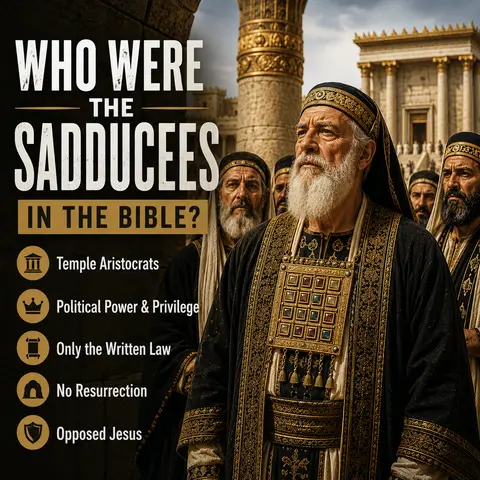
The Sadducees were among the most powerful figures in ancient Israel, yet they left behind no writings, no monuments in their own name, and no surviving community. What they did leave was a lasting imprint on the New Testament, on the trial of Jesus, and on the political landscape that shaped early Christianity. Understanding who they were, what they believed, and why they vanished reveals a critical layer of biblical history that most readers overlook.
Key Overview
-
The Sadducees were a powerful priestly and aristocratic group during the late Second Temple period, centered on the Jerusalem Temple. They were the Jewish aristocrats of first-century Israel, dominating religious and political life in Jerusalem through their control of Temple worship, sacrifices, and administration.
-
Sadducees held key offices in the priesthood, including the high priest position, and controlled the Sanhedrin, the Jewish ruling council. Their economic influence flowed from tithes, offerings, and Temple operations, making them enormously wealthy.
-
Sadducees rejected the resurrection of the dead, the existence of angels and spirits, and many later Jewish oral traditions. They limited divine authority mainly to the written Torah, which put them in direct conflict with Jesus and the early church.
-
Their close political relationship with Rome and other imperial powers helped preserve their status but made them deeply unpopular with many ordinary Jews, who saw them as collaborators rather than covenant-faithful leaders.
-
When Rome destroyed the Jerusalem Temple in AD 70, the Sadducees lost their entire power base and quickly disappeared as a distinct group, leaving Pharisaic–rabbinic Judaism and Christianity as the major heirs of Second Temple Judaism.
Historical Setting: Second Temple Judaism
The Second Temple period stretches from roughly 516 BCE, when the Jewish people rebuilt the Temple under Zerubbabel after returning from Babylonian exile, to AD 70, when Roman forces under Titus burned Jerusalem to the ground. Across those centuries, Judea passed through Persian rule, Greek domination following Alexander the Great, the crisis under the Seleucids, and the Maccabean Revolt (168–142 BCE) that gave rise to the Hasmonean dynasty in the second century BC. Roman conquest in 63 BCE then placed Judea under direct imperial control, reshaping everything.
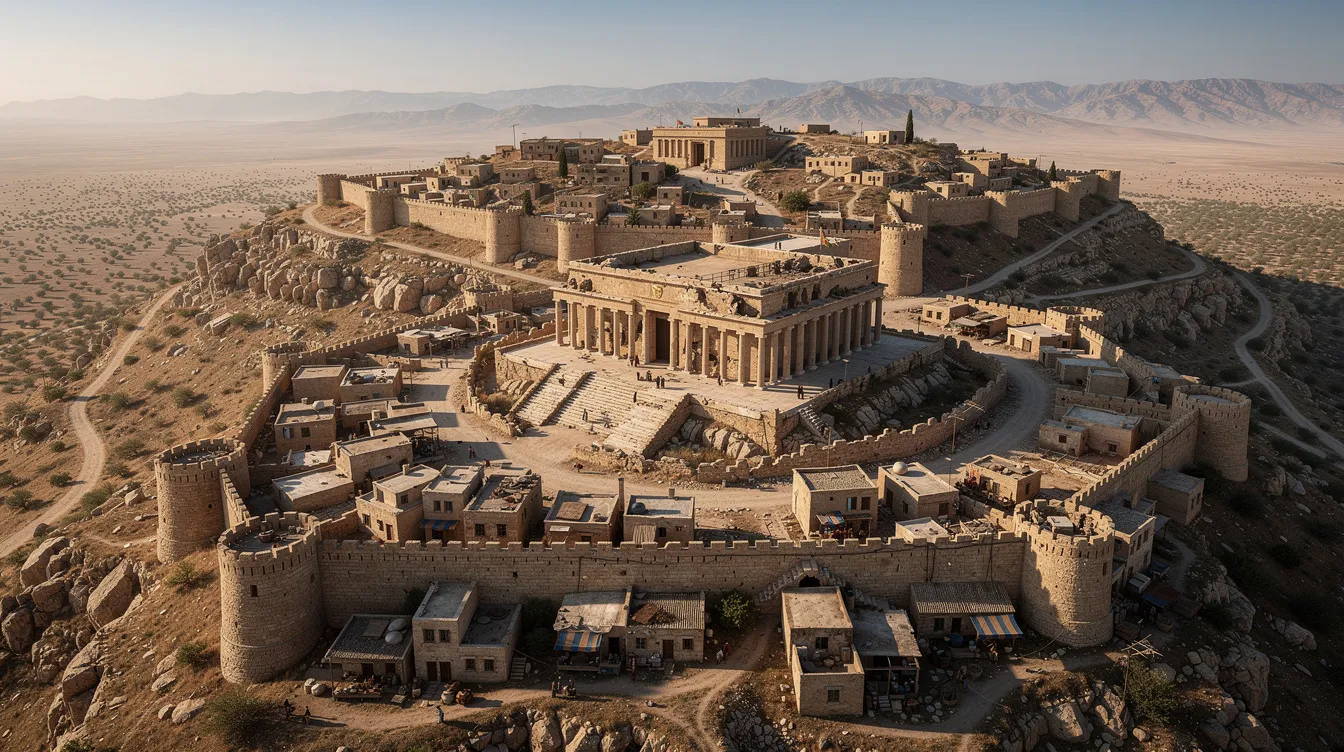
The Temple in Jerusalem was far more than a house of worship. It functioned as a financial hub, a political center, and the primary symbol of Jewish national identity. Sacrifices, festivals, pilgrimages, tithes, and the half-shekel Temple tax all flowed through its courts. This concentration of religious and economic power naturally attracted elite families who would later form the core of the Sadducees.
They were not the only religious sect competing for influence. Pharisees emphasized oral traditions and popular piety. Essenes pursued separatist, ascetic lives. Zealots pushed for armed revolt. Within this diverse and often fragmented Jewish community, the Sadducees carved out their niche as the aristocratic, Temple-centered elite.
Name and Origins of the Sadducees
The exact origin of the name "Sadducees" (Hebrew: Tsedûqîm) is debated, but the strongest theory ties it directly to priestly lineage. Most scholars connect the name to Zadok, the high priest who served under King David and Solomon in the tenth century BC. The prophet Ezekiel (chapters 40–48) portrays Zadok's descendants as the only legitimate priestly line, authorized to approach God's altar. For a group that built its identity on Temple authority, claiming Zadokite heritage was a powerful credential.
An alternative proposal links the name to the Hebrew root tsedeq or tsaddiq, meaning "righteous." While some ancient writers and Church Fathers held this view, linguistic and historical evidence favors the Zadokite priestly connection, especially given the group's obsessive focus on Temple service and priesthood.
The Sadducees emerged during the Hasmonean period, when wealthy priestly families tied to the Temple consolidated both religious and political power. As the Hasmonean priest-kings blurred the line between sacred and secular authority in the second century BC, these elite families coalesced into the recognizable party that Josephus, the New Testament, and rabbinic sources describe.
Social Status, Temple Power, and the Priesthood
The Sadducees belonged to the upper strata of Judean society. They were wealthy, landowning, and closely connected to the high priest's court in Jerusalem. They focused their worship on Temple rituals and sacrifices, which also happened to be the source of their income and prestige. The Sadducees were the aristocratic class in Jewish society, a priestly class that controlled crucial Temple offices: high priest, chief priests, treasurers, and administrators.
Control of the sacrificial system, tithes, and Temple funds gave them immense economic leverage. Every Jewish pilgrim arriving for Passover, Pentecost, or Tabernacles contributed financially to a system the Sadducees managed. This made the Jerusalem Temple not just a house of prayer but a revenue engine for elite families.
Not every priest was a Sadducee, and not every Sadducee was necessarily a serving priest. But the group was overwhelmingly priestly and aristocratic, unlike the more lay-based Pharisees. As Josephus noted, they appealed mostly to the wealthy.
Archaeological work in Jerusalem's Herodian Quarter has revealed palatial homes of priestly aristocrats, including a mansion covering roughly 600 square meters with terraces facing the Temple Mount, ritual purity baths, imported tableware, and frescoed walls. These ruins paint a vivid picture of the lifestyle behind the Sadducees' religious authority.
Sadducees and the Sanhedrin
The Sanhedrin was the supreme religious and legal council in Jerusalem, handling capital cases, Temple matters, doctrinal decisions, and mediation with Roman authorities. It functioned as the Jewish ruling council under Rome's watchful eye, meeting in the Chamber of Hewn Stones within the Temple precincts.
Sadducees held majority seats in the Sanhedrin and often occupied the most powerful positions. The high priest-almost always a Sadducee-effectively presided over the body. Caiaphas, a Sadducee, held king-like authority in the Sanhedrin during the years of Jesus' ministry, and Sadducees controlled the Sanhedrin during Jesus' time.
Pharisees also sat on the council and frequently clashed with Sadducees over interpretations of oral law versus written law, purity rules, and daily religious practice. Josephus records that the Hasmonean ruler John Hyrcanus formally switched allegiance from Pharisees to Sadducees, abolishing Pharisaic rulings and deepening the rift between the two sects.
Specific New Testament figures illustrate this power: Annas served as high priest and retained enormous influence through a family network-five of his sons also held the office. His son-in-law Caiaphas, appointed around AD 18, presided over Sanhedrin decisions during the most consequential moments in the Gospels, including the trial of Jesus (John 18; Acts 4–5).
Sadducees' Beliefs and Doctrines
Sadducees beliefs were conservative in their strict focus on the written Torah but deeply skeptical about doctrinal developments that most other Jews embraced. They rejected the oral Torah and Pharisaic traditions entirely, insisting that only the written Law of Moses possessed binding divine authority. Sadducees accepted only the written Torah as scripture, and they rejected the oral Torah as divine authority.
According to Acts 23:8, Sadducees rejected belief in the resurrection of the dead, angels, and spirits. The Sadducees denied the existence of angels and spirits, setting them sharply apart from Pharisees, who affirmed all of these. The Sadducees believed in the mortality of the soul and denied resurrection, meaning their theological horizon ended at death.
Sadducees believed in human free will without divine predestination. Josephus explicitly reports that they rejected fate, insisted on human free will, and believed the soul perished with the body. This emphasis on human free agency matched their pragmatic, this-worldly orientation.
Because they saw no afterlife or resurrection, their concern focused squarely on earthly life: status, ritual purity, Temple performance, and priestly privilege. There is no significant evidence of messianic or apocalyptic expectation among the Sadducees. Sources disagree on how much of the Hebrew Bible beyond the Torah they accepted, but they consistently limited binding doctrine to what they found clearly in Mosaic written word.
The Resurrection Dispute and Other Theological Conflicts
The question of the resurrection of the dead became the most famous doctrinal clash between Sadducees and other Jews, especially Jesus and the early Christians. Because Sadducees rejected resurrection, any preacher who proclaimed it was directly challenging their theology.
The Gospels record a confrontation where Sadducees posed a hypothetical about a woman married to seven brothers in succession (Matthew 22:23–33; Mark 12:18–27; Luke 20:27–40). Their intent was to tempt Jesus and expose resurrection as absurd. Jesus silenced the Sadducees in this theological debate by appealing to their own sacred texts: "I am the God of Abraham, the God of Isaac, and the God of Jacob," arguing from Exodus that God is not the God of the dead but of the living. The Sadducees had no answer.
Paul later exploited this same fault line. In Acts 23:6–10, he deliberately highlights the resurrection dispute to divide Pharisees and Sadducees in the Sanhedrin, shouting, "I am on trial for the hope of the resurrection of the dead!" The council split. Both the Sadducees and the Pharisees found themselves at odds, demonstrating how central this single doctrine was to Sadducean identity.
Josephus adds that beyond resurrection, Sadducees minimized God's direct involvement in everyday life, emphasizing human free will over divine providence-a stance that further separated them from Pharisees, who believed in a balance of fate and free choice.
Relationship with Rome and Political Pragmatism
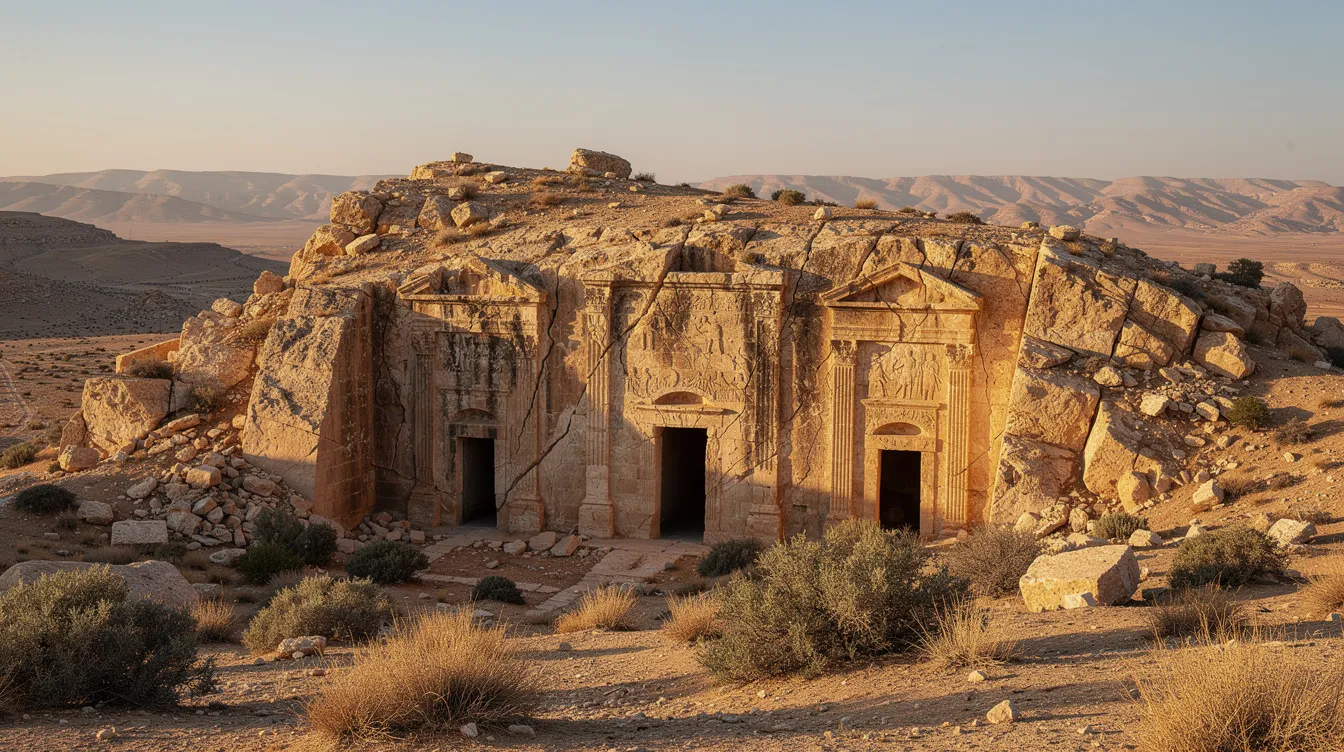
The Sadducees' Temple power depended on imperial favor, which pushed them toward a pragmatic, pro-Roman stance. After Pompey's conquest of Jerusalem in 63 BCE and especially under Herod the Great and the Roman prefects, high priests were often appointed or removed by Roman authorities. This tied Sadducean leaders directly to the Roman Empire's political interests.
Sadducees cooperated closely with Roman authorities for political stability. They generally favored maintaining public order, paying taxes, and avoiding rebellion, because any uprising threatened the Temple system and their own positions. Sadducees were politically pragmatic to maintain their social power. Their stance was clear: preserve the Temple, preserve the nation, preserve their authority.
This collaboration made many common Jews suspicious. The political elite in Jerusalem were seen as compromise-minded aristocrats more interested in status than covenant faithfulness. Sadducees aimed to maintain peace with the Roman Empire, but the cost was popular legitimacy.
The New Testament captures this dynamic precisely. In John 11:48–50, Caiaphas voices the Sadducean calculation: "If we let him go on like this, everyone will believe in him, and the Romans will come and take away both our place and our nation." Jesus threatened not just their theology but the entire political arrangement that kept them in power.
Sadducees in the New Testament
While the Sadducees are not mentioned as frequently as Pharisees in the New Testament, they appear at critical turning points. Their first notable appearance comes alongside John the Baptist in Matthew 3:7–10, where both Sadducees and Pharisees are called a brood of vipers-a stinging prophetic rebuke of their hypocrisy and lack of genuine repentance.
Jesus' confrontations with them center on resurrection and scripture. In Matthew 22, after silencing them on the question of the seven brothers, Jesus accuses them of knowing neither "the Scriptures nor the power of God." In another context, Jesus called the Sadducees a "wicked and adulterous generation" (Matthew 16:1–4), lumping them with other leaders who demanded signs while refusing to believe.
After Jesus' resurrection, the Sadducees and Temple authorities arrested Peter and John for proclaiming the resurrection in the Temple courts (Acts 4–5). The apostles' message that God had raised Jesus from the dead directly undercut everything Sadducean theology held. The Gospels and Acts consistently associate Sadducees with chief priests, Temple guards, and high council decisions that moved toward Jesus' crucifixion and the persecution of the early church. Caiaphas, a Sadducee, played a central role in Jesus' execution.
Conflicts with Pharisees, Essenes, and Other Jewish Groups
Much of what is known about the Sadducees comes from their opponents-Pharisaic-rabbinic literature, the New Testament, and possibly Essene writings from the Dead Sea Scrolls. Every surviving description must be read with this bias in mind, as noted by the Jewish Encyclopedia.
The Sadducees rejected oral traditions cherished by Pharisees, leading to fierce debates about purity laws, Sabbath observance, inheritance rules, and Temple rituals. Pharisees believed in and accepted both the written and oral Torah. Pharisees emphasized oral traditions alongside the Torah and were popular among the common Jewish people. The Sadducees rejected the oral Torah of the Pharisees and insisted only the written law held authority.
Essene texts from Qumran may refer polemically to Sadducean leaders as corrupt priestly usurpers, blaming them for covenant-breaking and inviting divine judgment on Jerusalem. Despite sharp disagreements, Sadducees and Pharisees sometimes cooperated within the Sanhedrin when confronting common threats. The Sadducees were part of a contested religious landscape-not simply villains-and later rabbinic portrayals reflect post-70 polemics against a now-defunct rival religious sect.
Temple Economics, Corruption Accusations, and Jesus' Critique
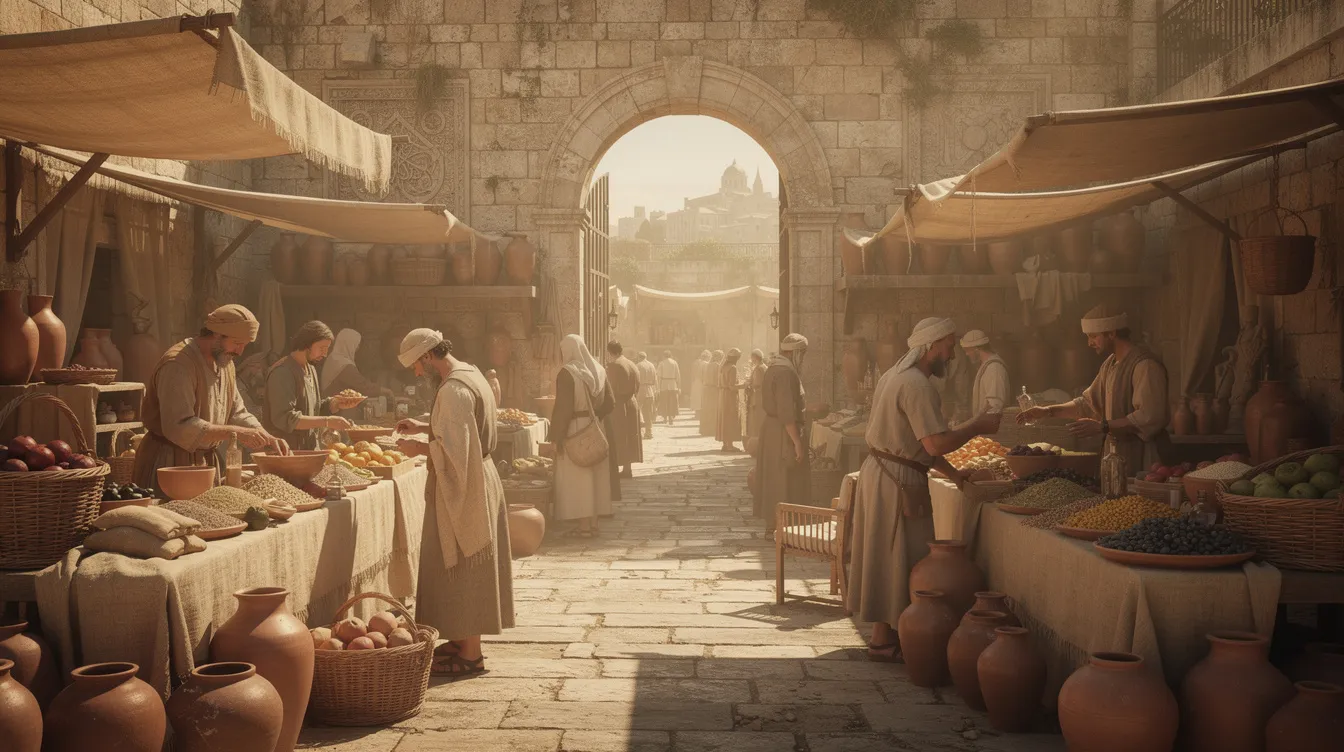
Control of Temple sacrifices, offerings, and currency exchange gave Sadducean families significant economic leverage. Every worshiper needed approved sacrificial animals and had to exchange foreign currency into Tyrian silver for the Temple tax. The Sadducees were known for their wealth and corruption, and later sources accuse their leaders of price-gouging and extortion.
Jesus' cleansing of the Temple (John 2:13–22; Matthew 21:12–17) was a direct challenge to the economic practices tied to Sadducean control. Overturning the money-changers' tables and driving out animal sellers, Jesus declared the Temple had become a "den of robbers." For the Sadducean establishment, Jesus threatened not just their religion but their revenue.
Traditions about the "Bazaar of Annas" suggest that the high priestly family ran commercial operations in the Temple courts. Some historians describe a "Temple mafia" under these families, though details are debated and rely partially on later sources. Jesus' critique combined moral condemnation with an implicit prediction that such corruption would lead to the Temple's downfall-an ominous message for power hungry leaders whose entire existence depended on that building standing.
Decline, Disappearance, and Legacy After AD 70
The Jewish revolt against Rome (AD 66–70) ended with the destruction of the Temple by Titus in AD 70. This single event marked the end of the Second Temple period and, with it, the end of the Sadducees. The Sadducees disappeared after the Temple's destruction in 70 CE, because their identity was bound entirely to Temple sacrifices, high-priestly offices, and the pilgrim framework. When the Temple fell, the Sadducees lost everything.
After AD 70, sources barely mention them. Pharisaic-rabbinic Judaism, centered on synagogues, Torah study, and halakhah rather than sacrifices, became the dominant form of Judaism. Christianity also grew, inheriting and amplifying the resurrection debates that Sadducees had opposed.
Some later groups, such as medieval Karaite Jews, were sometimes compared to Sadducees because of their similar rejection of oral tradition. However, historians see this as analogy, not direct institutional lineage. The Sadducees remain important for understanding the Bible, the development of Jewish law, and the political dynamics that shaped the old testament and new testament eras.
Why the Sadducees Matter for Understanding the New Testament
The Sadducees form a crucial backdrop for Jesus' ministry, the apostles' preaching, and early Christian claims about resurrection and Temple worship. Knowing their doctrines about resurrection, angels, and scripture clarifies why Jesus' teaching and the apostles' emphasis on his rising from death provoked such fierce opposition.
Their Temple-centered theology helps readers grasp why Jesus' prediction of the Temple's destruction and his redefinition of worship around his own person were so radical. New Testament references to chief priests, the high priest, and the Sanhedrin portray a complex alliance of religious and political elite whose fate was intertwined with Roman power-context essential for understanding the history of Jesus' trial.
The fall of the Sadducees and the destruction of the Temple set the stage for the spread of Christianity and the transformation of Judaism. Heaven and afterlife became central to both traditions, precisely because the Sadducean denial of these realities had been so thoroughly overturned by events.
FAQ
Were All Priests in Jerusalem Sadducees?
No. While many Sadducean leaders were priests and held top Temple offices, not all priests were Sadducees. Some aligned with Pharisees or held independent views. The term "Sadducees" refers to a political party and theological faction, not to the entire priestly class. Josephus and rabbinic literature distinguish between ordinary priests and specifically Sadducean leaders, showing the Temple staff included people with differing loyalties.
Did the Sadducees Have Any Writings of Their Own?
No texts survive that can be confidently identified as written by Sadducees themselves. Almost everything we know comes from their opponents-New Testament authors, Josephus, later rabbis, and possibly Essene writers. This means modern descriptions of Sadducees beliefs are carefully reasoned reconstructions rather than direct self-portraits. The absence of primary Sadducean literature is one of the great gaps in our understanding of Second Temple Judaism.
How Did Ordinary Jews View the Sadducees?
Evidence suggests many common Jews were suspicious of Sadducean elites, seeing them as wealthy collaborators with foreign powers. Pharisees were generally more popular because of their focus on everyday life piety, while Sadducees were associated with distant aristocratic circles. That said, attitudes varied. Some may have appreciated Sadducees for preserving the Temple and keeping peace, while others viewed them as corrupt and overly political. Matthew records that both Sadducees and Pharisees drew sharp prophetic criticism from John the Baptist.
Are There Any Groups Today That Descend Directly from the Sadducees?
There is no known direct institutional continuation of the Sadducees after AD 70. No modern Jewish denomination traces formal lineage back to them. Later groups like the Karaites were sometimes compared to Sadducees because both rejected oral tradition in favor of Moses and the written word of scripture, but historians generally see this as analogy rather than direct succession. The Sadducees are best understood as a distinct phenomenon of the Second Temple age whose influence survives indirectly through the theological debates they provoked in Judaism and Christianity.

The Problem With Certainty