Why Did Jesus Use Meals to Connect with People?
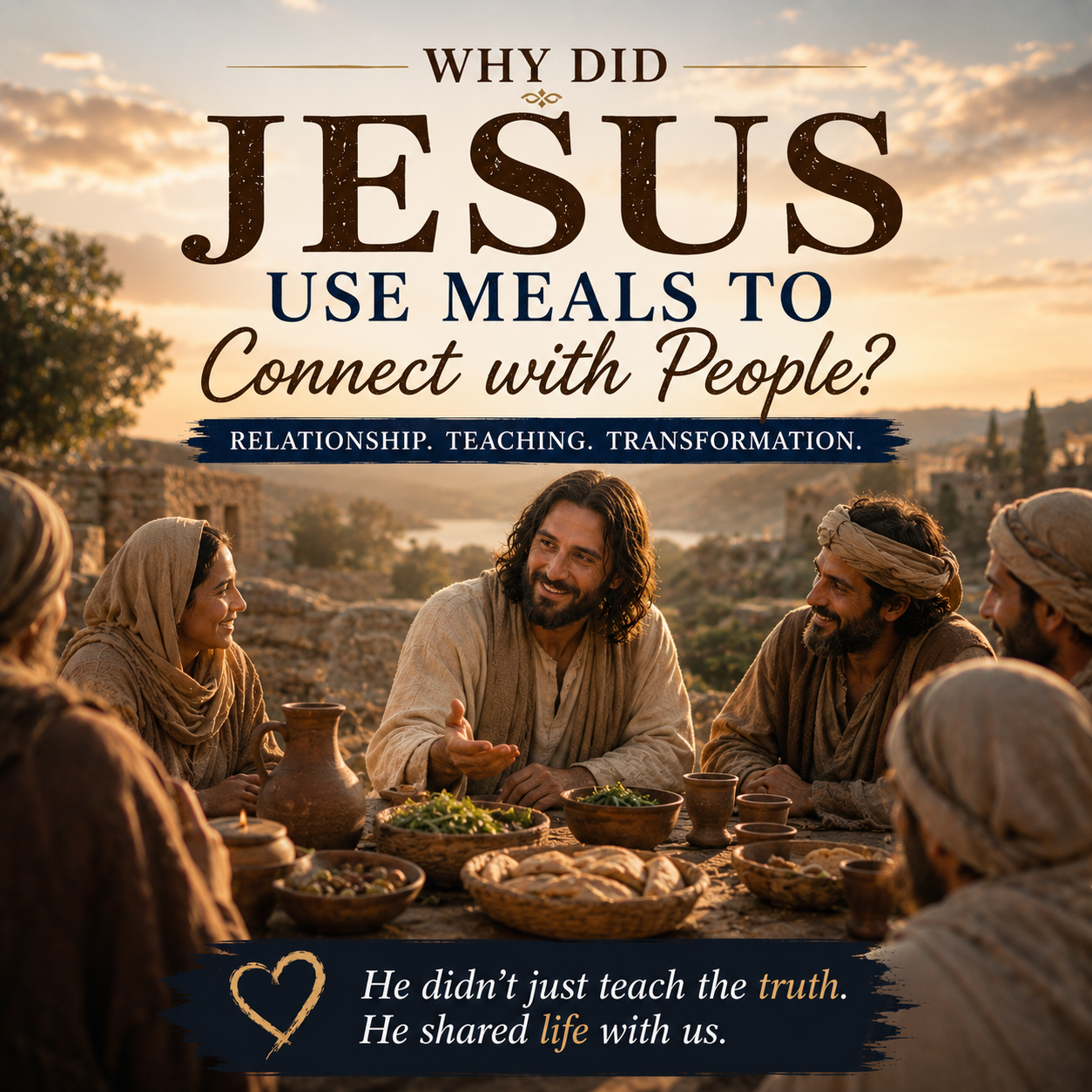
Why Did Jesus Use Meals to Connect with People?
Meals served as a primary way Jesus connected with people throughout the gospels. He didn't reserve His deepest teaching for the synagogue alone - He carried it to dinner tables, lakeside gatherings, and the homes of strangers and friends alike. Understanding why did jesus use meals to connect with people opens a window into how God meets us in daily life.

Overview
-
Jesus shared meals constantly across the gospels because tables were His chosen space for building relationships, welcoming outsiders, and showing god's love in ordinary moments.
-
Shared meals in luke's Gospel - with Levi (Luke 5), Simon the Pharisee (Luke 7), Zacchaeus (Luke 19), and the Emmaus disciples (Luke 24) - reveal how Jesus used food to teach, forgive, and restore dignity as well as understanding stories.
-
Sharing food let Jesus break social and religious barriers. He ate with tax collectors, sinners, and religious leaders, showing that God's kingdom is wide open to all the people who come.
-
When we invite Christ into our relationship with food and practice hospitality today, our tables become places of spiritual growth, reconciliation, and mission.
-
Even a simple meal - a home-cooked dinner, takeout, or coffee - can mirror Jesus' powerful way of connecting deeply and pointing others toward grace and hope.
1. Why Meals Mattered So Much in Jesus' World
In first-century Jewish society, eating together was far more than nourishment. In the ancient Mediterranean context, sharing a meal signified acceptance and trust. Who you sat with in towns like Capernaum and Jerusalem revealed your status, purity, and group identity. Meals were social boundaries that separated insiders from outsiders.
The bible records Pharisees carefully guarding their eating practices (Mark 7:1–5) and criticizing Jesus when He ate with tax collectors and sinners (Luke 15:1–2). Eating together expressed love, unity, and fellowship, which is exactly why religious leaders found Jesus' table habits so threatening. Jesus used meals to break down social barriers and promote acceptance, and He shared meals to connect with diverse groups of people.
Because tables were where honor, shame, and belonging were negotiated, jesus shared meals as a visible sign of the new community He was creating. His pattern of sharing meals was not a side detail but a central act of His ministry - a living demonstration of what the kingdom looks like in ordinary life.
2. How Jesus Used Shared Meals to Build Relationships
Jesus used meals as relational bridges. Tables were key places for building relationships, offering friendship, and restoring broken people. Meals were a vital tool for community building and teaching in His ministry, and Jesus' meals created spaces for meaningful conversations and relationships.
In Luke 5:27–32, Jesus calls Levi and then shares a feast at his house with tax collectors and outcasts. Jesus shared meals with marginalized individuals to demonstrate radical inclusion, showing them they were welcomed and wanted by God. When Pharisees complained, Jesus replied, "I have not come to call the righteous, but sinners to repentance."
At Simon the Pharisee's house (Luke 7:36–50), a sinful woman wept at Jesus' feet, washing them with tears and anointing them. That meal became a space for forgiveness and redefining worth. Then consider the story of Zacchaeus in Jericho: jesus invited Himself to dinner with Zaccaeus, a tax collector, and that shared meal led to repentance and restored community (Luke 19:1–10). Jesus invited Himself to dinner with outcasts like Zaccaeus because He came to seek and save the lost.
Smaller moments mattered too. At Bethany, sitting with martha, mary, and Lazarus (John 12:1–2), Jesus modeled friendship, listening, and mutual care. Jesus shared meals to deepen connections with others, whether with crowds or a few close friends.
Imagine your own lunch break or dinner table. When we talk, listen, and serve food with attention, we echo the same pattern Jesus practiced.

3. Meals as a Sign of the Kingdom of God
For Jesus, sharing food was never just about eating. His meals were living pictures of the kingdom, where the hungry are fed, strangers become family, and grace flows freely. Shared meals allowed Jesus to teach deep spiritual truths and parables.
Consider the feeding of the five thousand, a story so significant it appears in all four gospels (John 6:1–14; Luke 9:10–17). With bread and fish, Jesus fed thousands near the Sea of Galilee. This massive outdoor gathering revealed God's abundant provision and compassion. Jesus often used meals to teach important life lessons, and He used meals to teach life-enriching lessons about trust and dependence on god.
Jesus also used parables about banquets (Luke 14:15–24) to picture God's invitation to all - including the poor, crippled, blind, and lame. No person is too lowly to sit at God's table.
The significance of the Last Supper cannot be overstated. Around AD 30, on the night before the crucifixion, Jesus redefined bread and wine as symbols of His body and blood. The Last Supper established a lasting remembrance of Jesus' sacrifice, turning a Passover meal into an ongoing act of worship.
The early church mirrored this. In Acts 2:42–47, believers in Jerusalem broke bread in their homes and ate together with glad and sincere hearts, praising God. They devoted themselves to prayer, fellowship, and the scriptures. The Lord added to their number daily those who were being saved. Many wonders and signs were performed by the disciples, filling all the people with awe. When Christians today share meals across social, racial, and economic lines, they act out the same kingdom welcome Jesus embodied.
4. Why Sharing Food Helps Us Experience Jesus Today
Jesus continues to meet people at the table when we invite Him into our relationship with food. Sharing meals fosters deeper connections and spiritual relationships, turning ordinary breakfasts, dinners, and snacks into moments of spiritual connection.
Food is a gift from God given for nutrition, joy, and community. Sharing meals creates opportunities for deeper connections and sharing food and meals is a powerful way to build relationships that reflect the beauty of the faith Jesus modeled.
Here are a few down-to-earth examples:
-
A family who sets one night a week for a no-phones dinner with a simple prayer before eating
-
A college student who regularly invites a lonely classmate to lunch at the campus dining hall
-
Neighbors who host a june potluck for their street, creating space for laughter and conversation
Practices like fasting and simple eating can also help us realize our desire for god and our dependence on His presence. Both feasting and restraint deepen awareness of christ in daily life.
Whether your table holds homemade dishes or humble takeout, it is a place where Jesus delights to show up offering encouragement, comfort, and a sense of belonging to every person who gathers.

5. Practicing Jesus‑Style Hospitality Around Your Table
Here is a challenge: choose one concrete way this week to imitate how Jesus shared meals. Host, visit, or simply pay attention to someone who usually eats alone.
A simple pattern for Jesus-style hospitality:
-
Pray over a guest list - ask God who He wants at your table
-
Notice outsiders - new coworkers, international students, widows, single parents
-
Prepare a welcoming space, even if the meal is simple - connection matters more than cuisine
-
Leave room for honest talk rather than a packed schedule - seek to listen well and honor each person's story
Draw a relational map of the people God has placed around you - family, friends, neighbors, colleagues. Circle a few names to invite into shared meals this month. The goal is not to impress with gourmet food but to serve with the posture of Christ: listening, honoring, and trusting the Holy Spirit to guide the conversation.
The early church's shared meals and open homes caused their communities to take notice, and the lord demonstrated His power through that quiet faithfulness. Similar examples of generosity today can be a powerful witness to the world.
When we open our tables with the heart of Christ, we participate in His ongoing mission of healing, reconciling, and inviting people into God's family. Don't wait for someday. Prepare a meal this week and watch what God does in that gathering.
FAQ
Below are common questions that address issues not fully covered above.
Did Jesus always eat with large crowds, or did He value small meals too?
Jesus shared both large public meals, like the feeding of the five thousand and small, intimate meals, such as with the Emmaus disciples in Luke 24:13–35 and with the Twelve in the upper room. Both settings mattered for connection, teaching, and community. The wonders He performed at every scale remind us that no gathering is too small for His presence.
Why were religious leaders upset that Jesus ate with tax collectors and sinners?
In first-century Judaism, table fellowship implied acceptance. By eating with morally suspect people, Jesus challenged strict purity boundaries and showed that God's mercy reaches those others considered unworthy. This was a radical act that redefined who belonged at the Lord's table.
Can I practice Jesus‑style hospitality even if I have a small home or limited budget?
Absolutely. Hospitality is about presence, kindness, and openness , not square footage or fancy menus. Even shared sandwiches, simple soup, or a breakfast picnic in a public park can reflect Jesus' heart. What matters is the invitation and the willingness to serve.
How can families with busy schedules reclaim mealtimes as spiritual spaces?
Start small. Choose one or two non-negotiable shared meals per week. Begin with a short prayer, share the highs and lows of the day, and occasionally read a short Gospel story about Jesus eating with others. These moments of connection add up over time.
What if I often eat alone, can meals still help me connect with Jesus?
Yes. You can invite Jesus into your mealtimes through gratitude, scripture reading, or praying for people you might one day host. God sees and values you even when the chair across the table is empty and those quiet moments can prepare your heart for future hospitality that is saved for exactly the right time.

What Is Empire in the Bible and Why Does It Matter?