Why Did the Romans Use Crucifixion?
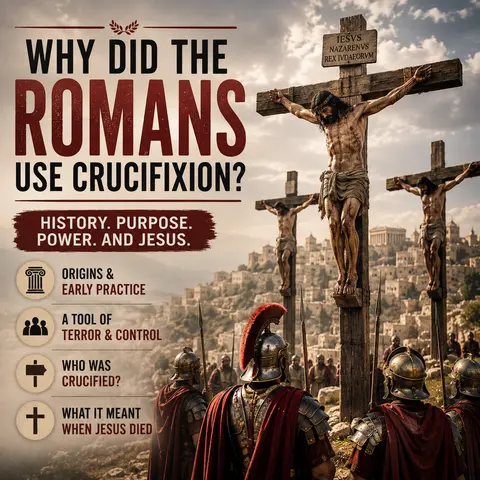
Few punishments in human history have matched the calculated cruelty of Roman crucifixion. Designed to inflict maximum pain, public humiliation, and political terror, this form of capital punishment defined how the Roman Empire dealt with those it considered the lowest threats to its authority. From rebellious slaves in Sicily to a Jewish man named Jesus in Jerusalem, the cross served a single, unmistakable purpose: obey Rome, or suffer the consequences.
This article examines Roman crucifixion from every angle, its origins in the ancient world, its legal framework, the gruesome mechanics of the execution itself, its role in the death of Jesus Christ, and how an instrument of state terror eventually became the most recognized symbol on Earth.
Article Overview
-
Roman crucifixion was the Roman Empire's most degrading form of public execution, reserved primarily for slaves, rebels, pirates, and non-Roman citizens who were seen as enemies of the Roman state. The crucifixion of Jesus around 30–33 CE is the most documented example and remains central to Christian tradition.
-
Crucifixion was a method reserved for political and social outcasts, and Roman citizens were typically exempt from crucifixion except in cases of extreme treason. This reinforced strict social hierarchy across the Roman world.
-
Death on the cross usually resulted from a devastating combination of blood loss, shock, dehydration, and progressive asphyxiation, often stretching over many hours or even days. Crucifixion was considered the most torturous form of execution available to Roman authorities.
-
Jesus' crucifixion was a political statement by Rome. The charge "King of the Jews" framed Jesus as a direct threat to Roman power, making his public execution a warning to anyone who might challenge Caesar's authority.
-
In one of history's greatest reversals, the Roman instrument of terror later became the central symbol of Christianity once Emperor Constantine, the first Christian emperor, gradually brought the faith into the empire's mainstream in the 4th century CE.
Roman Crucifixion in the Context of the Roman Empire
By the 1st century CE, the Roman Empire stretched from Britain to Egypt, governing tens of millions of people across dozens of provinces. Maintaining control over this vast territory demanded more than legions and laws. It demanded fear. Crucifixion was one of the primary tools Rome used to generate that fear.
Within the Roman legal system, crucifixion operated as a special penalty not a routine sentence handed down in everyday courts. It was aimed squarely at those who threatened imperial stability: rebels, bandits, deserters, and enslaved people who dared to resist. The Romans used crucifixion as a method of political intimidation and social control, and it was a public spectacle meant to deter others from similar defiance.
Crucifixion was deliberately public, deliberately slow, and deliberately humiliating. Victims were often stripped naked, displayed at busy intersections, and left to die slowly over hours or days. This was not punishment hidden behind prison walls. It was performance, designed to display Roman power over conquered peoples in ancient Rome and across every province the empire held.
Crucially, a Roman citizen could generally expect protection from this fate. Citizens convicted of capital crimes typically faced quicker deaths, such as beheading. Crucifixion was a slave's death and a foreigner's death, a distinction that reinforced the rigid social hierarchy of the Roman state.
Origins and Development of Crucifixion Before Rome
Rome did not invent crucifixion. The practice of executing people by suspension on wooden stakes or poles stretches deep into the history of ancient civilizations, long before the founding of Rome.
Near Eastern powers developed the earliest forms. The Assyrians and Babylonians used impalement and exposure on stakes as tools of royal terror. Among the Persians, the practice was well documented. Darius I crucified 3,000 political opponents in Babylon in 519 BCE, a staggering act of mass reprisal meant to crush dissent after a rebellion. These precedents established the symbolic power of public execution by suspension, a power Rome would later adopt and refine.
Alexander the Great's conquests in the 4th century BCE spread hanging and impalement-style executions across the eastern Mediterranean. After the siege of Tyre in 332 BCE, Alexander reportedly ordered the crucifixion of hundreds or thousands of defenders. This Hellenistic influence ensured that the practice traveled westward.
By the 3rd century BCE, Rome had adapted and systematized crucifixion, probably influenced by Carthaginian and Phoenician practices encountered during the Punic Wars. Crucifixion was extensively practiced from the 3rd century BCE until the 4th century CE, spanning roughly seven centuries of Roman and pre-Roman use. The Romans did not invent the cross, but they perfected and standardized it as a tool of imperial intimidation that no other civilization matched in scale or frequency.
Legal Status: Who Could Be Crucified Under Roman Law?
Roman law was remarkably clear about who could and could not be subjected to crucifixion. This was not a punishment available for just anyone, it was carefully targeted.
Crucifixion was primarily reserved for slaves, pirates, violent criminals, and political rebels. The legal framework placed it firmly outside the range of acceptable penalties for elite members of society. Specific categories included:
-
Enslaved people, especially those involved in revolt
-
Provincial subjects accused of sedition or insurrection
-
Bandits and highway robbers
-
Deserters from the Roman military
-
Anyone accused of challenging Roman authority
Roman citizens were typically exempt from crucifixion except in cases of extreme treason. The Valerian and Porcian laws, dating to the early Republic, explicitly protected citizens from degrading punishments like crucifixion and scourging. These protections reinforced a sharp divide: crucifixion was for those below the threshold of full citizenship. It was used to punish low-life criminals and slaves, and it was a method reserved for political and social outcasts who existed outside the protections of Roman civil society.
Over time, as the distinction between honestiores (higher-status citizens) and humiliores (lower-status citizens) hardened, some poorer citizens occasionally faced harsher penalties. But for most of Roman history, the cross remained a punishment reserved for enemies of the state and those the empire viewed as expendable.
In the eyes of the Roman state, crucifixion was a political message about who held power not merely a criminal sentence.
The Political Meaning of Crucifixion in the Roman World
Crucifixion functioned as a visible assertion of Roman authority, especially in rebellious provinces like Judea, Egypt, and parts of Asia Minor. Every cross erected along a road or outside a city gate was a statement: Rome is watching, and Rome will destroy anyone who resists.
Crosses served as billboards of terror. Crucifixion was often performed along major highways to maximize visibility and psychological impact. Execution sites were chosen for their proximity to busy routes, city entrances, and public gathering spaces. The condemned person hanging in agony was not just dying, they were broadcasting a message to every traveler, merchant, and local resident who passed by.
The humiliation was systematic. Victims were stripped naked, exposed to the elements, and displayed for all to see. A titulus - a wooden sign was posted above the head, naming the charge. Crucified bodies were often left on display to rot, sometimes for days after death, serving as a grim reminder that Roman sovereignty was absolute. The public display of crucified bodies served as a brutal warning against rebellion or insurrection.
Crucifixion communicated social meaning and reinforced the Roman authority and hierarchy. It served as a public deterrent against insurrection. And it connected directly to politically charged cases like the crucifixion of Jesus, whose charge "King of the Jews" framed him as a rival to Caesar in Roman eyes, a claim the empire could not tolerate, no matter how small the movement behind it.
Preliminary Torture: Scourging and Humiliation
Before the condemned person ever reached the cross, Roman soldiers typically subjected them to scourging, a brutal preliminary torture known in Latin as verberatio or flagellatio.
Scourging involved leather whips often embedded with shards of bone, metal balls, or sharp stones. The whip was designed to tear flesh with each strike, opening deep lacerations across the back, shoulders, buttocks, and legs. Scourging before crucifixion caused massive blood loss, and in severe cases, it killed victims before they ever reached the execution site. The degree of scourging was left largely to the attending Roman guards, who could adjust the intensity based on orders or personal discretion.
Beyond the physical violence, additional humiliations were heaped on the condemned. In Jesus' case, the Gospel accounts describe Roman soldiers dressing him in a purple robe, pressing a crown of thorns onto his head, and mocking him as a king. These theatrics served a dual purpose: they degraded the individual and amplified the warning to onlookers.
Scourging often preceded crucifixion, causing severe blood loss that left the condemned man physically shattered before the main event even began. This preliminary torture both weakened the victim and intensified the spectacle of suffering that followed.
Carrying the Cross: Route, Weight, and Public Exposure
Victims typically carried the patibulum, the horizontal cross beam, through public streets from the sentencing place to the execution site. Contrary to popular imagery, most scholars agree that condemned individuals did not carry the whole cross. The vertical beam, or stipes, was usually already in place at the execution site, ready for reuse.
The patibulum could weigh between 75 and 125 pounds, a crushing burden for someone already weakened by scourging and blood loss. When the condemned man could no longer bear it, Roman soldiers sometimes pressed bystanders into service. The Gospels record this happening with Simon of Cyrene, who was compelled to carry the cross beam for Jesus.
The route was intentionally public, turning the condemned into a mobile spectacle of Roman justice and a warning against resisting Roman power. Crowds gathered. Soldiers led the procession. The condemned person stumbled through streets lined with onlookers, carrying the very instrument of their death.
Execution sites were located just outside city walls or along main roads. Golgotha, the site of Jesus' death, was positioned near Jerusalem's gates, a location chosen to maximize visibility and deterrence among the dense population of the city.
The Instruments and Structure of a Roman Cross
The vocabulary of ancient Roman crucifixion tells us much about how the apparatus was constructed:
| Term | Meaning |
|---|---|
| Stipes | The upright post or vertical beam, often permanently fixed at the execution site |
| Patibulum | The horizontal cross beam carried by the victim |
| Titulus | A placard or inscription board displaying the charge against the condemned |
| Sedile | A small seat-like projection sometimes added to the upright, partially supporting body weight |
| Suppedaneum | A footrest, used less commonly |
Cross shapes varied. The crux simplex was a simple upright stake with no crossbar. The crux commissa formed a T shaped cross, with the patibulum placed atop the stipes. The crux immissa created the familiar †-shape, with the patibulum set below the top of the upright. Ancient sources and later artistic traditions suggest both forms were used, though debates continue about which was more common in first century Judea.
The vertical beam was typically reused. Wood and iron were valuable, so only the cross beam and nails were prepared fresh for each execution. The cross was usually tall enough - around three to four meters to be visible from a distance but low enough for soldiers to reach the victim's body with spears or clubs when needed.
Nailing or Tying: Methods of Fixing the Victim
Not every crucified person was nailed to the cross. Two primary methods existed, and both could produce the same agonizing result.
Nailing involved driving iron spikes through the wrists or hands and through the feet into the wood. Crucifixion involved nailing hands and feet to a cross in many documented cases, but there is ongoing scholarly debate about exact nail placement. Anatomical studies suggest that nails driven through the wrist - between the radius and ulna or through the carpal bones would have been more structurally sound than palm placement, which might tear under body weight. The limited archaeological evidence from the Yehohanan ossuary shows his feet were nailed to the sides of the stipes rather than the front.
Tying with ropes was likely more common than popular imagination suggests. Ropes were cheaper than nails, and tying alone could still cause prolonged, agonizing death through the same mechanisms of exhaustion and respiratory failure. In practice, both methods were sometimes combined - ropes securing the arms while nails fixed the feet.
Nailing may have been reserved for especially notorious cases to intensify pain and spectacle. The scarcity and reusability of iron nails likely explains why tying was common even when nailing was possible. Few crucifixions left behind the kind of physical evidence that survives in the archaeological record precisely because nails were routinely pulled from bodies and reused.
Physiology of Death: How Crucifixion Killed
Crucifixion was designed to prolong suffering for hours or days. The mechanics of death were multi-factorial, drawing out agony through a relentless combination of physical stresses.
The main causes of death included:
-
Blood loss from scourging and nail wounds
-
Dehydration and exposure to sun, wind, and temperature extremes
-
Exhaustion from the constant effort to breathe
-
Hypovolemic shock as the human body lost fluids and blood volume dropped
-
Progressive asphyxiation as respiratory muscles failed
The suspended position made breathing increasingly difficult. To inhale, the crucified person had to push upward on nailed or bound feet and pull with their arms - an excruciating effort that grew harder with every passing minute. Victims often died from asphyxiation after hours of suffering as exhaustion finally made it impossible to draw breath.
Death could come within a few hours for heavily scourged victims as possibly in Jesus' case or stretch to two, three, even four days for those who had not been severely beaten beforehand. Crucifixion victims were often left on the cross for days, and Roman authorities could choose to speed or slow the process.
Roman soldiers sometimes used sharp blows to the legs a practice called crurifragium, or deliberate fracturing of the two bones of the lower leg to precipitate death. Without functional legs, the victim could no longer push up to breathe, and a quick death followed. In other cases, spear stab wounds to the torso or a smoking fire built beneath the cross was used to hasten the end. A smoking fire at the base would force the victim to inhale acrid smoke, adding respiratory distress to an already failing system. Crucifixion was considered the most wretched of deaths, and conclusive evidence from both literary and medical sources supports that assessment.
Psychological and Social Dimensions of Crucifixion
The shame of crucifixion extended far beyond physical pain. In both Roman and Jewish cultures, being crucified stripped a person of every shred of honor, legal standing, and familial dignity.
The condemned person was publicly humiliated, often stripped naked, and denied the normal burial rites that cultures across the Greco-Roman world considered essential for the dead. Victims were often left on the cross to rot, their decaying bodies serving as a lasting reminder of what happened to those who defied Rome. The practice of crucifixion led to significant cultural trauma among conquered populations, who were forced to live alongside these gruesome displays.
For Jewish communities, the horror was compounded by scripture. Deuteronomy 21:23 associated hanging on a tree with divine curse, making crucifixion not just a political humiliation but a religious desecration. Communities forced to pass by rows of crosses experienced a constant reminder of Roman dominance and their own powerlessness.
Yet it was precisely this depth of shame that made the early Christian message so revolutionary. Early Christians proclaimed a crucified Messiah - an idea that struck Roman and Jewish audiences alike as scandalous and absurd. The cross, a symbol of disgrace, was reinterpreted as a sign of salvation. This inversion of meaning would eventually reshape the entire ancient world.
Archaeological Evidence for Ancient Roman Crucifixion
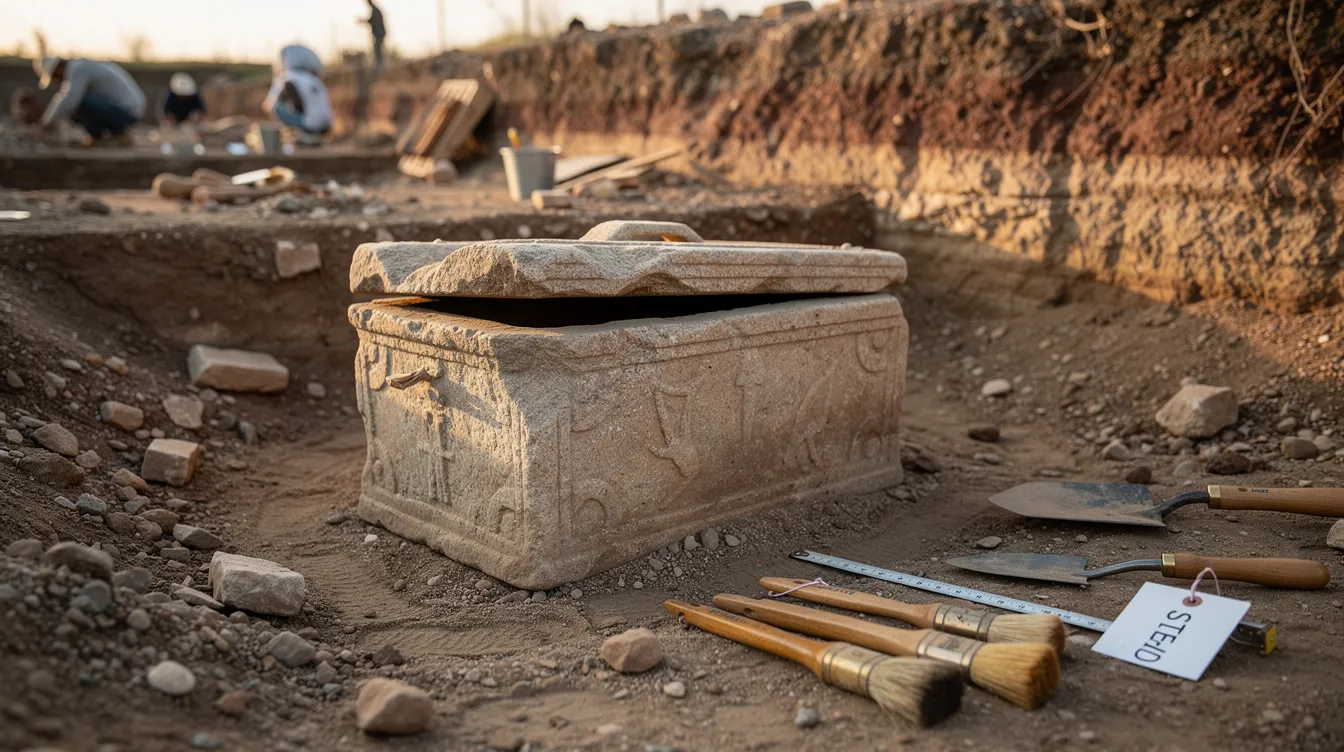
Despite thousands of crucifixions recorded in ancient sources, skeletal remains clearly showing crucifixion are extraordinarily rare. The explanation lies in practical realities: nails were recycled, bodies were left to decompose on crosses, and burial practices often obscured skeletal trauma.
The single most significant find is the ossuary of a young man named Yehohanan ben Hagkol, discovered in 1968 at Giv'at ha-Mivtar in Jerusalem. This 1st century Jewish man, estimated to be in his mid-twenties, had an iron nail approximately 11 centimeters long still embedded in his right heel bone. Fragments of olive wood remained attached to the nail, pressed between the nail head and the bone - evidence that the nail had been driven through a wooden washer or plank and into the stipes. His heel bones preserved the most direct physical evidence of Roman crucifixion ever found.
The remains also showed fractures consistent with crucifixion. His lower leg bones were broken, likely by pressure from the cross's upright post or by intentional crurifragium. Evidence suggests that his feet were nailed to the sides of the vertical beam rather than the front - a detail that challenges many artistic depictions.
An additional find from northern Italy, reported around 2007, and another from Britain reported in 2017, have added limited further data on nail placement and cross construction. But Yehohanan remains the cornerstone case. His burial in an ossuary - consistent with Jewish custom of reburial after decomposition - also suggests that even a crucified person could sometimes receive proper burial, challenging assumptions that all crucified bodies were denied this dignity.
Roman Crucifixion in Judea and the Jewish-Roman Conflict
Roman occupation of Judea began in 63 BCE and immediately generated friction. The region was volatile, populated by groups with deep religious convictions and a long history of resistance to foreign rule. Crucifixion became one of Rome's primary instruments for maintaining order in this restive province.
Specific episodes of mass crucifixion punctuate the historical record. Alexander Jannaeus crucified 800 Pharisaic opponents in 88 BCE a pre-Roman Jewish ruler using the method against his own people. Under direct Roman rule, the practice intensified. After the death of Herod the Great in 4 BCE, the Roman general Varus reportedly crucified 2,000 Jewish rebels. During the Jewish War of 66–70 CE, the historian Josephus records that Roman soldiers crucified so many captives outside Jerusalem's walls that they ran short of wood and space. Some days, 500 people were captured and nailed to crosses.
Crucifixion was used as a form of mass punishment to deter insurrections in conquered provinces, and Judea experienced this reality with devastating frequency. The cultural and religious horror of these events cannot be overstated. For a Jewish population that associated hanging on a tree with divine curse, each cross represented not just Roman violence but spiritual desecration.
This context is essential for understanding the political stakes of any claimant to kingship or messiahship in the region. Anyone who challenged Roman authority whether through armed revolt or religious proclamation risked the cross.
Why Romans Crucified People: Treason, Rebellion, and Terror
At its core, crucifixion was the special punishment reserved for enemies of the state and those challenging Roman sovereignty. It occupied a unique place in the Roman legal system more severe, more public, and more degrading than any alternative.
Charges of sedition, banditry, and unauthorized claims to royal authority were treated as grave threats, especially in volatile border provinces. Crucifixion was used for insurrectionists and low-life criminals alike anyone whose actions threatened the stability that Rome demanded.
How did crucifixion compare to other forms of capital punishment?
| Punishment | Typical Recipient | Speed of Death | Public Display |
|---|---|---|---|
| Beheading | Roman citizens, soldiers | Immediate | Moderate |
| Burning alive | Arsonists, certain criminals | Minutes to hours | High |
| Damnatio ad bestias | Condemned prisoners | Minutes | Very high (arena) |
| Crucifixion | Slaves, rebels, non-citizens | Hours to days | Extreme |
The comparison makes the point clearly. Crucifixion was not simply about killing. It was about making death as visible, as prolonged, and as terrifying as possible. In Roman eyes, the cross communicated the utter helplessness of anyone who opposed the emperor or the Roman state. The Romans wanted every subject, in every province, to understand what awaited them if they stepped out of line.
Roman Crucifixion of Jesus Christ: Historical Outline
Jesus was crucified around 32 CE by Pontius Pilate, the Roman prefect of Judea who governed from approximately 26 to 36 CE. The execution took place in Jerusalem, likely during or near the Passover festival, when the city was crowded with pilgrims.
The charge was political: "King of the Jews." Whether Jesus intended this title or not, the Romans wanted to signal that any challenge to Caesar's exclusive authority would be met with the empire's harshest response. The crucifixion of Jesus was a political statement by Rome directed at the wider population of Judea.
The sequence of events, drawn from the Gospel accounts and consistent with known Roman procedure, followed a familiar pattern:
-
Arrest in the Garden of Gethsemane
-
Trial before Jewish authorities and then before Pilate
-
Scourging by Roman soldiers, who also mocked him with a purple robe and crown of thorns
-
Procession to Golgotha, with the cross beam carried (partly by Simon of Cyrene)
-
Crucifixion alongside two other condemned men
-
Titulus posted: "Jesus of Nazareth, King of the Jews"
-
Soldiers casting lots for his garments
-
Death after a relatively short time on the cross - the Gospels indicate roughly six hours
-
Burial in a rock-cut tomb provided by Joseph of Arimathea
That Jesus died relatively quickly compared to other crucifixion victims likely reflects the severity of his prior scourging and the accumulated physical trauma. Roman soldiers confirmed his death and, according to the Gospel of John, pierced his side with a spear. The fact that he was buried at all - rather than left to rot - may reflect Jewish burial customs being honored under specific circumstances, as the Yehohanan case also suggests.
The most famous victim of Roman crucifixion was also its most consequential. Jesus' death set in motion a religious movement that would eventually transform the very empire that executed him.
Seeing the Cross Through Ancient Jewish and Roman Eyes
Modern Christians revere the cross. But for people living in the ancient world, the cross inspired only horror.
The Roman philosopher Cicero called crucifixion "the most cruel and disgusting penalty." Josephus described crucifixion as the most wretched of deaths. From a Roman perspective, even speaking about crucifixion in polite company was considered distasteful - it was a punishment for the lowest of the low, and respectable Romans preferred not to dwell on it.
For Jewish audiences, the scandal was even deeper. A messiah was supposed to triumph, to liberate Israel, to reign as king. A crucified messiah was a contradiction in terms. The Greek word for cross - stauros - carried no connotations of glory. It meant shame, defeat, and divine abandonment.
This is why Paul's letters describe the message of a crucified Christ as a "stumbling block" to Jews and "foolishness" to Greeks. Proclaiming a crucified savior demanded a radical rethinking of honor and divine power that most people in the Greco-Roman world found incomprehensible.
Understanding these original reactions is crucial to grasping the theological weight of Jesus' death within the Roman world. The cross was not always a symbol of hope. It became one - and that transformation is the story of Christianity itself.
From Instrument of Terror to Sacred Symbol: Rome and Christianity
For nearly three centuries after Jesus died, Christians lived as a minority within the Roman Empire, often persecuted and sometimes executed by the same methods that had killed their founder. Crucifixion and other brutal penalties were used against Christians accused of disloyalty to the Roman state.
The turning point came with Emperor Constantine in the early 4th century CE. Following his conversion and the Edict of Milan in 313 CE, Christianity's legal status shifted dramatically. Constantine, the first Christian emperor, began integrating the faith into imperial governance and culture.
Emperor Constantine the Great officially abolished crucifixion in the 4th century CE due to Christian influence. The exact date is debated - some place it around 314 CE, others associate the full abolition with Constantine's successors - but the result was clear. The Roman Empire's most feared punishment disappeared from its legal code within a generation of Christianity's official recognition.
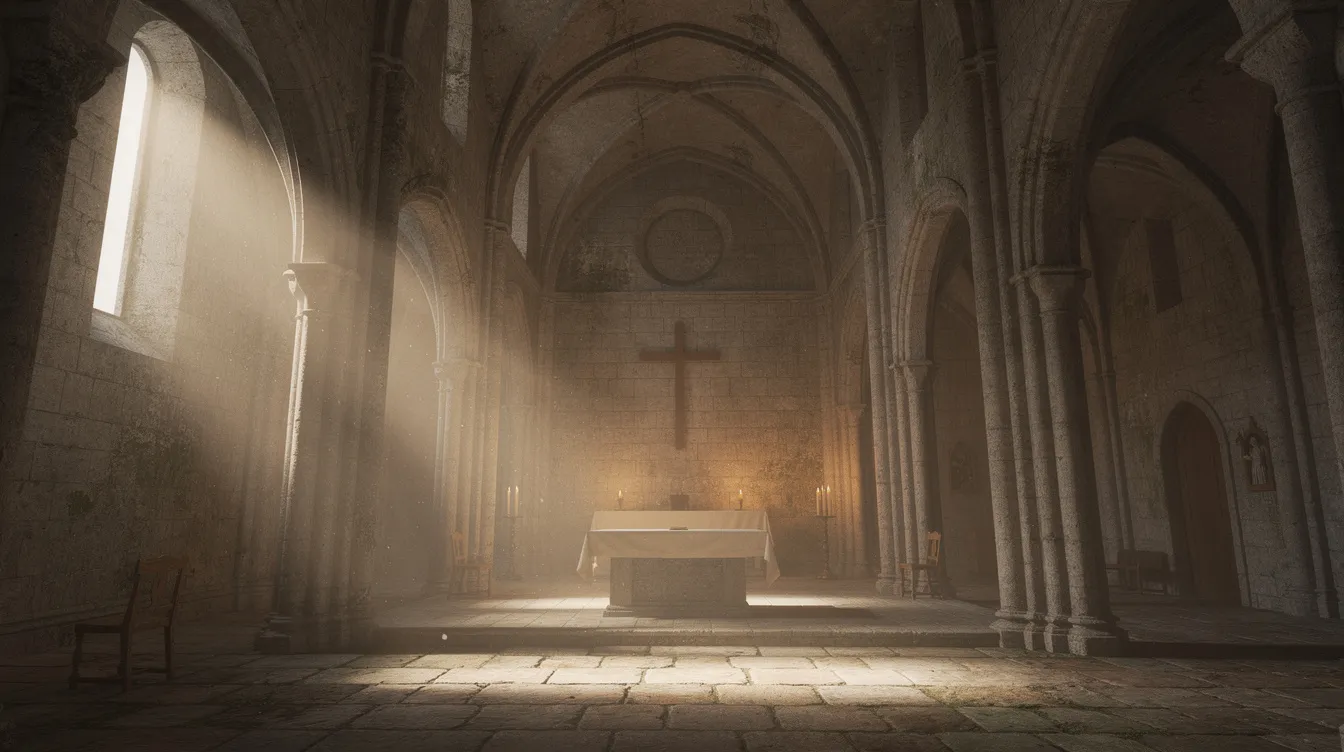
Over time, the cross transitioned from a Roman execution device to the central symbol of the Christian faith. Churches displayed it prominently. Artists depicted it. Theologians built entire systems of thought around it. The instrument that had once symbolized Rome's absolute power over life and death became a sign of God's power over death itself.
Crucifixion in Christian Art and Imagination
Early Christians were slow to depict the crucifixion directly. For the first several centuries, artistic representations relied on symbols: a lamb, the Chi-Rho monogram, simple crosses without a figure. The cultural memory of what crucifixion actually looked like - the agony, the nakedness, the degradation - made realistic depiction unthinkable.
By the 5th through 9th centuries CE, representations gradually shifted. Christ began appearing on the cross, initially shown alive with eyes open and body upright, emphasizing triumph over death rather than suffering. Only later did Western art move toward depicting Christ dead on the cross, head bowed, body sagging under its own weight.
Medieval and Renaissance artists populated crucifixion scenes with rich detail: attending Roman guards, thieves on either side, mourning women, and symbolic figures like the Sun and Moon. These compositions transformed a Roman instrument of state violence into a focal point of devotion, theology, and emotional reflection that defined European art for a millennium.
Crucifixion Beyond Rome: Later Uses and Echoes
While the Roman form of crucifixion faded after late antiquity, related practices and symbolic imitations have appeared throughout subsequent centuries. Some medieval and early modern legal systems in various parts of the world revived crucifixion-like punishments or post-mortem displays of bodies as instruments of terror.
In modern times, crucifixion imagery is frequently used metaphorically. Political cartoons, protest movements, and social commentary regularly invoke the cross to symbolize oppression, sacrifice, or martyrdom. These later echoes differ vastly in legal context and scale, but they draw on the deep cultural memory of ancient Roman crucifixion - a memory that remains viscerally powerful even two millennia later.
Medical and Forensic Perspectives on Ancient Roman Crucifixion
Modern medical and forensic studies have attempted to reconstruct exactly how crucifixion killed, drawing on skeletal evidence, Gospel narratives, and controlled experiments.
Key concepts emerge from this research:
-
Hypovolemic shock: Massive blood loss from scourging reduced blood volume, dropping blood pressure and starving organs of oxygen
-
Respiratory compromise: The suspended position forced victims into a cycle of pushing up to breathe and collapsing from exhaustion, progressively reducing oxygen intake
-
Cardiac stress: The combination of blood loss, dehydration, and respiratory failure placed extreme strain on the heart
-
Exposure: Sun, wind, temperature swings, and insect activity compounded the physiological collapse
Experimental reconstructions have limitations. For obvious ethical reasons, modern re-enactment studies cannot replicate severe scourging, full suspension, or prolonged exposure. They suggest possible symptom progressions but cannot precisely model actual deaths. Analysis of the Yehohanan remains has refined theories about nail placement - his feet were fixed to the sides of the cross rather than nailed through the front.
While specific details remain debated, there is broad agreement that crucifixion was medically devastating, multi-factorial, and intentionally drawn out. It was engineered to make the human body destroy itself, slowly and publicly.
Crucifixion as Devotional Practice and Reenactment
The crucifixion of Jesus has inspired centuries of liturgical reenactment and devotional practice. Passion plays - dramatic performances depicting Jesus' trial, suffering, and death - have been staged across the Christian world for hundreds of years. Major productions in Oberammergau, Germany, and Iztapalapa, Mexico, draw enormous audiences, particularly during Holy Week.
In some places, particularly parts of the Philippines, a few individuals undergo controlled, non-lethal nailing to crosses as acts of personal devotion. Despite reservations from Catholic Church leadership, these practices continue annually, with participants enduring brief suspension before being carefully taken down and treated.
These modern practices consciously reference Roman crucifixion but are highly regulated, symbolic, and voluntary - fundamentally different from the judicial punishments of the ancient world. They illustrate how deeply the image of the cross remains embedded in Christian piety and cultural memory.
Legacy: Roman Crucifixion's Lasting Impact on Law, Faith, and Culture
Roman crucifixion shaped the trajectory of Western civilization in ways that extend far beyond its centuries of active use.
In legal thought, the abolition of crucifixion marked an early milestone in evolving ideas about the limits of state violence. The notion that certain punishments are too degrading for any human being - even a condemned criminal - finds part of its origin in the Christian reaction against the cross. Modern debates about capital punishment, torture, and human rights still echo the ancient revulsion at what crucifixion represented.
In faith, the crucifixion of Jesus became the central narrative of redemption for Christians. The idea that God would willingly endure the Roman Empire's worst punishment to redeem humanity transformed theology, ethics, and worship. Every church steeple, every crucifix, every prayer of the faithful connects back to a Roman execution outside Jerusalem's walls nearly two thousand years ago.
In culture, the tension persists between viewing crucifixion as historical atrocity and as sacred event. Scholars study it as evidence of imperial brutality. Believers venerate it as the moment of divine sacrifice. Both perspectives are valid, and both are necessary for a complete understanding.
Understanding ancient Roman crucifixion - legally, medically, and theologically - helps modern readers interpret both the Roman Empire and the enduring symbol of the cross. The famous victim who died on Golgotha changed the meaning of the cross forever. But the cross only carried that power because of the centuries of terror that preceded it.

FAQ
Did Romans ever crucify their own citizens?
Roman citizens were legally protected from crucifixion under most circumstances. Laws dating to the early Republic specifically forbade subjecting citizens to degrading punishments like crucifixion and scourging. Citizens convicted of capital offenses typically faced beheading - a quicker, less humiliating death. However, exceptional circumstances did arise. In cases of severe military treason, desertion during wartime, or civil war, even citizens might be subjected to crucifixion, though such instances were rare and typically controversial. As class distinctions between honestiores and humiliores sharpened in the later empire, poorer citizens occasionally faced harsher treatment, but crucifixion of citizens remained broadly taboo throughout Roman history.
How common was crucifixion in the Roman Empire?
Crucifixion was not an everyday punishment, but it was frequent enough - particularly during periods of rebellion, banditry, or slave uprisings - to be widely feared and recognized across the Roman world. Ancient sources sometimes report mass crucifixions involving hundreds or even thousands of victims after major revolts. During the suppression of the Spartacus rebellion in 71 BCE, approximately 6,000 rebellious slaves were crucified along the Appian Way. During the Jewish War of 66–70 CE, Josephus reports that Roman soldiers crucified captives at a rate that exhausted available timber. These episodes magnified the psychological impact far beyond the individual executions.
Were all crucifixion victims nailed to the cross?
No. Many crucifixion victims were likely tied with ropes rather than nailed, sometimes in combination with nails in the wrists or feet depending on the case and local practice. Because nails and wood were valuable commodities, and because tying alone could still cause the same prolonged, agonizing death through exhaustion and asphyxiation, nailing was not universal in Roman crucifixion. The archaeological record confirms this indirectly - with only a handful of confirmed skeletal remains showing nail marks among thousands of documented crucifixions, it appears that nailing left physical traces only rarely, suggesting rope binding was common.
How long did victims usually survive on the cross?
Survival times varied widely. Heavily scourged victims might die within a few hours, as may have occurred in Jesus' case. Others who received lighter preliminary punishment could linger for one to four days on the cross, enduring a slow progression of dehydration, exhaustion, and respiratory failure. Roman authorities could choose to speed up or prolong the process depending on the intended public message or specific circumstances. Breaking the legs (crurifragium) hastened death by preventing the victim from pushing up to breathe. Leaving the victim undisturbed allowed death to come at its own devastating pace - a choice that amplified the terror for anyone watching.
Why is the crucifixion of Jesus so central to Christianity?
Christians believe that Jesus' crucifixion was a unique, salvific event in which the Son of God willingly suffered the Roman Empire's worst punishment to atone for human sin. In Christian tradition, the cross is not simply a record of suffering - it is the mechanism of redemption, the moment when divine love met human cruelty and overcame it. This belief transforms the Roman cross from a symbol of imperial violence into a sign of divine love, forgiveness, and hope. The resurrection that Christians proclaim three days later completes the reversal: the condemned man becomes the risen Christ, and the instrument of death becomes the promise of eternal life. This theological framework has shaped two thousand years of worship, art, ethics, and identity across the globe.

The Problem With Certainty