What Is the Greco-Roman Audience in the Bible? Understanding the New Testament's World
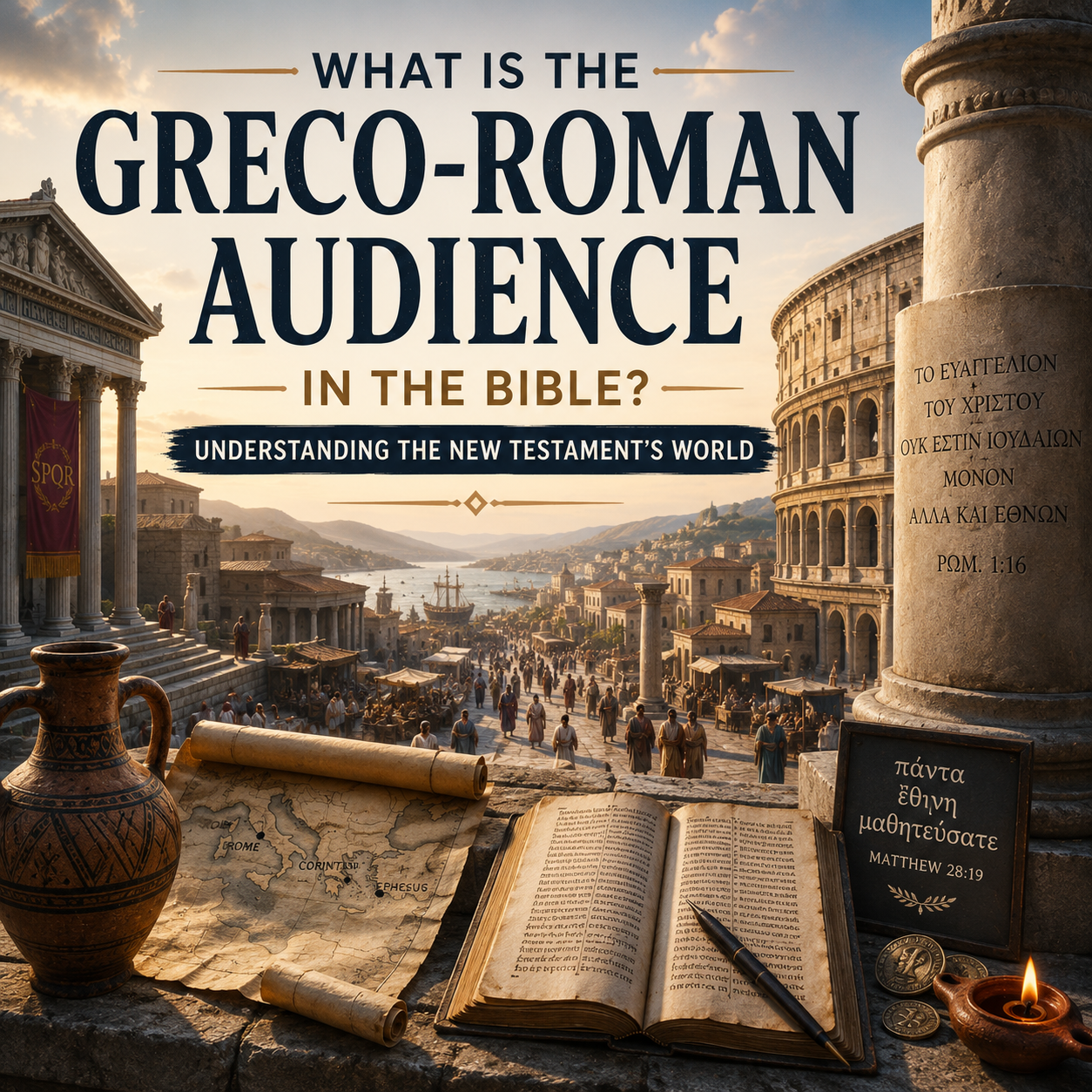
What Is the Greco-Roman Audience in the Bible? Understanding the New Testament's World
The New Testament was not written in a vacuum. It was crafted for real people living in real cities under real political power, and understanding who those people were changes how you read every page.
Overview
The Greco-Roman audience refers to the people living in the eastern Roman Empire who were shaped by Greek language and culture alongside Roman law and political authority, roughly from the first century BC through the second century AD.
-
Most New Testament books were written in koine Greek to urban, mixed Jewish–Gentile congregations living in a greco roman world defined by polytheism, patronage, and imperial power.
-
Terms like "gospel," "Lord," "salvation," and "citizenship" carried loaded political and religious meaning for this audience that modern readers often miss.
-
The Greco-Roman audience of the New Testament was diverse and multilingual, spanning artisans, slaves, merchants, elites, jews, and non jews across dozens of cities.
-
Knowing the greco roman culture, religion, politics, and greek philosophy behind the bible clarifies what testament authors intended and what their hearers understood.
-
This article gives concrete historical examples-cities like Corinth and Ephesus, emperors like caesar augustus and Nero-and practical tips for reading the new testament in its greco roman context.
Defining the "Greco-Roman Audience" of the Bible
When scholars talk about the "Greco-Roman audience" of the Bible, they mean the original hearers and readers of the new testament: people who lived under roman rule but whose daily life, education, and public discourse were saturated with greek culture. These were residents of cities stretching from jerusalem and Antioch to Corinth, Ephesus, Thessalonica, and Rome itself. Their world was shaped by Greek language, Roman law, religious pluralism, social hierarchy, and a web of trade routes connecting the ancient world.
The historical context spans primarily the first century ad (roughly AD 30–100), with roots reaching back to Alexander the Great in the fourth century BC and some later new testament texts extending into the early second century. This audience included both Jews and Gentiles, often living side by side in the same neighborhoods and sometimes worshiping in the same house churches. This audience was primarily Gentile and consisted of various socioeconomic classes-from wealthy patrons to slaves and freed laborers.
To contrast: modern readers typically assume individual rights, religious freedom, secular government, and mass literacy. The Greco-Roman audience assumed communal identity, public honor, divine emperors, and limited literacy. Reading the new testament in its greco roman context is not optional for serious study-it is essential for hearing what the first audiences actually heard.
Historical Background: From Alexander the Great to the First Century AD
The greco roman world did not appear overnight. It emerged from centuries of conquest, cultural exchange, and political transformation that reshaped the near east, the Mediterranean basin, and beyond.
It began with Alexander the Great. Alexander's conquests, launched in 334 BC, spread Greek language, city planning, gymnasia, and education across a vast territory from Macedonia to Egypt to Persia. Hellenization introduced Greek culture and language throughout the Mediterranean, creating a shared cultural framework that persisted for centuries. After Alexander's death in 323 BC, successor kingdoms-the Ptolemies in Egypt, the Seleucids in Syria-carried this Hellenistic legacy forward.
By the second century BC, Roman military expansion began absorbing these Hellenistic territories. Rome defeated Macedon in 168 BC, annexed Syria in 64 BC, and installed Herod the Great as a client king in Judea from 37 to 4 BC. About the year AD 6, Judea became a full Roman province. The result was a fusion: Greek remained the dominant language and cultural force in the eastern provinces, while Roman political, military, and legal authority governed the whole structure.
When Jesus was born and when Paul wrote his letters, emperors like Caesar Augustus (27 BC–AD 14), Tiberius (AD 14–37), Claudius (AD 41–54), and Nero (AD 54–68) presided over this world. The period of relative peace known as the pax romana allowed unprecedented mobility, trade, and communication-conditions that would prove critical for the rapid spread of early christianity.
The Greco-Roman World and the New Testament: Why It Matters
Any serious reading of the new testament must account for its greco roman setting. Without this background, readers risk flattening the text into modern assumptions and missing what made the early christian message so explosive.
Consider literary genres first. The four Gospels-matthew, Mark, Luke, and john-share features with Greco-Roman biography (bios), a genre focused on the character and significance of a central figure rather than strict modern-style chronology. Paul's letters follow standard Greco-Roman epistolary patterns: greeting, thanksgiving, body, closing. Recognizing these forms helps readers understand what the testament authors were doing and how their audiences would have received the writing.
More significantly, key theological terms had potent Greco-Roman overtones. The word "gospel" (euangelion) was used in imperial propaganda to announce good news about the roman emperor-a military victory, a birth, an accession. To proclaim Jesus as "Lord" (kyrios) and "Savior" (soter) was a direct challenge to Caesar's titles. The Greco-Roman audience often viewed the concept of "Lord" in contrast to Roman emperors. When Paul told the Philippians that their "citizenship is in heaven" (Philippians 3:20), he was writing to a Roman colony where citizenship meant everything. When 1 Corinthians addressed lawsuits, factionalism, and dining in idol temples, it spoke into the gritty realities of life in a Roman colonial city.
Understanding the greco roman context does not replace theological reading-it deepens it by revealing what the original hearers actually heard.
Geography of the Greco-Roman Audience: Cities, Provinces, and Roads
The new testament is an urban book. Its letters, narratives, and visions are set in cities embedded in the Roman Empire's provincial map, and the geography matters.
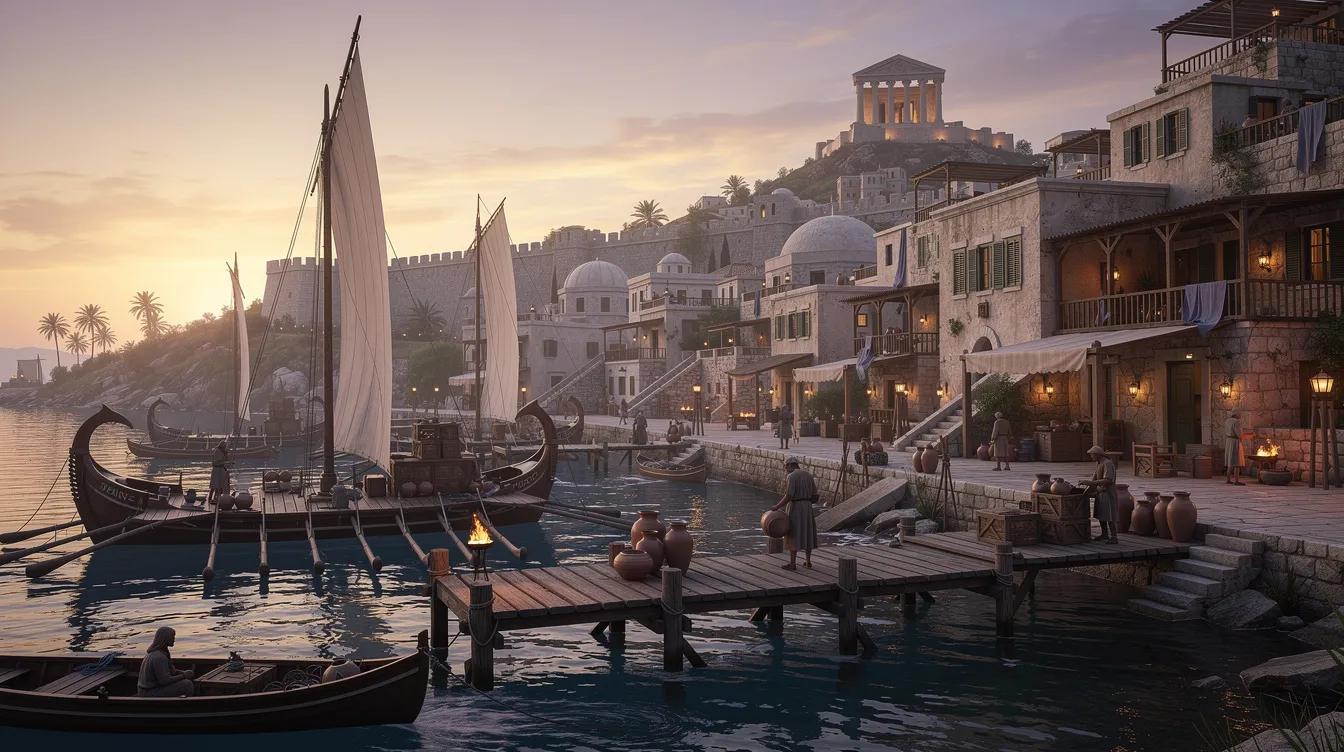
Major new testament cities include Corinth (a wealthy port in the province of Achaia), Ephesus (the leading city of the province of Asia in asia minor), Philippi and Thessalonica (key stops along the Via Egnatia in Macedonia), Antioch (a major hub in Syria), Rome (the imperial center), and Jerusalem (the spiritual heart of Judaism and the birthplace of the church). Each of these was an urban hub with markets, temples, courts, and diverse populations.
Christianity spread rapidly due to the infrastructure of the Roman Empire. Roman highways connected major cities like Rome and Corinth, and paul used Roman roads to spread the gospel effectively. Sea routes linked ports across the Mediterranean, making travel faster and safer than at any previous point in history. The phrase "All roads lead to Rome" highlights Roman infrastructure-and those same roads carried missionaries, letters, and converts in every direction. Winning cities was crucial for changing culture in early christianity, and Paul's strategy targeted exactly these urban centers.
Picture the geography in broad strokes: asia minor, Macedonia, Achaia, Syria, Judea, Egypt, and Italy. Cities like Ephesus facilitated the spread of early christianity because they sat at crossroads of trade, culture, and communication. The concentration of early christian communities in cities reflects the broader Greco-Roman pattern of urbanization and commerce that defined the first century ad.
Language of the Greco-Roman Audience: Koine Greek and Latin
The dominant everyday language of the new testament's Greco-Roman audience was koine ("common") Greek-not classical Attic Greek and not Latin.
Koine Greek emerged from the blending of Greek dialects under Hellenistic rule after Alexander's conquests. By the first century ad, koine Greek had become the lingua franca across the entire eastern Mediterranean. It was simpler than classical Greek in grammar and vocabulary, yet flexible enough for literary, commercial, and theological expression. Greek was the dominant language for centuries across this region, cutting across ethnic and social boundaries.
The apostles wrote the New Testament in koine Greek, making it accessible to audiences from Judea to Rome. Occasional Aramaic phrases appear (e.g., "Maranatha," "Abba"), reflecting the jewish background of the earliest believers, but the dominant medium was Greek. This linguistic reality meant that early christian preaching and letters could circulate widely across the greco roman world without translation. Common languages helped spread the Gospel widely-a fact that shaped the entire trajectory of early christianity.
Latin functioned as the language of Roman administration, military command, and legal proceedings, especially in western provinces. But in the eastern territories where most new testament events occur, Greek remained primary even for official inscriptions. Over time, Latin became the language of the Western church. Jerome's Latin Bible, the Vulgate, became the standard across the empire, but by that point the new testament had already been composed, copied, and spread in Greek.
Greco-Roman Culture: Honor, Shame, Patronage, and Family
To a Greco-Roman audience, social values like honor, shame, and patronage shaped daily life far more than modern individualism does. The Greco-Roman audience emphasized values such as honor, shame, and social status in nearly every sphere-from public speaking to family life to worship.
Honor (timē) was public reputation earned through birth, achievement, or benefaction. Shame was its devastating opposite. In this framework, the crucifixion of jesus was not merely tragic-it was maximally shameful. Crucifixion was reserved for slaves and criminals, the lowest social categories. For early christians to proclaim a crucified man as Lord and God was scandalous. The resurrection, by contrast, functioned as the ultimate vindication of honor. Passages in Romans, 1 Corinthians, and the Gospels assume this honor-shame matrix at every turn.
The patron–client system structured relationships across the roman empire. Powerful patrons provided material support, legal protection, and social connections; clients reciprocated with loyalty, service, and public praise. When Paul describes Phoebe as a "patron" (prostatis) of the church in Cenchreae (Romans 16:1–2), a Greco-Roman reader would instantly recognize the social dynamics at work. God as benefactor, Christ as patron, grace as generous gift-all this resonates with patronage language.
The household (oikos) was the basic economic, social, and religious unit. "Household codes" in Ephesians and Colossians address relationships between husbands and wives, parents and children, masters and slaves within this structure. Early house churches met in these households, making family dynamics inseparable from church life. Misunderstanding these cultural patterns can lead modern readers to apply new testament instructions in ways the original audience would not have recognized.
Roman Religion and Greco-Roman Religious Pluralism
The religious landscape of the greco roman world was pluralistic and polytheistic-never secular. Religion permeated civic identity, public festivals, trade, politics, and family life.
Roman religion centered on state cults, animal sacrifices, temple rituals, and festivals honoring traditional gods. Religion and loyalty to Rome were tightly bound together, culminating in the imperial cult-the veneration of the roman emperor as divine or semi-divine. The emperor was called "lord," "savior," and even "son of god." To confess Jesus as the true god and only Lord was not a private spiritual preference. It was a public, political, and dangerous claim.
Greek gods like Zeus, Athena, and Artemis (and their Roman equivalents Jupiter, Minerva, Diana) were worshiped in temples across cities mentioned in the new testament. In Ephesus, the massive temple of Artemis dominated civic and economic life. Acts 19 records how silversmiths who made Artemis shrines rioted against Paul because the christian religion threatened their livelihood and their city's religious identity. Local gods were part of community identity in ways modern readers rarely experience.
Mystery cults-devoted to deities like Isis, Mithras, and Dionysus-promised salvation, secret knowledge, initiation rituals, and sacred meals. A Greco-Roman audience familiar with these pagan religions and other religions would have noticed both parallels and sharp contrasts with christian practices like baptism, the Lord's Supper, and the promise of eternal life. Early christian preaching challenged roman religion head-on by claiming Christ as the one true Lord, creating tension with both gentile religion and imperial expectations in cities like Philippi, Ephesus, and Thessalonica.
Philosophy and Thought: Greco-Roman Ideas Shaping New Testament Hearers
Many in the audience were influenced by philosophical schools like Stoicism and Epicureanism, and educated members of the Greco-Roman audience encountered these ideas in public lectures, marketplaces, and private conversations.
Centuries before the new testament, Socrates, Plato, and Aristotle reshaped human thought with questions about virtue, the soul, justice, and the nature of reality. By the first century ad, their legacy had branched into active philosophical schools. Stoics (like Seneca and Epictetus) taught that a rational divine principle (logos) governed the cosmos, that virtue was the highest good, and that human beings should live in harmony with nature. Epicureans argued that the gods were distant and uninvolved, that the material world was composed of atoms, and that tranquility (ataraxia) was life's goal. Platonists emphasized the soul's immortality, a transcendent realm of Forms, and the sharp distinction between the visible and invisible worlds. Greek philosophers influenced early christian thought significantly, providing both vocabulary and conceptual frameworks.
In Acts 17, Paul engages Stoic and Epicurean greek philosophers in Athens, quoting their own poets and subverting their categories. He proclaims a God who is not distant but actively involved in history, who created all human beings from one ancestor, and who will judge the earth through a risen man. Paul both connects with and challenges his Greco-Roman audience.
Early christians used greek philosophy to clarify doctrines-terms like "logos" (John 1), "spirit" versus "flesh," and "nature" carried resonances from philosophical discourse. By the second century, figures like Justin Martyr argued that christianity professed itself as the true philosophy, fulfilling what the greek concept of reason and virtue had only partially grasped. The Holy Spirit, for example, was not merely a greek concept of divine breath or cosmic principle but a personal agent of God, a distinction that required careful theological work in a greco roman context.
Political and Legal Context: Empire, Citizenship, and Persecution
The Roman political structure shaped the context in which early christians operated. The roman empire was governed by a hierarchical system: the roman emperor at the top, then the senatorial class, provincial governors and proconsuls, and local city councils and magistrates.
Roman citizenship was a prized legal status that conferred rights of appeal, protection from certain punishments, and social prestige. Paul is the clearest case study. In Acts 22–25, Paul invokes his Roman citizenship to avoid flogging and appeals his case to Caesar in Rome. When Paul tells the Philippians that their "citizenship is in heaven" (Philippians 3:20), every reader in that Roman colony understood the weight of that comparison-heaven's polity outranks Rome's.
Throughout Acts, local magistrates, proconsuls, and client kings appear as real first century ad officials. Herod Antipas, Pontius Pilate, the proconsul Gallio in Corinth, governors Felix and Festus in Caesarea-all are grounded in documented Roman governance. The Gallio inscription discovered at Delphi dates Paul's appearance before Gallio to about the year AD 51–52, anchoring the chronology of Paul's letters and journeys.
Persecution of early christians was real but not constant. Emperor Claudius expelled jews (likely including Jewish believers) from Rome around AD 49. Nero targeted christians after the Great Fire of AD 64. Roman officials categorized christianity as a "superstitio"-an illicit, suspect religion-rather than a "religio licita." Refusal to offer sacrifices to the emperor or participate in civic religious rites could lead to charges of disloyalty, impiety, or sedition. These legal categories shaped how non christians and Roman authorities perceived and treated the early church.
Daily Life in the Greco-Roman World of the New Testament
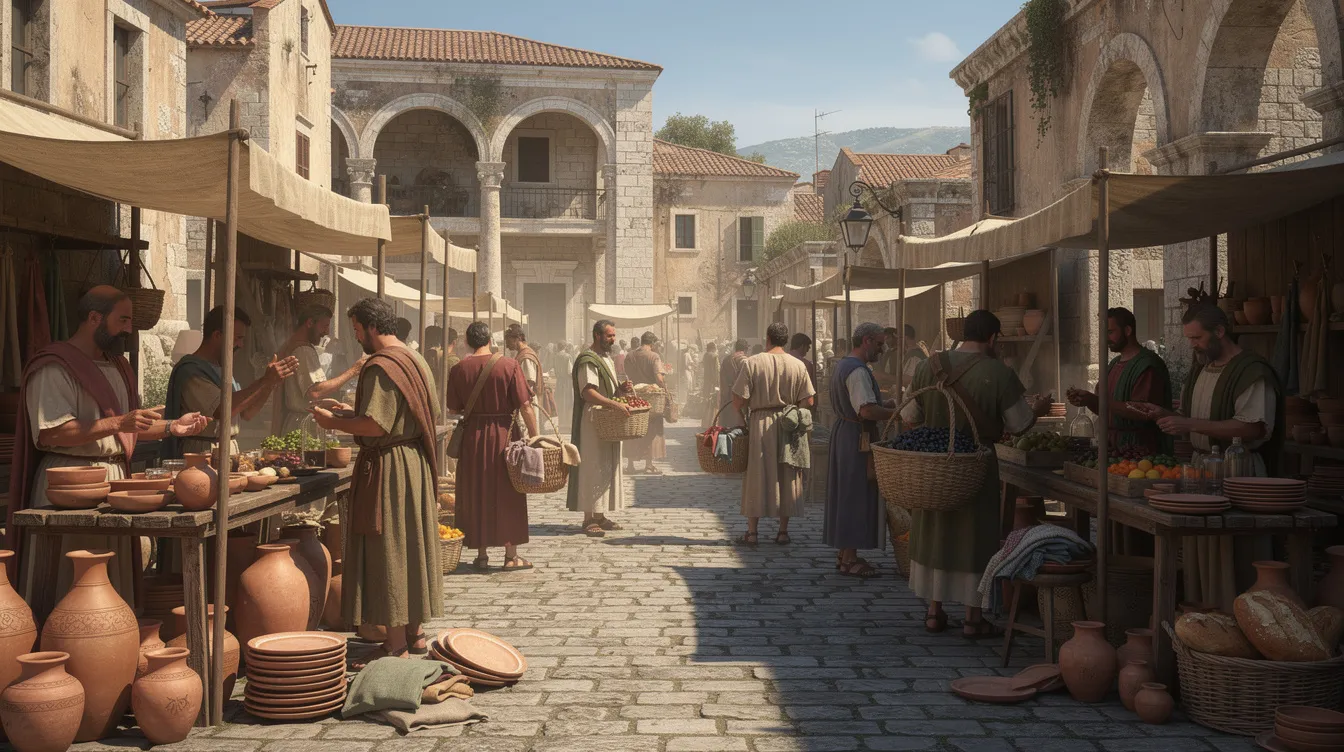
A Christian in Corinth around AD 55 wakes before dawn in a cramped upstairs room of an apartment block (insula), eats bread dipped in olive oil, and heads to the agora to work as a tentmaker alongside fellow artisans. This is not a modern imagination-it is the kind of life the new testament's Greco-Roman audience actually lived.
Housing ranged from crowded urban apartments for the majority to spacious townhouses (domus) for the wealthy. Clothing signaled class: togas for Roman citizens, simple tunics for laborers, minimal dress for slaves. Diet centered on bread, fish, olive oil, wine, and seasonal vegetables. Work included artisan trades, merchant activity, and domestic labor-Paul himself worked as a tentmaker alongside Aquila and Priscilla in Corinth (Acts 18:3).
Slavery was woven into every level of Greco-Roman society. Slaves were property, not persons under the law, though some achieved education and responsibility. The letter to Philemon addresses Onesimus, a runaway slave whom Paul sends back with a plea for forgiveness and brotherhood-a deeply countercultural request in a world where masters held absolute power. Modern readers must resist projecting later forms of slavery onto this context, even while recognizing its dehumanizing reality.
Entertainment included theaters, gladiatorial games, public baths, and banquets. Christian ethics challenged many of these leisure practices-Paul warned the Corinthians about eating meat offered to idols at temple banquets (1 Corinthians 8–10), and James confronted economic favoritism in assemblies where the rich received the best seats while the poor were humiliated (James 2:1–7). These instructions land differently when you picture the actual life of their first century audience.
The Mixed Nature of the Audience: Jews and Gentiles in a Greco-Roman Context
The Greco-Roman audience of the new testament was not purely pagan. It often consisted of both Jews and Gentiles within the same city-and sometimes within the same congregation.
Diaspora Jewish communities were spread throughout the greco roman world. Cities like Alexandria, Rome, Antioch, and Corinth had established synagogues where Jews maintained Torah observance, Sabbath worship, and kosher food laws while speaking Greek and participating in urban Greco-Roman life. Their jewish background shaped their reading of scripture, their messianic expectations, and their understanding of God's covenant promises. The Jewish scripture (what christians call the old testament or hebrew bible) was read in Greek translation (the Septuagint) across these diaspora communities.
"God-fearers"-Gentiles attracted to Jewish monotheism and ethics but not fully converted-served as a crucial bridge audience for the early christian message. When Paul entered a synagogue in a new city, these God-fearers were often the first person to respond, and entire households followed.
Tensions within the early church were real and well documented. In Galatians, Paul confronts the question of whether Gentile believers must follow Jewish law. In Acts 15, the Jerusalem council-where figures including jesus's brother james played a leading role-debated whether non jews must be circumcised. In Romans 14, Paul navigates disputes over food and holy days between Jewish believers and Gentile converts. The New Testament serves as a bridge between Jewish and Hellenistic worldviews, and new testament authors tailored explanations to clarify Jewish customs for Gentile readers who had no familiarity with the old testament or its practices. Passages like Ephesians 2 explicitly describe the breaking down of the dividing wall between Jew and Gentile-a theological claim rooted in the lived social reality of mixed Greco-Roman congregations.
Genre and Literature: Gospels and Letters in the Greco-Roman Milieu
The new testament writings belong to recognizable literary genres in the greco roman world, and those genres shaped audience expectations in ways modern readers often overlook.
Most scholars now see the four Gospels as a type of Greco-Roman biography (bios), comparable to works by Plutarch or Suetonius. These biographies focused on the character, teaching, and significance of a central figure rather than producing a modern-style chronological documentary. Matthew, Mark, Luke, and john each present Jesus's life, death, and resurrection through this lens-but with a distinct theological purpose that sets them apart from other ancient biographies.
New testament letters follow customary Greco-Roman epistolary patterns: a greeting identifying sender and recipient, a thanksgiving section, a body of argument or instruction, and a closing with personal greetings. Paul, Peter, and other authors adapt these conventions theologically-opening with grace and peace instead of standard Roman greetings, for instance, or closing with blessings rather than formulaic wishes.
Other new testament genres also fit the Greco-Roman milieu. Acts reads as ancient historiography, comparable in style (though not in theology) to works by Thucydides or Polybius. Revelation belongs to apocalyptic literature, a genre familiar from both Jewish prophetic tradition and broader Greco-Roman cosmic and mythological frameworks. Recognizing these genres prevents misreading-for example, expecting a modern biography's standards from an ancient Greco-Roman bios, or treating apocalyptic imagery as a literal newspaper forecast of the future.
Case Study: Paul's Letters and His Greco-Roman Readers
The apostle Paul is the clearest example of a new testament author writing directly to a Greco-Roman audience. His letters, composed between roughly AD 49 and 64, are addressed to churches in Roman cities across the eastern Mediterranean.
Paul's key locations-Thessalonica, Corinth, the region of Galatia, Ephesus, Philippi, and Rome-are all cities embedded in the wider greco roman world. Paul wrote to communities shaped by Roman governance, Greek education, religious pluralism, and complex social hierarchies. His language reflects this: he uses Greco-Roman citizenship language (Philippians 3:20), legal imagery (Galatians 3:15, on covenants and wills), athletic metaphors drawn from the Greek games (1 Corinthians 9:24–27), and household codes familiar to Roman readers (Ephesians 5–6).
Paul also adapted his approach depending on the audience. In Acts 13, he preaches in a synagogue using the Jewish scripture and Israelite history. In Acts 17, facing Stoic and Epicurean philosophers in Athens, he quotes Greek poets and reasons from natural theology. This rhetorical flexibility shows a missionary deeply attuned to the historical context of his hearers.
Archaeological evidence anchors Paul's audience firmly in the Roman imperial setting. The Gallio inscription at Delphi-a marble rescript from Emperor Claudius naming Lucius Junius Gallio as proconsul of Achaia-dates Paul's Corinthian ministry to about the year AD 51–52. In Corinth, the Erastus inscription names a city official who may be the same Erastus mentioned in Romans 16:23. These are not abstractions. They are stone, carved names, and datable evidence placing Paul's readers in a real world.
Case Study: Corinth, Ephesus, and Other Key Greco-Roman Cities
The "Greco-Roman audience" is not an abstraction. It is embodied in concrete communities at particular times and places in the first century ad. Here are short profiles of key cities.
Corinth was a wealthy port city and Roman colony in Achaia, strategically positioned on an isthmus connecting two seas. Its population was diverse-Roman veterans, Greek merchants, Jewish immigrants, slaves, freed persons. The city was known for social mobility, commercial competition, and moral laxity. Paul's letters to the Corinthians address factionalism, sexual ethics, lawsuits between believers, and debates about eating meat sacrificed to idols-all issues rooted in Corinthian greco roman culture.
Ephesus was the leading city of the province of Asia, famous for the temple of Artemis (one of the Seven Wonders of the ancient world), widespread magical practices, and its status as a regional economic and religious hub. Acts 19 records riots by silversmiths whose trade in Artemis shrines was threatened by christian preaching. The letter to the Ephesians (or its recipients in surrounding churches) addresses life in this spiritually contested environment.
Philippi was a Roman colony on the Via Egnatia in Macedonia, proud of its Roman identity and its connection to the legacy of Augustus. Paul's letter to the Philippians uses citizenship and military language that would resonate with its audience. Thessalonica, the provincial capital of Macedonia, was a commercial and administrative center. Paul wrote to its church about the return of Christ, addressing fears and confusion in a community under social pressure. Rome itself was the imperial center, where Paul's letter to the Romans addressed a mixed Jewish-Gentile church navigating identity, law, and grace under the shadow of the roman emperor.
Greco-Roman Moral and Social Issues Addressed by the New Testament
Many new testament ethical instructions respond directly to moral questions embedded in greco roman culture-questions that modern readers easily miss without historical context.
Sexual ethics in the greco roman world differed sharply from Christian teaching. Prostitution was legal and common. Pederasty was practiced in some Greek contexts. Concubinage was socially accepted among elites. Paul's instructions in Romans 1, 1 Corinthians 5–7, and 1 Thessalonians 4 address these practices head-on, calling believers to a sexual ethic rooted in the holiness of God rather than the norms of greco roman culture.
Economic behavior was another flashpoint. The patron-client system could be exploitative, and the gap between rich and poor was vast. Paul's collection for the jerusalem church (2 Corinthians 8–9) modeled cross-cultural generosity that cut against normal patronage dynamics. James warns the rich who exploit laborers and show favoritism in assemblies (James 2, 5)-language that speaks directly to real Greco-Roman patterns of economic hierarchy.
Virtues like humility, forgiveness, and love of enemies were countercultural in an honor-driven society. To turn the other cheek, to forgive a debtor, to serve rather than dominate-all this challenged the values of a world where public honor and competitive status defined a person's worth. Jesus's teaching on enemy love and Paul's instructions on unity between social classes would have sounded radical, even offensive, to many in the greco roman world.
These ancient issues are not irrelevant today. Wherever readers face questions about sexual ethics, economic justice, or the temptation to prioritize status over service, they are walking ground the first century church already covered.
How Knowing the Greco-Roman Context Changes Bible Interpretation
Understanding the Greco-Roman audience helps readers avoid common misinterpretations of the new testament.
Consider three concrete examples:
-
Ekklesia ("church"): Modern readers picture a building with pews. In the greco roman world, ekklesia was a civic term for a public assembly of citizens-a political gathering with decision-making authority. When Paul addresses the "ekklesia" in Corinth, he is invoking a word his audience associated with the city assembly, not a Sunday morning service.
-
Euangelion ("gospel"): This was not a purely religious term. Roman imperial inscriptions used euangelion to announce the emperor's birthday, a military victory, or the accession of a new ruler. To proclaim the "gospel of Jesus Christ" was to make a rival announcement-good news about a different King.
-
Household codes: Instructions to wives, husbands, slaves, and masters in Ephesians and Colossians are often read through modern lenses. In their Greco-Roman setting, these codes engage and sometimes subvert Roman family law by introducing mutual obligation and the authority of Christ over all relationships.
Background knowledge from archaeology, inscriptions, and contemporary writers like Josephus, Tacitus, Pliny, and Seneca helps recreate what a first century ad Greco-Roman audience would have heard.
A short caution: historical context is not everything. It serves Scripture, clarifying but not controlling christian doctrine or practice. Readers can use study Bibles, bible dictionaries, and reputable scholarship to gain reliable insight into the greco roman world without needing to become professional historians.
Practical Tips for Reading the New Testament in Its Greco-Roman World
Here are concrete, actionable steps you can take to read the new testament with its original Greco-Roman audience in mind.
-
Note city names and provinces when reading Acts or Paul's letters. Look them up on a map. Knowing that Philippi was a Roman colony or that Thessalonica was a provincial capital changes how you hear the letters addressed to those cities.
-
Pay attention to references to coins, courts, soldiers, temples, and markets. These are signals that Greco-Roman institutions are shaping the text.
-
Consult background resources. A good study bible with historical notes, a bible dictionary entry on "Roman Empire" or "Corinth," or a reliable commentary can illuminate passages that seem flat without context.
-
Read short selections from Greco-Roman authors. Pliny's letter to Trajan about christians, Epictetus on Stoic virtue, or Suetonius on emperor Claudius's actions can give you a feel for the world of the new testament audience. These are not inspired Scripture, but they are valuable windows.
-
Look up key Greek terms. When you see "gospel," "Lord," "church," or "citizenship," pause and ask what a first century Greco-Roman hearer would have understood.
Seeing the new testament through the eyes of its original Greco-Roman audience can make familiar passages feel fresh, vivid, and surprisingly relevant.
Common Misunderstandings About the Greco-Roman Audience
Modern readers frequently make mistakes when they talk about the greco roman world and the bible. Here are the most important corrections.
Not everyone was educated or elite. Many early christians were artisans, laborers, women, and slaves. While philosophical ideas and technical theological terms are present in the new testament, they were often mediated in accessible, oral forms. The church was not a philosophers' club.
"Greco-Roman" does not mean purely pagan. Many in the audience were Jews or God-fearers who already rejected idols while living in a Greco-Roman environment. Conflating "Greco-Roman" with "non-Jewish" erases the jewish background that runs through the entire new testament and distorts the picture of early christianity.
The Roman world was not uniformly tolerant. While there was broad religious diversity, loyalty to Rome and the roman emperor set real limits. Refusal to participate in the imperial cult or civic sacrifices could lead to legal consequences. christians decided to worship one God alone, and that decision put them at odds with a system that demanded religious conformity as civic duty.
The New Testament was not written for a modern Western audience. The cultural distance between the first century ad Mediterranean and a twenty-first century reader is enormous. Assumptions about democracy, individualism, separation of church and state, and personal privacy simply did not exist. Careful, historically informed application is not a luxury-it is a responsibility.
The testament canon was shaped in and for the greco roman world. Forgetting that fact leads to readings that are more about us than about the text.
Conclusion: Why the Greco-Roman Audience Still Matters Today
The Greco-Roman audience of the new testament was not a footnote to Scripture. It was the living, breathing context in which the gospel was first proclaimed, debated, and believed. Cities, koine Greek, roman religion, greek philosophy, Roman politics, honor codes, patronage, and the daily rhythms of earth and life in the first century ad Mediterranean-all this shaped what testament authors wrote and what their readers understood.
Understanding this historical context honors the original meaning of biblical texts. It does not reduce Scripture to a museum artifact. It equips contemporary readers to apply the new testament wisely in very different cultural settings-recognizing what is timeless and what was addressed to a specific moment in history.
Ongoing archaeological discoveries, fresh readings of ancient inscriptions, and continued scholarship on the greco roman world keep enriching our understanding. The work is far from finished. Every new find, every careful study of a Greco-Roman city or a first century document, opens another window into the world behind the bible.
Keep exploring. The more you understand the world the new testament was written into, the more clearly its message speaks to your life today. Whether you are reading matthew or Romans, john or Revelation, the greco roman world is not a barrier-it is a bridge to deeper understanding.

FAQ: Questions About the Greco-Roman Audience and the Bible
Below are answers to common questions not fully addressed in the main sections above.
Did Jesus himself live in a Greco-Roman culture?
Yes. Although jesus grew up in Galilee, a predominantly Jewish region, Galilee was surrounded by Greco-Roman cities like Sepphoris and Tiberias. Greek was spoken alongside Aramaic, Roman soldiers patrolled the roads, and Herod Antipas governed as a Roman client ruler. Jesus's world was thoroughly shaped by greco roman influence, even if his primary audience was Jewish. His life, teaching, jesus death on a Roman cross, and the virgin birth narratives all occur within this Greco-Roman political and cultural setting.
Were any New Testament books written directly in Latin?
No. The entire new testament was composed in koine Greek. Latin influenced legal and military terminology, but no new testament book was originally written in Latin. Jerome's Latin Vulgate, produced in the late fourth century, became the standard bible of the Western church but was a translation, not an original composition.
Is "Greco-Roman" the same as "Hellenistic"?
Not exactly. "Hellenistic" refers specifically to the period and culture following Alexander the Great (roughly 323–31 BC), characterized by the spread of Greek language and culture. "Greco-Roman" is broader, encompassing the fusion of Greek cultural influence with Roman political authority from the late Republic through the common era of the Roman Empire. Most new testament texts fall in the Greco-Roman period, though they inherit Hellenistic cultural foundations. Emperor Constantine's later legalization of christianity in the fourth century ad further transformed this landscape, but that falls outside the new testament period itself.
Can I understand the New Testament without studying the Greco-Roman world in depth?
You can understand the new testament's core message-the gospel of Jesus Christ-without a PhD in ancient history. But studying the greco roman world, even at a basic level, significantly deepens comprehension. A good study bible, a bible dictionary, or an introductory book on the ancient world can make a meaningful difference without requiring years of specialized training.
How quickly did Christianity spread beyond the Roman Empire?
Within the first two centuries, christianity reached regions beyond formal Roman borders-into Mesopotamia, Armenia, parts of North Africa, and along trade routes into the near east. But its most dramatic early growth occurred within the Roman Empire's cities, where Greek was spoken, roads were maintained, and urban networks facilitated communication. The infrastructure of the greco roman world was the primary highway for the early christian mission.

The Problem With Certainty