Who Were the Essenes and Why Do They Matter for Understanding Jesus?
The Essenes were an ascetic Jewish sect during the Second Temple period whose practices of purity, communal discipline, and apocalyptic expectation continue to captivate historians and biblical scholars alike. This article unpacks what we know about them, how the Dead Sea Scrolls illuminate their world, and why their story still matters for understanding ancient Judaism, the historical Jesus, and the earliest followers of Christ.
Essenes Overview
-
The Essenes were a rigorously observant Jewish sect that flourished from the 2nd century BCE to the 1st century CE. Most scholars connect the Qumran community and many of the Dead Sea Scrolls with Essene beliefs, though ongoing scholarly debate surrounds this identification. The Dead Sea Scrolls reflect the theology and communal rules of an Essene-like sect.
-
Essene practices of ritual purity, communal living, and apocalyptic expectation provide crucial insight into the diversity of ancient Judaism during the Second Temple period and help us understand other Jewish sects of the era.
-
Some features of Essene life and thought resemble the mission of John the Baptist and themes in early Christianity, including shared emphasis on water purification and beliefs in light versus darkness. Direct dependence, however, remains disputed among researchers.
-
The Essenes held a deeply apocalyptic worldview and anticipated messianic figures, rejected the Jerusalem Temple priesthood as corrupt, and practiced communal ownership and strict voluntary poverty. Their world sheds light on the environment from which both rabbinic Judaism and Christianity emerged.
-
This article summarizes evidence from ancient literary sources, archaeology, and the scrolls themselves, relating these findings to broader questions about first century Judaism. Connections to themes explored in the previous post are noted where relevant.
Who Were The Essenes
The Essenes were a rigorously observant Jewish sect known from the writings of the Jewish historian Josephus, the philosopher Philo of Alexandria, and the Roman writer Pliny the Elder. They were active in Judea from roughly 150 BCE until the destruction of Jerusalem in 70 CE. They appeared to have disappeared as a recognizable group after the First Jewish Roman War.
Essenes are not named anywhere in the Hebrew Bible or the New Testament. It was only through later historical study and, especially, the discovery of the Dead Sea Scrolls near the Dead Sea at Qumran that scholars gained a richer understanding of who these people were and how they lived.
Ancient authors placed Essene communities in various towns across Judea as well as in remote areas near the Dead Sea. They established a settlement near Qumran and withdrew from mainstream society, preferring a life of prayer, study, and purification over the bustle and perceived corruption of urban centers. Their intentional separation from the world around them is one of the most defining features of the Essene movement.
What emerges from the sources is the portrait of a holy people deeply committed to moral purity, communal discipline, and the conviction that God was about to act decisively in history.
Sources For Our Knowledge Of The Essenes
Our knowledge of the Essenes rests on three main pillars: classical literary sources, the Dead Sea Scrolls, and archaeological evidence from Qumran and surrounding sites.
-
Josephus (c. 37 to 100 CE): The Jewish historian provides the most extensive accounts, especially in the Jewish War and his Antiquities of the Jews. He describes Essene customs including communal property, ritual washings, severe discipline, beliefs about fate, prophecy, and the immortality of the soul. Josephus claimed personal experience with the sect, though his accounts sometimes carry a philosophical gloss aimed at Greek and Roman readers.
-
Philo of Alexandria (c. 20 BCE to 50 CE): In works like Every Good Man Is Free and Hypothetica, Philo draws a portrait of the Essenes as exemplary practitioners of virtue, emphasizing their communal property, avoidance of wealth, and detachment from worldly pleasures. His descriptions are sometimes idealized, shaped by his philosophical agenda.
-
Pliny the Elder (23 to 79 CE): In his Natural History, this Roman writer briefly describes a celibate community near Ein Gedi by the Dead Sea, living without money or sexual relations. His account is external and concise but provides independent geographic confirmation.
-
The Dead Sea Scrolls: These sectarian writings do not use the name "Essenes," but they describe a community whose rules, beliefs, and practices closely resemble what the classical authors report. They serve as an indirect yet deeply valuable source for understanding Essene identity from the inside.
Each source has strengths and limitations. Multiple independent attestations reinforce core details, but all three classical writers relied on hearsay or rhetorical idealization to varying degrees.
The Essenes Among Other Jewish Sects
Understanding the Essenes requires placing them within the broader landscape of Second Temple Judaism. They were not alone in their zeal. The last centuries BCE and the first century CE saw several competing Jewish sects vying over questions of purity, scripture, Temple worship, and divine providence.
The major groups to compare include:
-
Pharisees: More embedded in town life, less ascetic, and more inclined toward oral interpretation and evolving tradition. Pharisees affirmed resurrection, personal reward, and a balance of fate and free will. Essenes shared some of these beliefs but pushed them further toward strict dualism and possibly stronger predetermination.
-
Sadducees: A priestly aristocracy tied closely to Temple Judaism. They denied the resurrection of the dead and rejected belief in the immortality of the soul, positions the Essenes affirmed vigorously. While Sadducees upheld the authority of the Temple, the Essenes rejected the Jerusalem Temple and viewed its priesthood as corrupt.
-
Zealots: A later, more overtly political and militant movement. While the War Scroll envisions a cosmic battle, the Essenes were not clearly militaristic in the way Zealots were.
Many scholars hypothesize that the Essenes originated from priestly or lay reformers who became disillusioned with the Temple leadership during the Hasmonean period. Whether they were breakaway priests or a broader lay reform movement remains debated, but their sharp critique of mainstream religious authority set them apart from other Jewish sects in important ways.
Beliefs, Theology, And Daily Life
The Essenes held a set of core convictions that gave shape to every part of their daily existence. At the center was strict monotheism and a high view of scripture, anchored in the Torah and the Prophets but extending to apocalyptic and wisdom writings as well.
Their theology was marked by a strong belief in angels and demons, a vivid dualism between light and darkness, and the conviction that history was moving toward a divinely ordained climax. They held a deeply apocalyptic worldview and anticipated messianic figures, including possibly both a priestly and a royal Messiah. The Essenes believed in the immortality of the soul, in rewards and punishments after death, and in a form of divine foreknowledge or predestination stronger than what most Pharisaic writings describe.
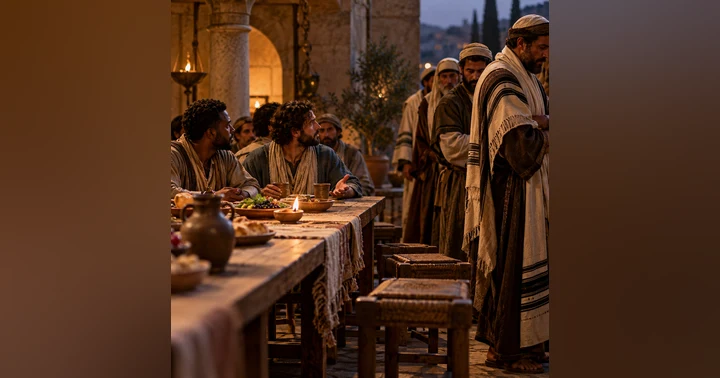
Members practiced daily ritual immersions for purity and held communal meals together. They practiced ritual purification through water repeatedly, not merely as an occasional rite but as a daily discipline. Strict cleanliness governed everything from food preparation to social interaction.
They followed a 364 day solar calendar instead of the lunar calendar used by the Jerusalem Temple, a point of serious disagreement with mainstream Judaism. This calendar difference meant the Essenes celebrated festivals on different days, deepening their separation from other Jews.
Regarding diet, some sources hint at vegetarian tendencies, and Essenes refrained from animal sacrifices and swearing oaths. They maintained a pure lifestyle and avoided immoral activities of all kinds. Whether complete vegetarianism was universal or limited to certain branches remains a matter of scholarly discussion.

Community Structure, Rules, And Customs
The Essene community organized itself as an intentional alternative society under divine law. Essenes practiced communal living and collective ownership. Property was pooled and overseen by elected or senior members, and the group functioned as a tightly regulated monastic community in which individual wealth had no place.
Key features of community life included:
-
Initiation: Josephus and the Community Rule describe a probationary period lasting one to three years. New members took oaths of loyalty, received graded access to communal meals and decision making, and were tested on their commitment to the community's standards before full membership.
-
Oaths and honesty: Essenes were forbidden from swearing oaths except during formal initiation. Strict honesty was expected at all times, and deception was punished severely, sometimes through temporary exclusion from common meals.
-
Slavery: Essenes rejected slavery, believing all men are born equal. They did not possess slaves, a position that set them apart from much of the surrounding world.
-
Marriage and celibacy: They practiced a communal lifestyle characterized by strict voluntary poverty and celibacy. However, not all Essenes were celibate. Many Essenes were celibate, while some married after three years of probation. This diversity is reflected in different ancient accounts and may represent variation across the movement.
-
Discipline: Infractions could result in reduced food rations, exclusion from meals, or even expulsion. The Community Rule details a precise system of penalties that reveals just how seriously the Essenes took their own community standards.
Essenes practiced communal living similar to early Christian monasticism, and early followers of Christ would later organize themselves along remarkably parallel lines.
Qumran, The Dead Sea, And The Scrolls
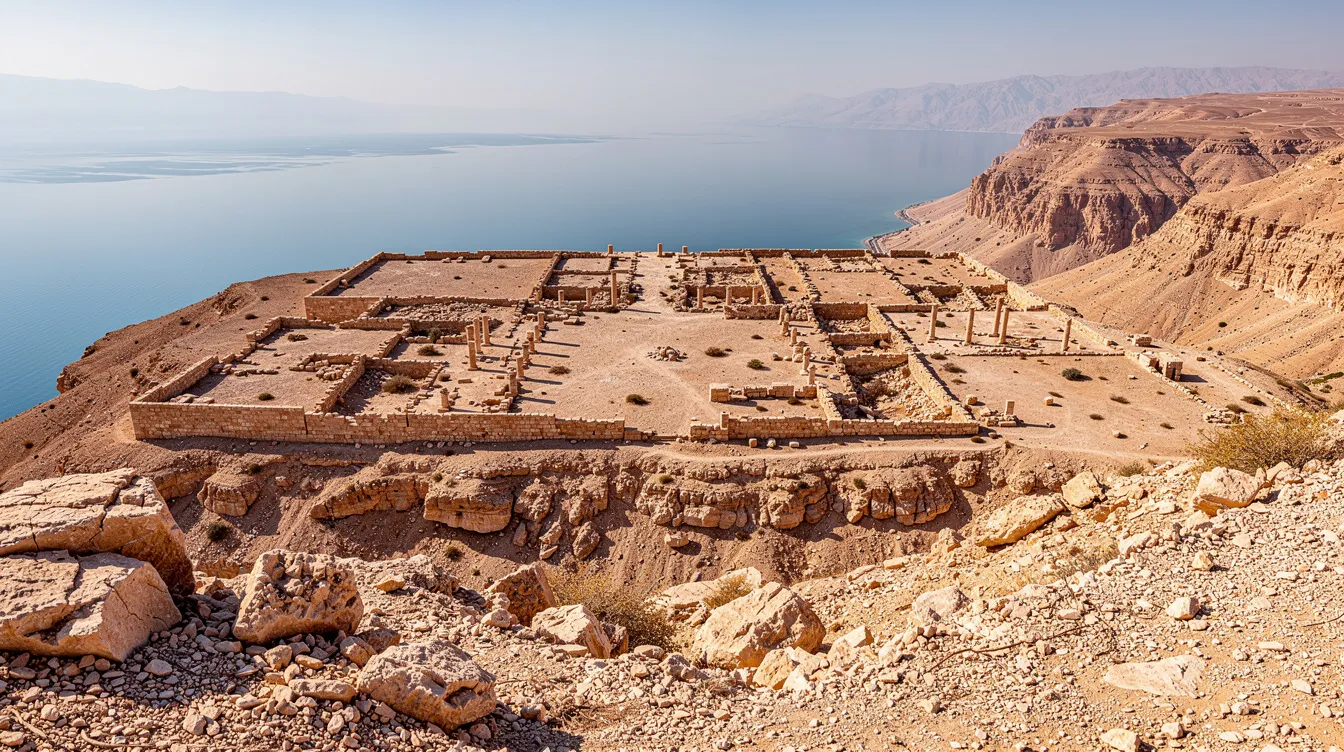
The archaeological site of Qumran sits on the northwestern shore of the Dead Sea in modern Israel. Its ruins include communal halls, extensive water installations and ritual baths, workshops, and what may have been a scriptorium. The Qumran ruins testify to a community designed around collective worship, study, and purification.
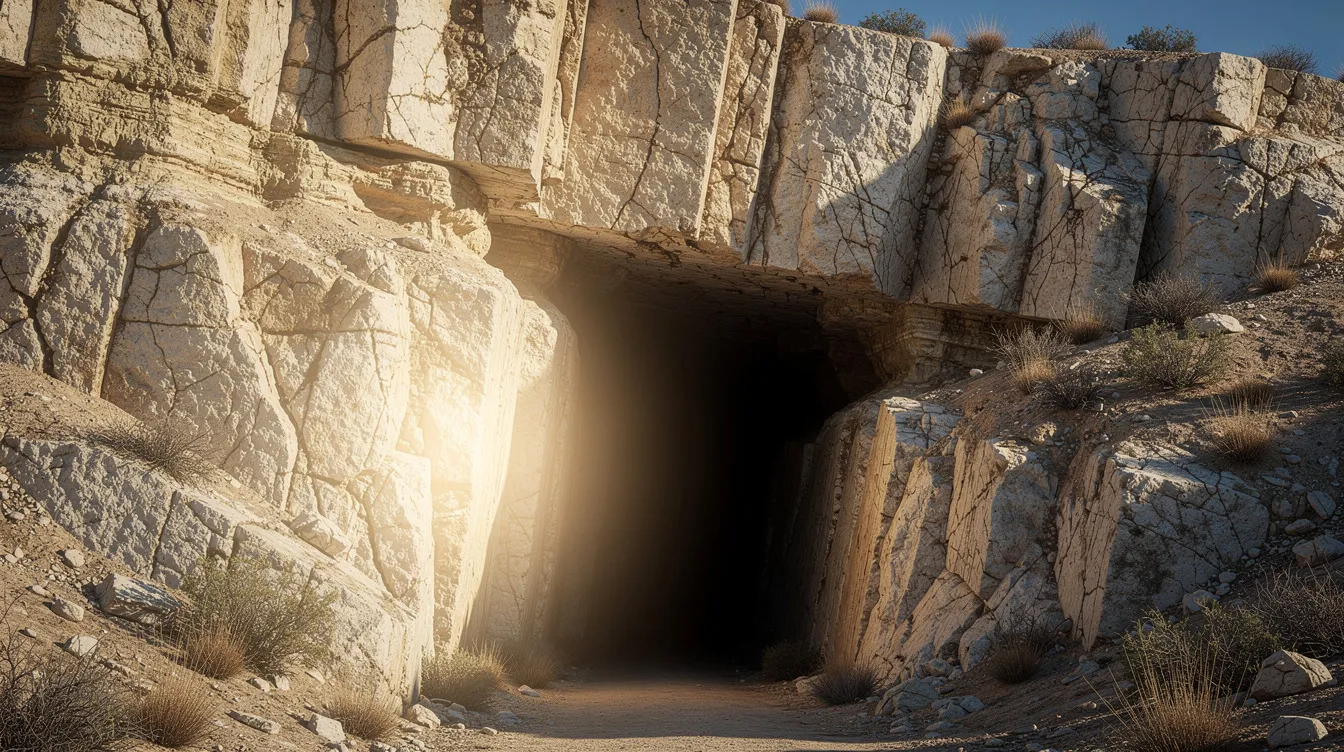
The story of the scrolls begins in 1947, when a Bedouin shepherd boy stumbled upon ancient manuscripts hidden in a cave. That chance discovery led to systematic archaeological excavations across eleven main caves between 1947 and the late 1950s. The scrolls were discovered in 11 caves near Qumran, and together they constitute one of the most significant archaeological finds of the twentieth century.
The Dead Sea Scrolls date from the 3rd century BCE to the 2nd century CE and include about 800 to 900 original manuscripts. The Library of Congress notes that the final deposition likely occurred around 68 CE, during the Roman military campaign. Cave 4 alone yielded roughly 15,000 fragments from some 500 different texts.
In broad terms, the scrolls fall into several categories: biblical manuscripts (including the famous Isaiah Scroll and copies of nearly every book of the Hebrew Bible), commentaries known as pesharim, halakhic or legal writings, hymns, and explicitly sectarian compositions such as the Community Rule and the War Scroll. A unique find, the Copper Scroll, lists locations of hidden treasure and remains one of the most puzzling of all the Qumran scrolls. Most manuscripts are sectarian writings related to the Essenes, though some biblical texts and other sacred writings clearly come from broader Jewish tradition.
Are The Essenes The Authors Of The Dead Sea Scrolls
The mainstream scholarly view, often called the Qumran Essene hypothesis, holds that the settlement at Qumran was inhabited by a sectarian community whose beliefs match many features of Essene descriptions in classical sources. Most scholars accept some version of this identification, even as they debate its scope and precision.
Key arguments for the identification include the alignment between what Josephus and Philo describe and what the scrolls contain: communal property, leadership structures, ritual washings, and eschatological expectations all overlap in significant ways. The geographic placement of the community on the northwest shore of the Dead Sea also matches Pliny's description.
However, major alternative hypotheses exist. Norman Golb of the University of Chicago argued that the scrolls do not originate from a single sectarian community but instead represent a library of varied works from Jerusalem, brought to the desert for safekeeping during the Roman war. In this view, Qumran functioned as a fortress or administrative center rather than a sectarian monastery.
The cemetery near Qumran adds another layer of complexity. In a sample of 35 excavated skeletons, 31 were male and only one was female. Women and children appear almost exclusively in extension cemeteries. This pattern supports the celibacy hypothesis for the main community but complicates any rigid claim that women were entirely absent. Scholars like James VanderKam have emphasized these nuances when evaluating the identification.
Social Archaeology And The Qumran Community
Social archaeology examines how physical site layouts and access patterns reveal social structures. Eyal Regev and other researchers have applied these methods to Qumran with revealing results.
The arrangement of communal rooms, restricted spaces, and elaborate water systems at Qumran suggests controlled movement and a hierarchy of purity and authority. Certain areas appear to have been accessible only to fully initiated members, while other spaces served more general functions. The placement of ritual baths at transition points between zones reinforces the impression that movement within the site was regulated by purity status.
Architectural segregation and secluded communal halls point to a community that deliberately limited contact with outsiders and maintained an intense internal social life focused on study, prayer, and ritual. This physical evidence directly supports the literary portrait of an Essene-like community that built its own community around separation from the wider world and strict internal discipline.
War Scroll, Community Rule, And Sectarian Texts
Among the hundreds of Dead Sea Scrolls, several sectarian writings stand out for what they reveal about the community's spiritual life and self-understanding.
-
The War Scroll: This apocalyptic text envisions a cosmic conflict between the Sons of Light and the Sons of Darkness, involving both human armies and angelic combatants. It reflects the community's conviction that they stood on the edge of history's final battle, when God would intervene decisively for his people.
-
The Community Rule (Serekh HaYahad): This foundational document sets out admission procedures, communal meals, leadership roles, and disciplinary measures with rigorous detail. It is one of the most important texts for reconstructing daily life in the Qumran community.
-
Other sectarian texts: The Thanksgiving Hymns, the Damascus Document, and various pesharim (biblical commentaries) shed light on the community's theological convictions, their reading of scripture, and their sense of being God's people set apart in a corrupt world.
Themes running through these writings include sharp dualism between light and darkness, a division between the righteous remnant and corrupt outsiders, and the urgent expectation of divine judgment. Both Essenes and Christians shared beliefs in light versus darkness, a parallel that has generated extensive scholarly discussion.
It is worth noting that not all scrolls found in the caves necessarily come from a single subgroup. Some biblical books and other texts likely circulated widely across Jewish communities. But the sectarian core of the collection remains distinctly Essene in character.
Essenes, John The Baptist, And The Historical Jesus
Scholars have long noted overlaps between Essene practices and the mission of John the Baptist. Both operated in the wilderness near the Jordan River and the Dead Sea. Both placed heavy emphasis on repentance and purification through water. Both criticized the religious establishment in Jerusalem. John the Baptist may have been influenced by the Essenes, although no ancient source explicitly confirms membership.
Important differences exist. John's ministry was public, directed at all who would listen. His baptism appears as a one time initiatory act rather than the repeated daily immersions practiced by the Essenes. And John pointed beyond himself, identifying Jesus as the Messiah and the Christ whom God's people awaited.
Both Essenes and Christians emphasized ritual water purification, and the Dead Sea Scrolls contain teachings similar to Jesus' messages about the kingdom of God, judgment, and the responsibility of the faithful. Essene expectations of multiple messianic figures, priestly and royal, as seen in some Qumran scrolls, help illuminate the diverse messianic hopes circulating in Jesus' day.
Knowledge of Essene beliefs adds context for New Testament themes such as apocalyptic judgment, communal sharing among early Christians, and the language of truth, light, and darkness that runs through John's Gospel. However, scholars urge caution about claiming direct dependence. Jesus' teaching drew on a broad stream of Jewish thought, and the Essenes represent one important current within that stream rather than a singular source.
These connections are relevant to questions raised in the previous post about the Jewish background of the Gospels and how first century Judaism shaped the earth on which Christianity took root.

Later Influence And Modern Appropriations
Early Christian writers occasionally refer to groups reminiscent of the Essenes, and some scholars have debated whether there is direct historical continuity between the sect and certain forms of early Christianity. The Essenes led lives of discipline and purity that bear comparison with later Christian monastic traditions, but evidence of a direct institutional link remains thin.
In the modern world, numerous movements claiming Essene identity or inspiration have appeared. These groups often mix historical elements with esoteric, New Age, or mystical ideas that diverge sharply from the original Jewish context. Claims about Essene healing rituals, advanced spiritual powers, or secret gospel teachings typically lack support from the ancient evidence.
Readers interested in the Essenes should distinguish between evidence based historical reconstruction and imaginative spiritual reinterpretation. The latter, while sometimes appealing, can obscure the distinctiveness of the ancient Essenes. Modern self described Essene groups do not reliably preserve the original sect's beliefs or practices. The truth about the Essenes is found in careful study of the sources, not in romantic projection.
Archaeology, Scholarship, And Ongoing Debates
Since the mid twentieth century, new excavations, radiocarbon dating, and advanced textual study have continued to refine our understanding of Qumran and the Essene hypothesis. Over 1,200 coins spanning the Hasmonean period (around 130 BCE) through the Jewish Revolt (about 68 CE) confirm the site's long occupation. Recent AI assisted paleographic analysis has suggested that some manuscripts may be older than previously thought, though these findings are not universally accepted.
Representative scholarly perspectives include those emphasizing Essene identity (the majority position), those stressing connections to other branches of Judaism, and those arguing for a non sectarian library origin for the scrolls. There is broad but not unanimous support for linking the majority of Dead Sea Scrolls to a sect with Essene-like traits.
The ongoing study of the Essenes illustrates the dynamic nature of historical and biblical research. New data and methods continue to reshape older models, and the history of this small but remarkable community still has surprises to offer. The Bible, the earth of Israel, and the writings found in its wilderness caves continue to shed light on a world that shaped both Judaism and Christianity in ways we are still discovering.
FAQ
These concise questions and answers address common issues not fully covered in the main sections.
Were The Essenes A Single Unified Movement Everywhere In Judea
Ancient sources suggest the Essenes appeared in multiple locations across Judea and may have had regional variations. Some communities were more urban while others, like the group at Qumran, lived in remote desert settings. The Qumran community likely represents one distinctive branch rather than the entire Essene movement. Josephus estimated their total number at about 4,000, scattered across many towns and settlements throughout the land of Israel.
Did All Essenes Live In Monastic Communities Like Qumran
Not all Essenes lived in desert style communes. Writers like Josephus describe Essenes living in many towns, maintaining their discipline and communal practices while integrating more closely with wider society. The Qumran settlement, while the best known example, was probably one expression of a broader movement. Some Essenes chose the intensity of a fully separated community while others lived among other Jews and maintained Essene standards in more ordinary settings.
What Language Did The Essenes Use In Their Writings
Most sectarian scrolls associated with the Essenes are in Hebrew, often a distinctive form sometimes called late or Qumran Hebrew. Some texts appear in Aramaic, and a smaller number were written in Greek. This multilingual character reflects the broader linguistic environment of Second Temple Judea, where Hebrew served as a sacred and literary language, Aramaic was widely spoken, and Greek functioned as the language of administration and wider Mediterranean contact.
How Did Essene Purity Practices Differ From Those Of Other Jews
While many Jews practiced ritual washing and observed purity laws drawn from the Bible, the Essenes intensified these customs to an extraordinary degree. They required frequent immersions, maintained strict meal purity, and separated themselves from anyone they considered impure, including other Jews who did not share their standards. Their level of ritual purity went well beyond what Pharisees or ordinary Judeans practiced.
Did The Essenes Expect The World To End In Their Lifetime
Several scrolls express urgent expectation of an approaching final conflict and divine intervention, suggesting that many members believed they were living in the last generation. The War Scroll, for example, maps out a detailed scenario for the end times battle. Yet these apocalyptic hopes seem to have outlasted the group's own existence. The world did not end on their timeline, but their expectation profoundly shaped the lives they led and the writings they left behind.
When Outsiders Became Family: The Conflict That Shaped the Early Church